
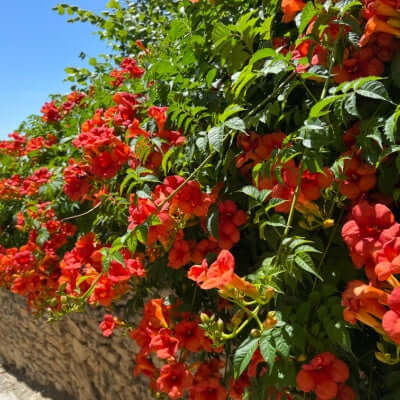
When most people picture a pollinator garden, they imagine rows of wildflowers and fluttering wings. A native pollinator border offers more than that. It's a layered planting designed to feed and shelter bees, butterflies, and other beneficial insects from early spring through late fall, while anchoring a bed with real structure and visual rhythm.
This guide walks through how to design a border with substance: one that balances native perennials, shrubs, and evergreens for year-round habitat and bloom. If you want broader context before you start, our guides on creating a pollinator-friendly landscape and the importance of pollinator plants cover the bigger picture, and TN Nursery can supply the stock to build it.

What a Pollinator Border Actually Needs to Do
A border planted along a fence, a path, or a lawn edge does more than add color. A good one delivers four things at once:
-
A sequence of blooms from early spring through late fall
-
Shelter, host plants, and nectar for a range of pollinator species
-
Visual layering that reads as intentional rather than chaotic
-
A mix of plant heights and textures that supports both wildlife and design
Most pollinator plantings fail on the first point. They peak for a few weeks in June or July and then go quiet, which leaves bees and butterflies hungry during the parts of the season when food matters most. The rest of this guide is built around fixing that problem.
Start With Site and Space
Before planting, take stock of what the site actually gives you. The conditions shape what will thrive.
Key factors to assess:
-
Is the space in full sun, part sun, or light shade?
-
How much room do you have? Measure width and depth, since this determines how you layer.
-
What's the soil like? Note drainage, compaction, and texture.
-
Where does the border run? Along a fence, path, foundation, or open lawn edge?
Even a small backyard can become rich pollinator habitat with intentional design. A thoughtfully planted border can turn a narrow side yard into a working corridor for bees and butterflies while adding privacy and softening the edges of the house.
In windier or more exposed sites, adding a backdrop of native canopy trees amplifies the benefits. Northern red oak seedlings and tulip poplar trees both work well, protecting pollinators from wind, supporting nesting wildlife, and framing the border with height. If you want to learn more about what tulip poplar brings to a landscape specifically, this tulip poplar tree overview and the additional tulip poplar facts and information are worth a read.

Build the Border Around Bloom Timing
The single most useful thing you can do for pollinators is spread blooms across the full season. A good border covers three stretches:
-
Early season (April–May). Flowers for emerging bees and queens coming out of winter.
-
Summer. Abundant bloomers during peak pollinator activity.
-
Late season. Nectar sources that carry into fall for migrating butterflies and late foragers.
When you plan your mix, stagger flowering by species and variety so something is always open. That principle shapes every plant choice that follows.
Layer for Habitat and for Design
Layered planting boosts both habitat value and visual depth, even in narrow spaces. A working structure looks like this:
-
Back or center: taller anchors such as milkweed, tall perennials, or small native trees
-
Middle: mid-height bloomers like coneflower, bee balm, and liatris
-
Front: shorter perennials, low sedges, or groundcover
Layering gives pollinators blooms at different heights, better access to nectar and pollen, and improved airflow (which cuts disease pressure). It also prevents the patchy, unfinished look that plagues flat borders. Choose species with different leaf textures and growth habits for visual rhythm across the seasons.
Three Plants That Carry the Border
Some plants do disproportionate work. These three form the backbone of most successful pollinator borders across the eastern and central U.S.

Milkweed: the host plant
Few plants play a more critical role than milkweed. It's the essential host plant for monarch butterflies, a strong nectar source for bees, and an architectural element all at once.
Milkweed feeds monarch caterpillars through every larval stage, produces fragrant globe-shaped summer flowers, stands tall enough to anchor the back of a border, shrugs off drought once established, and is typically ignored by deer thanks to its bitter latex. Even a few plants make a real difference, since monarchs rely on any patch they can find during migration. Keep the milkweed zone pesticide-free, since caterpillars are highly sensitive.

Coneflower: the workhorse
Native coneflower (Echinacea spp.) is the classic middle-layer pick and does more than deliver a splash of purple or pink. It's a reliable perennial with a bold upright form, it pulls in butterflies, bees, and hummingbirds, and it holds big, prominent blooms through summer and into early fall. After the flowers fade, songbirds work the seed heads. A deep taproot system stabilizes soil. It handles heat, drought, and a range of soils, and returns reliably year after year.
In design terms, coneflower brings repetition and a cohesive vertical line. It blends especially well with native grasses, milkweed, and late-summer asters.

Blanket flower: the long-bloom color
Blanket flower (Gaillardia) is the plant to use when you want color to last from early summer to frost, particularly on hot, sunny sites. Its fiery red, orange, and yellow daisy-like blooms run longer than almost any other perennial, drawing a steady stream of bees and butterflies. It thrives on heat and dry soils, stays compact and mounded, and fills the gaps when other flowers fade. It layers well under open-canopy trees like black walnut or oak, whose high dappled shade suits a wide mix of perennials below.
All three are available through TN Nursery's perennial plants collection in bare-root format, which makes larger plantings more affordable.
Pair Flowers With Native Texture
A border heavy on flowers alone can look flat. Native grasses and soft-leaved companions add depth and give insects and small birds additional shelter.
Texture adds movement and contrast (switchgrass or little bluestem waving behind coneflowers), nesting and hiding places across the year, softer transitions between tall trees and mid-level perennials, and a sense of intentional structure through dormant months. You don't need a dozen grass species. A few well-placed natives can break up flower-heavy stretches, frame smaller shrubs, or edge the entire border.
Add Evergreen Structure at the Edges
Deciduous perennials and grasses go dormant. Native evergreens keep the border legible in winter and give pollinators shelter during cold snaps and early spring. White pine, eastern redcedar (Juniperus virginiana), and arborvitae all work well as backbone plantings near or behind a pollinator border.
For more on blending evergreens into a mixed planting, the TN Nursery garden blog covers this from several angles: the 10 advantages of evergreens, the top 5 evergreen trees for year-round gardens, the enchanting world of evergreens, and 10 evergreen trees to transform your garden.
Design for Pollinators and People
Great borders don't sacrifice beauty for ecology or usability for wildlife. A few practical design habits:
-
Place tall trees and perennials so they don't block key windows or access paths
-
Concentrate active nectar sources where you'll see them from a porch, kitchen window, or seating area
-
Repeat groupings and sweeps of each species rather than scattering singles
-
Use clean edges and light pruning to keep the border looking maintained
A tidy native border can feel as curated as any boxwood hedge while carrying far more ecological weight. If you prefer a wilder look, you can lean that direction, but you don't have to let things sprawl to make the planting valuable.
Matching Your Mix to the Site
Different sites call for different strategies. A few useful starting points:
Sunny, heat-prone border. Blanket flower and coneflower at the front and middle, milkweed for height at the back, switchgrass or little bluestem for texture, with a screen of white pine or arborvitae on the north or west edge if wind is a factor.
Small backyard edge. Milkweed or liatris for tall structure, purple coneflower for bloom and form, low sedges or blanket flower wrapping the border, and a pair of tulip poplars along a fence to layer tree canopy over pollinator habitat.
Naturalized native planting. Intermixed groups of milkweed, wild bergamot, black-eyed Susan, and coneflower, with clumps of oak or northern red oak seedlings for dappled shade, finished with native shrubs or low evergreens along the edges.
Butterfly and monarch focus. Milkweed placed every few feet along the sunniest line, purple coneflower and blanket flower staggered for continuous bloom, and fruit trees mixed in for spring nectar and fall interest. Where space allows, eastern redcedar or arborvitae add shelter and structure.
Why Bare-Root Plants Help
For larger borders or a windbreak planting, bare-root stock is the practical choice. It ships dormant, plants quickly without wrestling pots, runs significantly cheaper per plant, and establishes fast with water and reasonable placement. Most of the trees, perennials, and shrubs above are available bare-root, which makes ambitious borders affordable rather than aspirational.
The Core Idea
Build around a few indispensable plants. Milkweed for host action, coneflower for persistence, blanket flower for long color. Layer them with native grasses for texture, frame the whole thing with canopy trees and evergreens, and stagger bloom times across the full season. That combination gives you a border that feeds pollinators from the first warm days of spring through the last flowers of fall, while holding its shape and structure through winter.
Plant with that in mind and the border will keep getting better every year as the roots deepen and the planting settles into itself.


