Quick answer: A hazelnut tree in most U.S. yards is the American hazelnut (Corylus americana), a native, multi-stemmed shrub that grows about 8 to 12 feet tall in zones 4 to 9. It bears small, sweet nuts in late summer to early fall. Plant at least two, because hazelnuts are wind-pollinated and need a partner to set nuts.
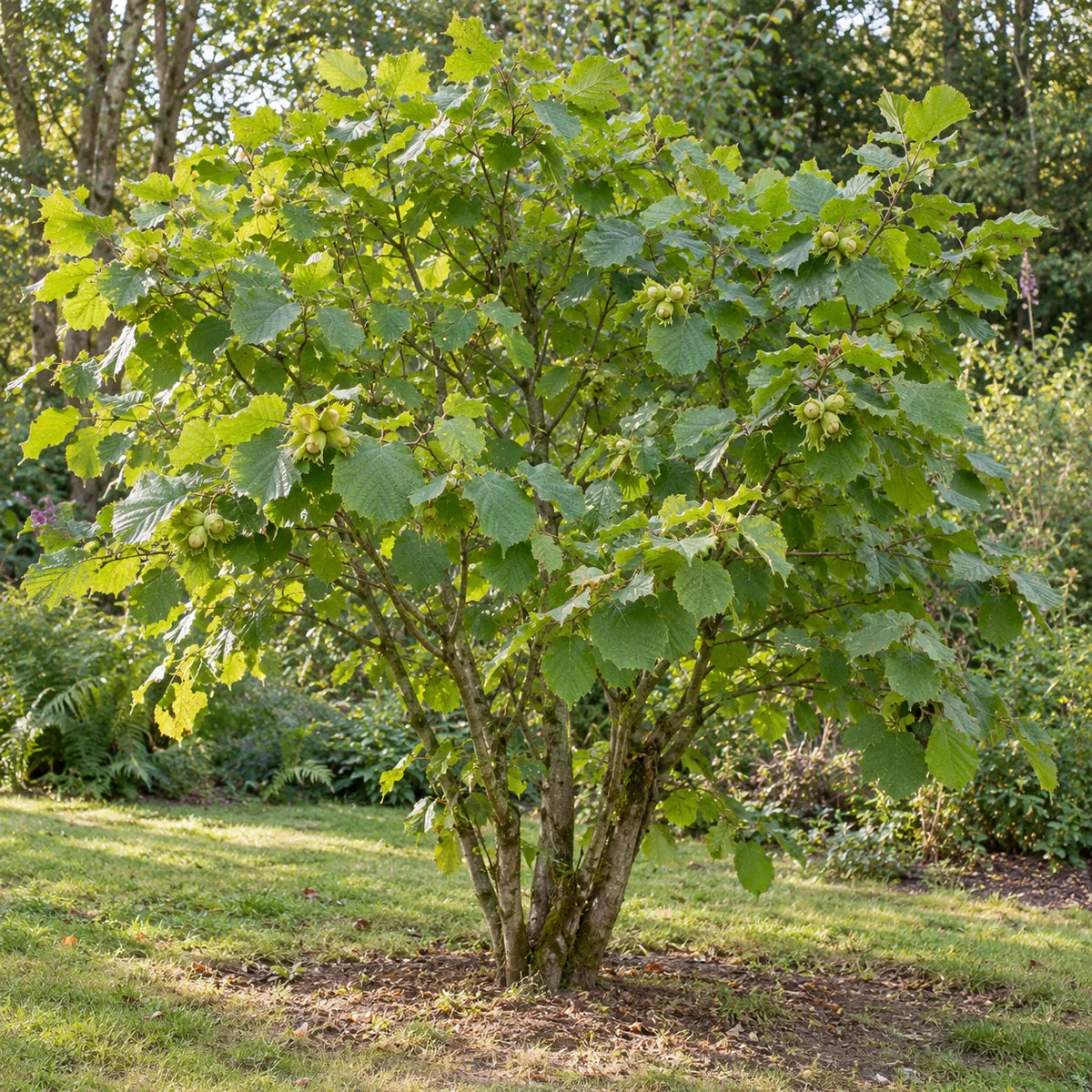
People search for a "hazelnut tree," but the native hazelnut of the eastern and central United States usually grows as a thicket-forming shrub rather than a single-trunk tree. That habit makes it one of the most useful plants for a small homestead: one row gives you nuts, a privacy screen and food for wildlife. Here is how to grow it, based on extension and USDA guidance and on the hazelnuts we field-grow at TN Nursery.
Quick facts: American hazelnut
| Botanical name | Corylus americana (birch family, Betulaceae) |
| Hardiness zones | 4 to 9 |
| Sun | Full sun for the most nuts; tolerates part shade |
| Soil | Clay, loam or sand; moist but well drained |
| Soil pH | Acidic to neutral |
| Water | Regular water the first year; tolerates occasional dry spells once established |
| Mature size | Usually 8 to 12 ft tall, occasionally to about 15 ft; spreads 8 to 13 ft by suckers |
| Bloom time | Late winter to early spring (catkins) |
| Nut harvest | Late summer to early fall (July to October, depending on region) |
| Spacing | About 6 ft apart in a hedge or windbreak row |
| Best planting time | Late fall to early spring, while dormant |
| Native range | Eastern and central United States into southern Canada |
What is a hazelnut tree?
A hazelnut is a nut-bearing shrub or small tree in the genus Corylus. In North America the common wild species is the American hazelnut, also called American filbert. It grows as a clump of many stems from the base and spreads by root suckers into thickets. Missouri's Department of Conservation notes that large hazel thickets were once a common part of Missouri's prairies and savannas.
The commercial hazelnuts (filberts) sold in stores come mostly from the European hazelnut, Corylus avellana. American hazelnut nuts are smaller, about half an inch across, but they are sweet and edible, and the plant is far more cold-hardy and disease-tolerant in the East.
How big does a hazelnut tree get?
Most American hazelnuts reach 8 to 12 feet tall and spread 8 to 13 feet wide. Sources give a wider range, from about 3 feet on poor, dry sites to 15 or 16 feet in rich soil. NC State Extension lists a growth rate of 13 to 24 inches per year. If you want a single, tree-like plant, remove suckers from the base each year; if you want a hedge, let it fill in.
Where does American hazelnut grow best?
Give it full sun and moist, well-drained soil for the best nut crop. It adapts to clay, loam and sand, tolerates acidic to neutral soil, and even grows near black walnut, which harms many other plants. It is very shade tolerant, so it also fits woodland edges, but shaded plants bear fewer nuts. It is not salt tolerant, so keep it away from heavily salted roads. Check your zone with our planting zone calculator.
When and how do you plant a hazelnut?
Plant bare-root hazelnuts while they are dormant, from late fall through early spring.
- Soak the roots in water for about an hour before planting. The USDA NRCS plant guide notes this usually improves survival.
- Dig a wide hole about twice as wide as the root spread and just deep enough to set the plant at the depth it grew in the field.
- Spread the roots, backfill with the native soil, and firm it gently to remove air pockets.
- Water deeply, then mulch 2 to 3 inches deep, keeping mulch off the stems.
- Space plants about 6 feet apart in a row for a hedge or windbreak.
New to bare-root stock? Follow our step-by-step guide on how to plant bare-root plants. Our American hazelnut ships bare root, ready to plant.
Do you need two hazelnut trees to get nuts?
Yes. Hazelnuts are wind-pollinated and self-incompatible, so a single plant rarely sets a good crop. Rutgers Cooperative Extension explains that at least two hazelnut plants with different pollen compatibility types are needed. Plant two or more seedling hazelnuts near each other. In late winter, the long yellowish-brown male catkins shed pollen onto tiny red female flowers on neighboring plants.
When do hazelnuts ripen and how do you harvest them?
American hazelnuts ripen from late summer into early fall. In Missouri they mature in July and August; farther north and east they may ripen in September or October. Each nut sits in a leafy, jagged-edged husk, in clusters of one to five.
- Watch the husks. Pick when the husk edges start to turn brown and the nuts slip out easily.
- Harvest promptly. Blue jays, squirrels and chipmunks often get to ripe nuts first.
- Dry the clusters in a single layer for a week or two until the husks loosen.
- Crack and eat raw, roasted, chopped into baked goods, or ground into flour or nut butter.
According to the USDA NRCS, a mature American hazelnut can produce 10 to 15 pounds of cleaned seed.
Is American hazelnut good for wildlife?
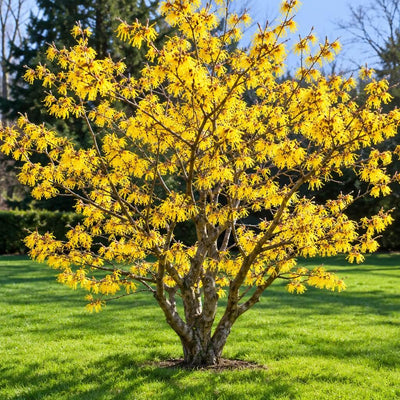
Yes. NC State Extension lists songbirds, ruffed grouse, quail, wild turkeys, chipmunks, black bears, foxes, white-tailed deer, skunks and squirrels among the animals that eat the nuts. Grouse and deer also eat the catkins in winter. The dense thickets give songbirds nesting cover, and the leaves feed the caterpillars of giant silk moths. Hazelnut pairs well with spicebush and witch hazel in a wildlife hedgerow.
What problems affect hazelnut trees?
American hazelnut has no serious pest or disease problems in most yards. Possible minor issues include Japanese beetles, scale, leaf spots and moderate deer browsing. The disease to know is eastern filbert blight. American hazelnut is resistant and rarely shows serious symptoms, but Rutgers notes that it can carry the fungus. That matters only if you also plan to grow European hazelnuts, which are highly susceptible.
Can you use hazelnut as a privacy hedge?
Yes. Because it suckers and fills gaps on its own, a row of hazelnuts planted about 6 feet apart becomes a dense, informal screen within a few seasons. The USDA recommends it for windbreaks, erosion control and wildlife cover, and it turns yellow to orange and red in fall. For more hedge choices, see our privacy shrubs and nut trees, or read hazelnut trees for shade in small yards and our chart of native fruit and nut trees by zone.
Frequently asked questions
How tall does a hazelnut tree get?
American hazelnut usually grows 8 to 12 feet tall and 8 to 13 feet wide, occasionally reaching about 15 feet in rich soil.
Do you need two hazelnut trees to produce nuts?
Yes. Hazelnuts are wind-pollinated and self-incompatible, so plant at least two near each other for a good nut crop.
When do hazelnuts ripen?
American hazelnuts ripen from late summer to early fall, roughly July to October depending on your region. Pick when the husks begin to brown.
Is a hazelnut a tree or a shrub?
American hazelnut is a multi-stemmed shrub that spreads by suckers. You can train it to a tree-like form by removing suckers each year.
Are American hazelnuts edible?
Yes. The nuts are small, about half an inch, but sweet. Eat them raw or roasted, or grind them into flour or nut butter.
What zone do hazelnut trees grow in?
American hazelnut is hardy in USDA zones 4 to 9 and is very cold-hardy across the eastern and central United States.
Can hazelnut grow near black walnut?
Yes. The Missouri Department of Conservation notes that American hazelnut tolerates nearness to black walnut.
Is American hazelnut resistant to eastern filbert blight?
Yes. American hazelnut is resistant and rarely shows serious symptoms, but it can carry the fungus that harms European hazelnuts.
Shop hazelnuts and native nut trees


TN Nursery was founded in 1959 by Roscoe Tate and grows native trees and shrubs on 170 acres in Tennessee. Our hazelnuts are field grown, dug while dormant and shipped bare root.
Sources
- NC State Extension Plant Toolbox: Corylus americana
- Missouri Department of Conservation: American Hazelnut
- University of Minnesota: American Hazelnut
- Rutgers Cooperative Extension E368: Choosing Plants for a Hazelnut Orchard
- Rutgers Organic Agriculture: Hazelnuts
- USDA NRCS Planting Guide: American Hazelnut