
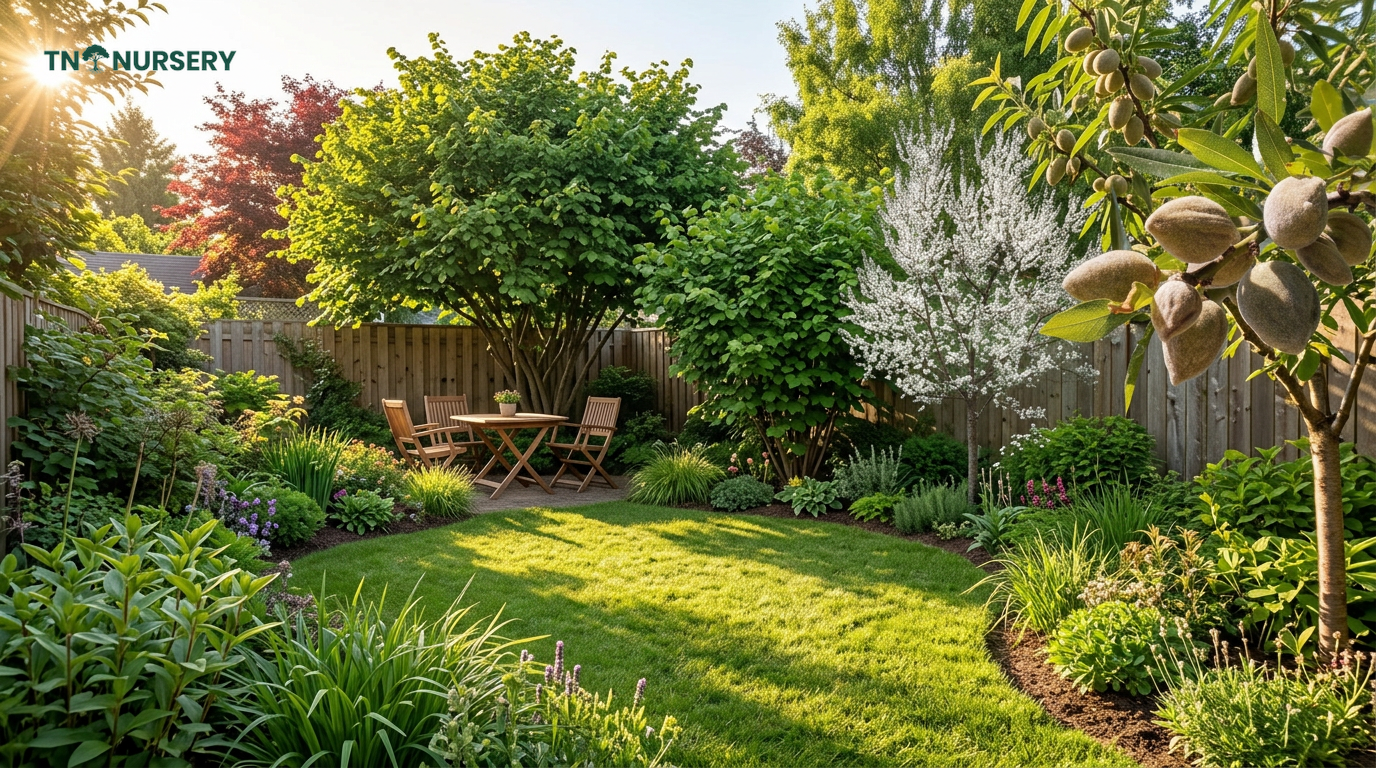
Small Yard Shade Trees Start with Hazelnut
We grow Hazelnut Trees for tight spaces, with a dense 10–15 ft. canopy, native strength, and low-maintenance value for home gardens that need shade without crowding.
What are the best small yard shade trees to buy?
- Why hazelnut works so well in tight spaces: moderate scale, usable shade, and nut production in one planting
- When native trees for partial shade handle clay, slope, and mixed light better than short-lived ornamental picks
- How to compare nut-bearing and fruiting choices by mature spread, root habits, cleanup needs, and canopy density
- What to check before buying: maintenance level, soil tolerance, and whether you need filtered or dense shade
How to Choose Small Shade Trees That Actually Fit
When you shop for small yard shade trees, start with mature size, not the tag photo. A young tree can look modest in a pot, then spread far wider than a patio bed in ten years. We always tell customers to measure overhead wires, rooflines, and the distance to walks before they fall for spring color alone.
How to choose the right small yard shade trees?
Match the tree to the light you have. If your yard gets morning sun and afternoon cover, many trees can adapt. If the spot stays dim all day, your choices narrow fast.
Choose Mature Size Before You Choose Looks
Small trees need room at the top and at the roots. Look, a tree that tops out at a modest height still needs enough width to form a useful canopy. Keep in mind that tight planting often means more pruning, more leaf cleanup near gutters, and more stress during dry spells.
- Check height and spread: Plan for the full canopy, not the starter size.
- Watch the root zone: Leave open soil around the trunk.
- Think about use: Shade for a bench needs a different shape than shade near a driveway.
Filtered Shade vs. Heavy Shade
Many people searching for trees that grow in shade really need trees that tolerate partial shade. That matters. Hazelnut can handle some shade, but heavier nut production usually needs more sun. So if harvest matters as much as cooling the yard, give it brighter exposure.
What are the best small yard shade trees to buy?
The best pick is the one that fits your USDA zone, soil, and maintenance tolerance. We suggest browsing our Nut Trees, Native Trees, and Shade Trees collections with those limits in mind first.
Native Adaptability Matters
Native trees for partial shade usually handle local weather swings better than fussier choices. And they often feed birds, pollinators, and other wildlife through catkins, nuts, or shelter. That gives you more than summer cover.
Plan for Multi-Season Value
Good yard planning goes beyond July shade. We like trees that earn their space with spring bloom, fall color, edible nuts, or habitat value. But be honest about cleanup. Nut-bearing trees can drop husks and shells, which is fine in a naturalized corner and less ideal right over a main walkway.
Pick for the site first. Beauty lasts longer when the tree is not struggling.
Under the canopy, some homeowners also look for shrubs that grow in shade or grass that grows in shade to finish the area. We suggest keeping the base simple at first, then adding plants after you see how dense the canopy becomes over a full season.
Our Top Pick for Small Yard Shade Trees

American Hazelnut for Light Shade, Screening, and Edible Harvests
If you need one plant to do several jobs well, this is the one we’d choose. Our Hazelnut Tree grows about 10 to 15 feet tall with a bushy habit, so you get the look of a small tree and the coverage of a screen in tighter spaces. It handles full sun to partial shade, adapts to sandy, loamy, or clayey soil, and gives you dense summer cover, yellow blooms, bright fall color, wildlife value, and edible nuts. Keep in mind, though, fruiting improves when you plant another hazelnut nearby.
- Native, hardy growth that adapts to sandy, loamy, and clay-based soils
- Dense, bushy form for natural hedges, privacy screening, and shelter for wildlife
- Minimal care after establishment, with edible hazelnuts and four-season landscape interest
Compare Small Trees for Shade, Flowers, and Homegrown Harvests
If you're sorting through small yard shade trees, this lineup makes the choice clearer fast. We included our Hazelnut Tree, Hall's Hardy Almond Tree, Black Walnut Tree, Hickory Tree, and American Plum Tree so you can compare space, bloom, fruit, and long-term use in one place.


Frequently Asked Questions
Are hazelnut trees good for small yards?
Yes, they can be a very practical fit for compact spaces. In this guide, we focus on hazelnuts as small yard shade trees because they give you light canopy cover without the broad spread many larger trees develop. You also get a useful landscape plant that suits tighter home gardens. Keep in mind, though, you still need to give the roots and branches room to mature.
Do hazelnut trees grow in shade or partial shade?
Hazelnuts handle partial shade better than many larger shade choices, which is why we include them when customers ask about native trees for partial shade. But they usually perform best with a mix of sun and afternoon shelter, not deep shade all day. So if your yard gets filtered light, that is a better setup than a dark corner under dense canopy.
What are the best low-maintenance trees for home gardens?
For easier care, we usually point customers toward trees that match their zone first and their space second. Hazelnuts fit that goal well because they work in smaller landscapes and do not demand the footprint of a full-sized shade tree. If you want low-maintenance trees for home gardens, start with a site that drains well and avoid overcrowding. That saves more work than any shortcut later.
Can I plant flowering trees in a compact yard?
Yes, if you stay realistic about mature size. Many flowering trees add color and structure to a smaller lot, but you do not want one that crowds the house, fence line, or patio after a few seasons. Look, the best plan is to measure first, then plant once. That simple step prevents expensive pruning later.
What should I plant under small shade trees?
We suggest using shrubs that grow in shade or perennials that can handle filtered light and root competition. In some yards, customers also ask about grass that grows in shade, but under trees, grass often struggles if the soil stays dry from root uptake. So we usually tell people to watch moisture closely and avoid packing the area too tightly.
How does TN Nursery ship live trees?
We ship all items by 3–4 day ground shipping. That gives you a clear expectation before you order from our tree nursery. Once your trees arrive, unpack them promptly and check the roots and soil condition right away.
Does TN Nursery accept returns or offer refunds?
No. We do not offer refunds, and we do not accept returns. If a product issue qualifies and the item is available, we may offer a reshipment. If it is unavailable, we may offer in-store credit. We also do not offer a warranty unless you purchased an extended warranty at the time of order.
How can I contact TN Nursery?
You can reach us at customerservice@tennesseewholesalenursery.com. If you need our mailing address, it is Tennessee Wholesale Nursery, 12847 State Route 108, Altamont TN 37301, United States. And yes, that is the best place to start if you have an order question.
Conclusion
Key Takeaways
- Hazelnut is the strongest all-around choice for practical shade, manageable size, native toughness, and multi-season value.
- American Plum fits better when spring flowers and fruit matter more than nuts.
- Hall's Hardy Almond works best for ornamental planting in sunnier sites.
- Hickory and Black Walnut belong on larger properties because of their mature size.
- Choose by yard size, light exposure, and USDA zone before you plant.
