
Flowers That Bloom in Autumn for Color That Lasts
We built this roundup for homeowners who want late-season color and steady visits from butterflies, bees, and hummingbirds when nectar starts to thin out.
Why Fall Perennials Matter
- How to pick dependable perennial bloomers that return in suitable zones
- Which native and near-native plants help support late-season butterflies
- What works best in full sun, moist soil, or light shade
- How our Fall Blooming Perennials collection helps extend color deeper into fall
How to Choose Fall Blooming Perennials That Last
When you shop for flowers that bloom in autumn, start with the basics that decide success in a real yard. We always tell customers to check bloom window, sun exposure, soil moisture, and mature height before anything else. That simple step helps you get repeat color, better plant survival, and fewer replacements next season.
What are the best flowers that bloom in autumn to buy?
The best picks are the ones that match your USDA zone and your light conditions first. We suggest browsing our Fall Blooming Perennials collection for repeat performers that hold color into early or mid-fall, then leave useful seed heads for birds after bloom.
Look for plants that flower in sequence instead of all at once. Early-fall bloomers carry the garden through warm September days, while later selections keep color going after nights turn cooler. And if your yard gets dry by late summer, choose plants that can handle average moisture instead of thirstier picks.
How to choose the right flowers that bloom in autumn?
Start with where you plan to plant them. Full sun spots usually give you the heaviest bloom, while part sun areas often stretch bloom a bit longer in warmer regions. Keep in mind that taller perennials can flop in rich soil, so give them room and avoid crowding the front edge of a walkway.
- Zone match: Buy plants suited to your USDA zone for stronger root establishment.
- Water grouping: Place plants with similar moisture needs together.
- Bloom timing: Mix early-fall and late-fall color for a longer display.
- Height: Put shorter growers in front and taller stems behind.
- Wildlife value: Choose blooms for pollinators and seed heads for birds.
Questions shoppers ask before planting
We hear a few of the same questions every fall. Are dahlias perennials? In some climates, yes, but many homeowners treat them as tender plants because cold winters can damage roots. Are gladiolus perennials? Sometimes, but they are often less reliable for repeat color than hardy perennial choices. People also ask about flower bulbs, and they have their place, but established perennials are usually the easier route for low-maintenance fall color year after year.
"Choose for your zone first, then for bloom color. A plant that survives winter gives you far more value than one season of flowers."
If you want pollinator traffic, focus on open blooms and staggered flowering. That is the easiest way to add flowers that attract butterflies while keeping the landscape manageable for busy homeowners.
Our Top Pick for Flowers That Bloom in Autumn

Goldenrod for Late-Season Nectar and Easy Fall Color
If you want an easy entry into fall blooming perennials, we’d start with Goldenrod for flowers that bloom in autumn. It blooms in fall with bright yellow color, feeds pollinators when many gardens fade, and fits naturally into meadow edges, borders, and native-style plantings. And if allergies worry you, keep this in mind: goldenrod often gets blamed, but ragweed is usually the real problem.
- Bright yellow fall blooms that keep color going late in the season
- Pollinator-friendly planting that supports bees and flowers that attract butterflies
- Adaptable in zones 3–9 with full sun to partial shade exposure
Shop 10 dependable flowers that bloom in autumn and attract pollinators
We built this roundup to help you stretch nectar season from late summer into fall with reliable perennials for home landscapes. You’ll find sunny border staples, moisture-loving natives, and naturalized picks that answer the same practical question behind “are dahlias perennials” with plants…


Build a Border With Flowers That Attract Butterflies
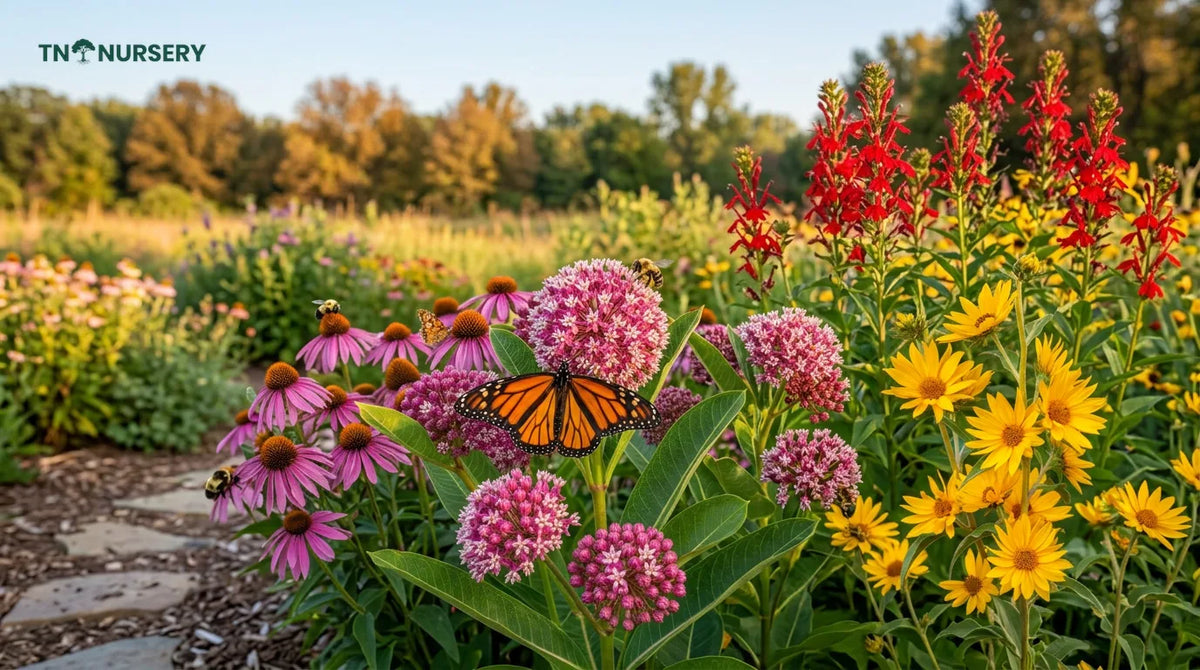
Plant these four in repeating drifts for a border that carries color into fall. We pair red Cardinal Flower, blue Great Blue Lobelia, fragrant Garden Phlox, and late yellow Maximilian Sunflower so you'll get height, contrast, and reliable flowers that bloom in autumn.
How to Layer a Fall Bed That Stays Full
If you want flowers that bloom in autumn to read as a finished garden, not a patchy late-season rescue, build the bed in layers. We start with height in back, repeat medium plants through the center, and tuck lower companions along the edge. That simple structure keeps color moving from summer into fall, even when one plant pauses between bloom cycles.
How to choose the right flowers that bloom in autumn?
Choose by mature height, bloom shape, and zone fit first. Then group plants with similar soil moisture needs, and leave enough space for airflow so foliage dries faster after rain.
Build the back layer first
Put your tallest perennials at the rear or center of an island bed. Upright spikes give the whole planting a backbone. They also keep rounded and daisy-shaped blooms from looking flat. This is where many shoppers ask about are gladiolus perennials. They can be seasonal accents in some climates, but a perennial framework gives you the stronger long-term return.
Fill the middle with the main color mass
The middle layer should carry the biggest share of bloom. We like broad drifts here, not single plants dotted around. Pair upright forms with daisy faces and rounded flower clusters. That mix feels fuller and pulls in more movement from flowers that attract butterflies. For color, warm yellows and reds look richer when you cool them down with purple or blue nearby.
Finish the front edge
Use lower growers and naturalizing companions at the front. They soften the bed line and hide bare stems as taller plants stretch upward. Keep in mind, tighter spacing may look full in year one, but it often cuts airflow and raises disease pressure by late summer.
What are the best flowers that bloom in autumn to buy?
Start with a proven perennial mix from our Fall Blooming Perennials collection. If you are comparing perennial structure with short-term flower bulbs, here is the plain answer: bulbs can add a sharp burst of color, but perennials give you the repeat framework that keeps the bed from feeling empty next September.
- Back layer: tall, upright bloomers for height and late-season structure
- Middle layer: repeated clumps with daisy or rounded blooms for color mass
- Front edge: low companions that naturalize and cover open soil
- Planting rule: group by moisture needs and match choices to your zone
A fall bed lasts longer when bloom time overlaps by a few weeks, not by accident, but by plan.
And if you are still wondering are dahlias perennials, the answer depends on your winter conditions. In many home landscapes, they need more attention than a hardy perennial backbone. So start with the long-lived structure first, then add seasonal color where you want extra drama.
Frequently Asked Questions
What are the best flowers that bloom in autumn for pollinators?
For late-season color and insect activity, we point customers to our Fall Blooming Perennials collection. Flowers that bloom in autumn help fill the gap when summer beds start to fade. You'll usually get the best pollinator traffic from daisy-shaped blooms and open flower forms, since bees and butterflies can land and feed more easily. If your yard feels quiet in September, this is the group we would plant first.
Which flowers attract butterflies in late season?
Butterflies look for easy nectar access late in the season, so open, bright blooms usually perform better than tight double flowers. In our fall-blooming selection, you'll want plants that keep flowering as days shorten and temperatures cool. Look, placement matters too. Put them in full sun and out of strong wind, and you'll see more feeding activity.
Are dahlias perennials?
Yes, dahlias are perennials in warm enough zones. That said, the answer to are dahlias perennials or annuals depends on winter cold in your area. In mild zones, they can return. In colder zones, freezing soil can kill the tubers, so many homeowners treat them like seasonal plants or lift them before hard frost. Keep that tradeoff in mind if you want low-maintenance beds.
Are gladiolus perennials?
Are gladiolus perennials? They can be, but only where winters stay mild enough for the corms to survive in the ground. In colder USDA zones, they often need to be lifted and stored after frost. So if you want a plant you can mostly leave alone year after year, check your zone first before planting gladiolus.
Are gerbera daisies perennials?
Gerbera daisies are perennial in warm climates, but they are not dependable outdoor perennials everywhere. Cold, wet winter soil is usually the problem. If you garden in a cooler zone, treat them carefully and expect less winter survival than tougher fall perennials.
When should I plant fall blooming perennials?
We recommend planting when the soil is workable and roots have time to settle before hard frost. Early fall often works well because the ground is still warm, and plants can focus on root growth instead of summer heat stress. But if your first freeze comes early, don't wait too long. A few extra weeks in the ground can matter.
How do I choose plants for my USDA zone?
Start with your USDA zone, then match it to the plant's cold tolerance before you buy. We always suggest choosing for winter survival first and bloom color second. It sounds less exciting, sure, but it saves money and replanting later. If you need help, contact us at customerservice@tennesseewholesalenursery.com.
How does TN Nursery ship live plants, and what is your return policy?
TN Nursery ships all items via 3-4 day ground shipping. We do not offer refunds and we do not accept returns. If a problem qualifies and stock is available, we may offer a reshipment, an extended warranty on a plant, or in-store credit if the product is unavailable. For support, email customerservice@tennesseewholesalenursery.com or write to Tennessee Wholesale Nursery, 12847 State Route 108, Altamont TN 37301, United States.
Conclusion
Key Takeaways
- Combine dependable perennial bloomers with short, mid-height, and taller plants for a fuller fall display.
- Choose plants with staggered bloom windows so nectar stays available late in the season.
- Match every planting choice to your growing zone for better long-term survival.
- Even a small border can support pollinators when you plant with purpose.
