
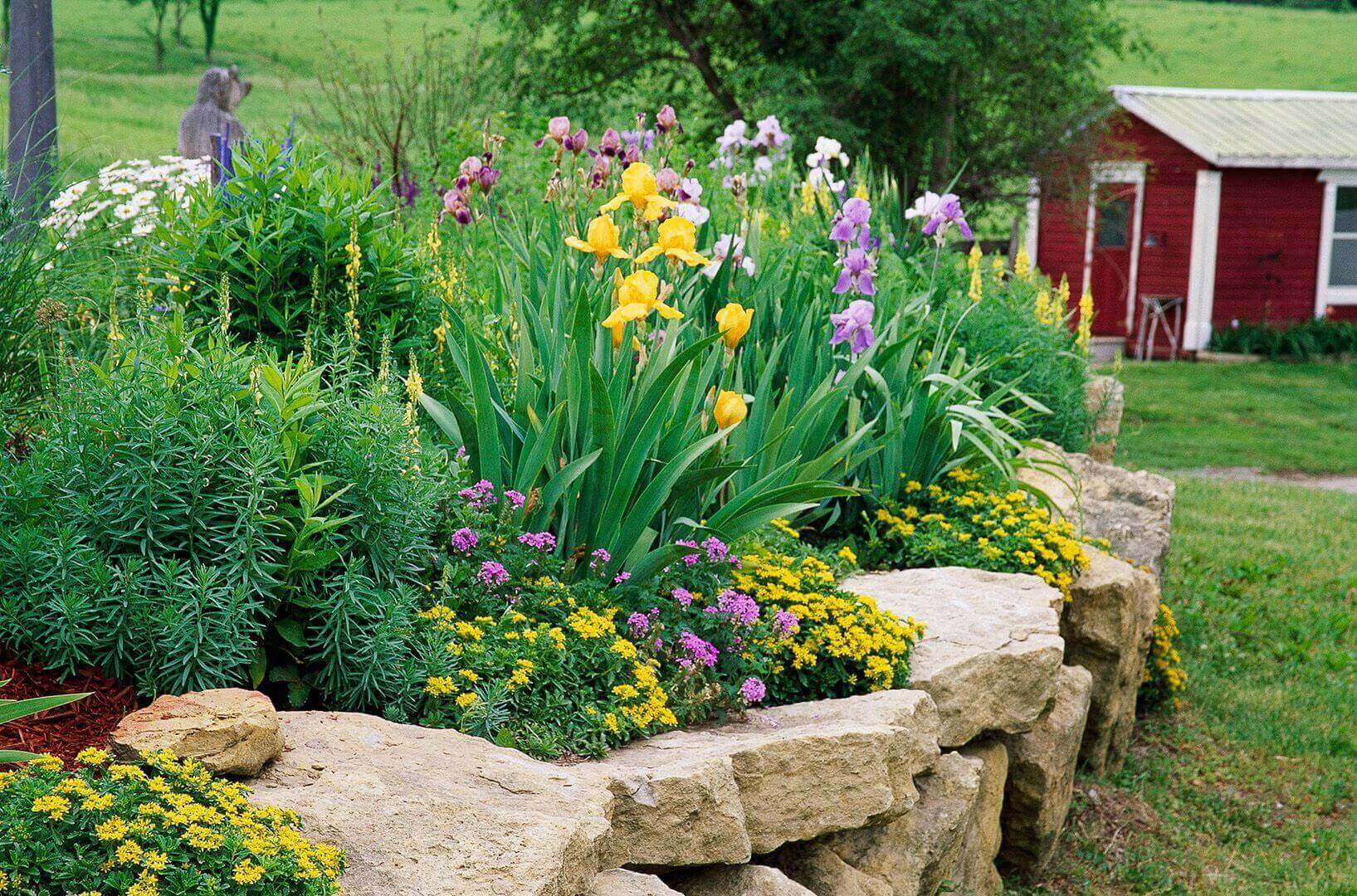
Perennial plants appear bright and radiant, and they need a very low maintenance cost as compared to annuals in the garden. Continuous blooming perennials serve a pollination purpose, and they never fail to come back, but they come back better with the long-blooming perennials. In TN Nursery, we also found out which plant flowered the longest and most prettily of any in the entire state of Tennessee and how to select the plant that would be a long-term supplier.
Why Choose Long-Blooming Perennials?
Annuals cannot compete with perennials, as they will grow a deeper root system and come back every year naturally, which contributes more organic content to the soil and is also reported to stimulate the existence of microbialities in the soil.
The long-lasting flowering perennials will give regular supplies of nectar and pollen to bees, butterflies, and hummingbirds and are most penetrative. The continuous blooming perennials that bloom throughout the entire year will also save a lot of money since, once the perennial is planted, it will only require some deadheading and annual mulch in order to keep the soil alive. TN Nursery highly encourages the use of long-blooming perennials as staples of a low-effort, high-impact Tennessee garden. The biology and seasonal behavior of perennial plants are well covered in articles on perennial plants.
Top Long-Blooming Perennials for Your Garden
Long-lasting flowering perennials are designed to endure Tennessee's climate and are regarded as a good source of seasonal color with the least care. These TN Nursery varieties are among the best continuous-blooming perennials that can be adopted in Tennessee gardens.
Tall Phlox
This is a large native perennial (Phlox paniculata) and creates massive, potent clusters of flowers that are pink, purple, and white from midsummer to the earliest weeks of autumn. The Tall Phlox is a hummingbird- and butterfly-drawing plant, highlighted by the duration of its flowering time, growing 3–4 feet tall. It is one of the prettiest, colorful perennials that bloom all summer in Tennessee garden borders.
Maximilian Sunflower
This is a native erect perennial (Helianthus maximiliani) planted in heaps of golden-yellow flowers throughout the end of the summer up to the fall, when many other long-blooming perennials are long past. The Maximilian Sunflower is 5–10 feet tall and produces plenty of pollen and nectar, which ensures that the pollinating insects do not die in the rest of the season. It is a great bloom, an all-summer perennial choice when it is required to lengthen late flowering.
Tiger Lily
A decorative perennial (Lilium lancifolium) that is bold in color and will bloom in the rose gardens during midsummer. The Tiger Lily is 3–4 feet tall and also very easy to naturalize. It needs almost no maintenance and comes back even stronger. It has been among the most impressive long-lasting flowering perennials to present the Tennessee landscapes with a lively exhibition of color.
Great Blue Lobelia
This is a native herbaceous perennial (Lobelia siphilitica) that is flower-spiking in the wet, partly shaded gardens, fading to a vivid blue-purple. The Great Blue Lobelia grows 2–3 feet tall and is very beautiful to the native bees and the hummingbirds. It is an excellent perennial that blooms all summer, an option for shaded Tennessee borders where coloring is required in the late season.
Periwinkle Plants
It is a low-growing perennial (Vinca minor) that carries jubilant purple-blue flowers in early spring and throughout the summer period on the shaded parts of the garden and even on slopes. The Periwinkle Plants multiply throughout the season into thick weed-smothering mats of successive color as every season shifts. They are among the most colorful perennials that bloom all summer, which give minimal cover on the surface at ground level in Tennessee landscapes.
Designing a Garden with Long-Blooming Perennials
These continuous blooming perennials, where applicable, should be used where they are chosen to give overlapping periods during the spring, summer, and fall.
- Layer bloom times: Until the first frost, one may count on the perennial continuity of color by planting long-blooming perennials that bloom at a variety of early, middle, and late times in the season.
- Plant in odd numbers: Plant blooming all-summer perennials in threes or fives as opposed to singly because of a greater visual effect and proximity to pollinating insects.
- Consider heights: For achieving depth and continuous interest at different heights, it is advisable to plant tall, colorful perennials that bloom all summer, like Maximilian sunflowers, alongside low-growing Periwinkle Plants.
Care Tips for Continuous Blooming Perennials
Even the long-blooming perennials that blossom over a lengthy period of time are simpler to manage with a few routine habits. These tips will make sure that even the survival of the continuously blooming perennials will not end up in a yearly cycle.
- Deadheading: This method is applied to stimulate the growth of flowers all season long by removing all the spent blooms from perennials that bloom all summer.
- Mulching: 2–3 inches of organic matter should be applied on all long-lasting flowering perennials every year to keep the soil moist, regulate temperature, and provide soil organisms with nutrients as it decomposes.
- Dividing: The spreading, blooming all-summer perennials are all divided every 3–4 years, not only as a stimulus to healthy growth but also as a prevention of congestion and overcrowding in the already existing beds.
- Watering: Watered deeply twice in the first year of growth, most long-blooming perennials should find adequate water in natural rainfall in Tennessee once established.
TN Nursery consistently observes that colorful perennials that bloom all summer, planted into compost-amended soil with regular deadheading, produce significantly longer and more impressive bloom displays than those planted without proper preparation.
Conclusion
The long-blooming perennials can decorate Tennessee landscapes and transform gardens into beautiful, colorful, and low-care facilities with seasonal colors. TN Nursery offers trusted quality plants, including Tall Phlox, Maximilian Sunflower, Tiger Lily, Great Blue Lobelia, and Periwinkle Plants — all proven to provide continuous blooming perennials' beauty across Tennessee landscapes.
FAQs
What are the best long-blooming perennials?
The most reliable long-blooming perennials one can count on to offer a lot of color during a season are Maximilian Sunflower as well as Great Blue Lobelia and can be found in Tennessee yards.
Which perennials bloom all summer?
The special plants involve Tall Phlox and Periwinkle Plants, which are perennials that bloom all summer long until the end of summer in the fall, until the first frost.
Are long-blooming perennials low maintenance?
Yes—the continuously blooming perennials must be agonized over to trim and to rake and, where there are few, to separate when long-rooted.
What is the easiest perennial flower to grow?
Similar to the type of simplest long-lasting flowering perennials are the Tiger Lily and Periwinkle plants—they may grow at a high rate and increase in number at an equally constant rate with little or no care.
Which perennial flowers bloom the longest?
Maximilian Sunflower and Tall Phlox are the types of all-summer perennials that best bloom and also make some of the longest bloom periods in Tennessee gardens.
Can you plant perennials in the summer?
Yes — colorful perennials that bloom all summer may be planted in the early summer with regular watering until they root, and then they will be all right till the fall.
Where can I buy perennial plants online?
TN Nursery deals with long-blooming perennials and continuous-blooming perennials that are of high caliber and have been established to be very competent in Tennessee landscape gardens.


