
The short answer
Evergreen climbing plants hold their leaves through winter, so a fence or trellis stays green all year. Choose by USDA zone and light: zone-matched climbers, such as those in our trellis pack, for sunny fences, and trailing evergreens such as vinca minor, partridge berry and running cedar for shady ground. Plant them bare-root and water through the first winter.
Not every evergreen vine climbs the same way, and that matters more than any list of names. True climbers pull themselves upward by twining stems, tendrils or clinging rootlets, so they need a fence, trellis, arbor or wall to hold onto. Trailing evergreens grow low and knit across the ground, then spill over rocks, banks and low walls, staying green when the lawn and the beds around them go brown. Our Evergreen Vines collection holds both kinds, because most yards have a sunny fence line and a shady corner under trees. Start with the spot you want covered. A sunny fence or trellis calls for a climber; a shaded slope or the ground beneath a tree calls for a trailing evergreen. Then check your USDA hardiness zone against each plant's range, and match its light and water needs to the site. Get those three things right, and a bare-root vine gets the best possible start.
Planting evergreen climbing plants

1. Match the vine to your zone and light
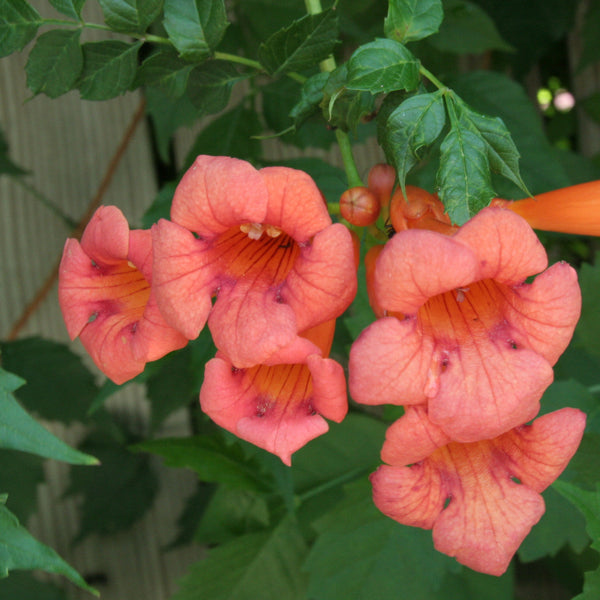
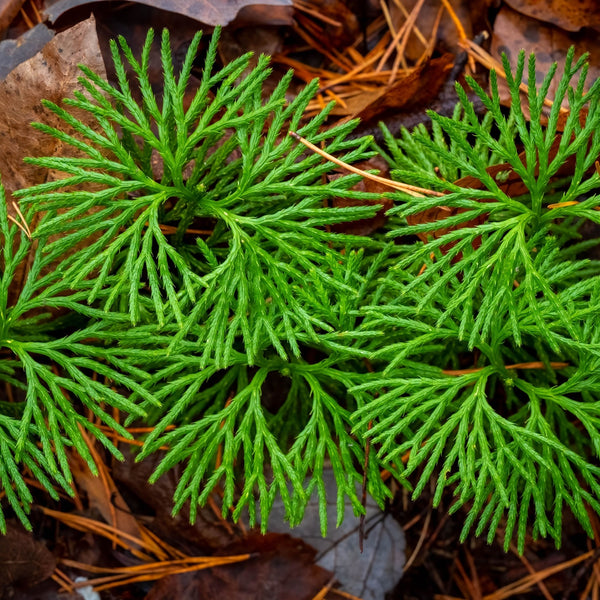
Look up your USDA hardiness zone, then read each plant's range and light needs before you order. Running cedar, for example, grows in zones 4 to 7 and thrives in partial shade with moderate to wet soil. Vinca minor grows in shade and partial sun, and it is valued for holding soil on slopes. Climbers for a fence want the sunniest stretch you have.
Tip: Our trellis and ground cover packs are selected for your zone, so start with your zone.
2. Set a sturdy support before you plant
Put the trellis, arbor or fence wire in place first, so you never disturb young roots later. Climbers in our 15 Trellis Climbing Favorites pack can reach 10 to 40 feet, and a mature evergreen vine carries leaves all year, so its weight builds over time. Choose metal, rot-resistant wood or bamboo set firmly in the ground, and plant a little way out from its base.
Tip: Tie new shoots loosely to the support until they start to grip on their own.
3. Soak and plant the bare roots
Unpack your vines as soon as they arrive and soak the roots in a bucket of water while you dig. Make each hole wide enough to spread the roots out flat, set the crown level with the soil surface, and backfill with the soil you removed. Firm it gently with your hands, then water slowly until the soil is settled around every root.
Tip: For ground cover, space plants in a staggered pattern so they knit together into one carpet.
4. Water and mulch through the first winter
An evergreen keeps losing moisture through its leaves in winter, so a new vine needs damp soil going into the cold. Water deeply each week the ground is not frozen and rain is scarce. Spread a few inches of shredded bark or leaf mulch around the base, keeping it off the stems. After hard freezes, press back any plants the frost has lifted.
Tip: Partridge berry and running cedar love a mulch of shredded leaves, like their woodland home.
Evergreen ground covers for shade
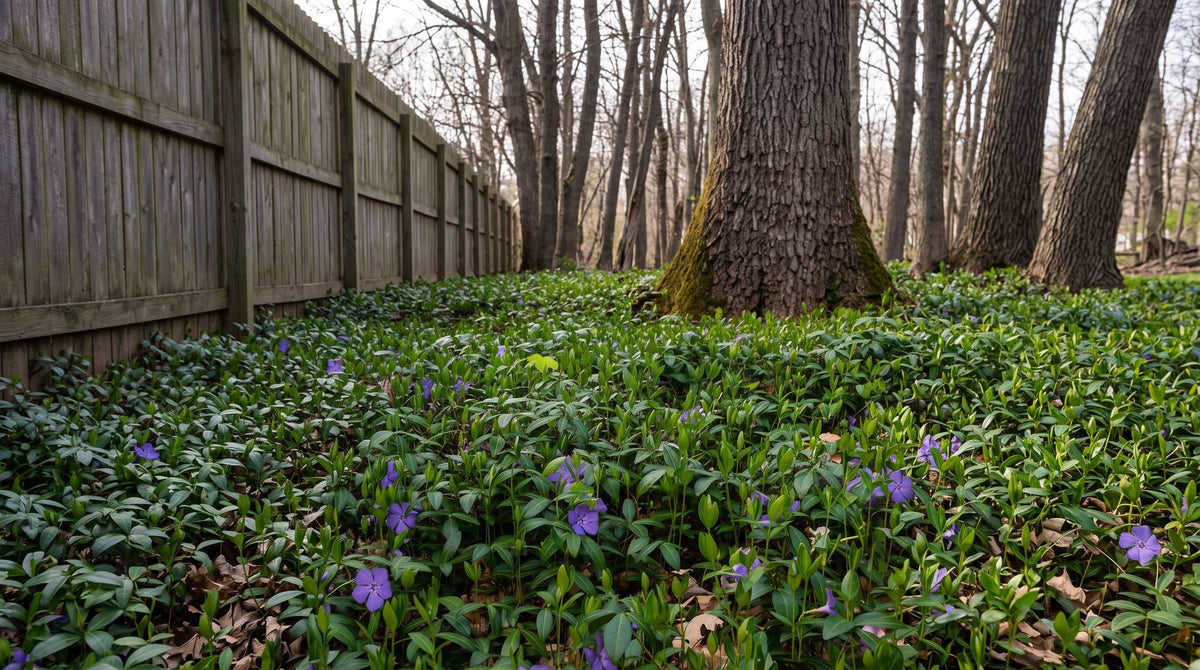
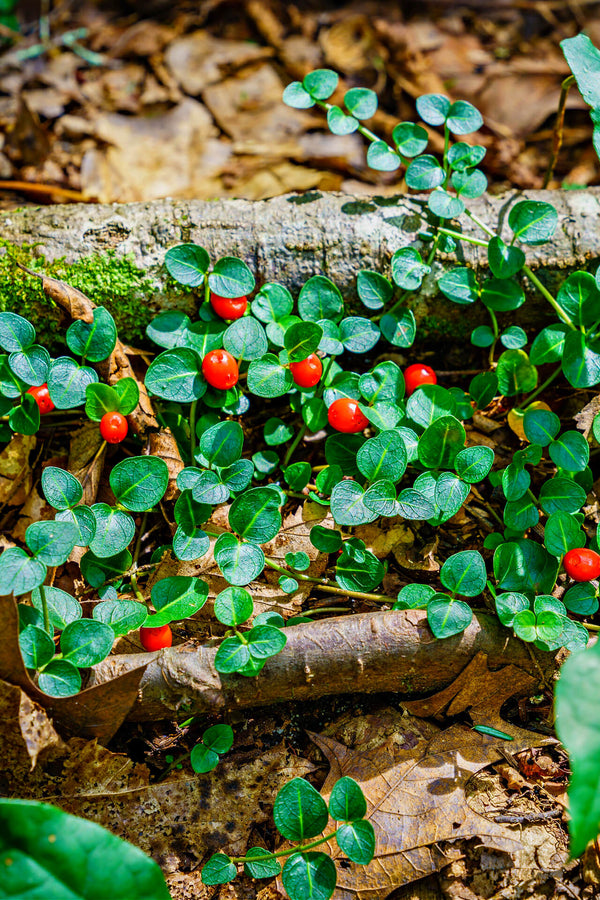
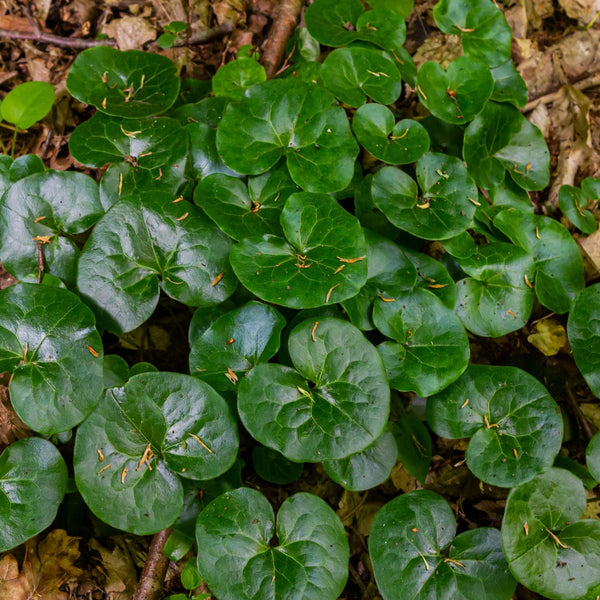
Shade is where evergreen vines earn their place, because grass thins out beneath trees and on north-facing banks. Here the low, trailing evergreens do the work that a climber would do on a sunny fence. European ginger forms clumps of glossy, heart-shaped leaves 4 to 6 inches tall and grows in partial to full shade with moderate to moist soil; it spreads slowly and looks after itself. Periwinkle (Vinca minor) carpets the ground under groves of trees with glossy leaves and small purple flowers. Partridge berry adds red berries among its tiny paired leaves, and running cedar brings feathery, cedar-like fronds that shine when sunlight reaches them. Mix two or three of these beneath a shade tree or along a wooded path, and the ground stays green through the cold months while the trees overhead stand bare. For a low wall in shade, plant along the top edge so the vinca stems trail down.

Care and keeping
Through their first year, keep the soil evenly moist, and guide new climbing shoots onto the support every few weeks. Trim climbers lightly after their spring growth to keep them inside their space. Trailing evergreens need little more than a leaf mulch each fall, which feeds the soil the way a forest floor does.
Frequently asked questions
What climbing plant is green all year round?
Any true evergreen climber keeps its leaves all year, as long as it is hardy in your zone. Our 15 Trellis Climbing Favorites pack is selected for your zone and is available with evergreen climbers for fences and trellises. On the ground, vinca minor and partridge berry stay green through winter.
What climbing plants don't need sun?
The evergreens that thrive without direct sun mostly trail rather than climb, and they cover shady ground and wall tops beautifully. European ginger grows in partial to full shade, running cedar thrives in partial shade, and vinca minor grows in shade and partial sun. Plant them beneath trees or along wooded paths.
Which evergreen climbing plants are low maintenance?
The trailing evergreens are the easiest to keep. Vinca minor forms a dense mat that acts as a natural weed barrier, and European ginger spreads slowly and looks after itself. For a fence or trellis, plant a zone-matched climber on a sturdy support and trim it lightly once a year.
Evergreen vines compared by zone and light
| Plant | Habit | USDA zones | Light | Growth |
|---|---|---|---|---|
| 15 Trellis Climbing Favorites | Climbs a trellis, fence or arbor | Selected for your zone | Sunny fence lines | 10 to 40 feet tall |
| Vinca Minor Vine | Trails as ground cover | 3 to 9 | Shade and partial sun | Fast-spreading |
| Periwinkle Plant | Trails as ground cover | 3 to 9 | Sun or shade | Spreads across bare ground |
| Partridge Berry | Creeps along the ground | 3 to 9 | Sun and shade | Low and creeping |
| Running Cedar Plant | Creeps along the ground | 4 to 7 | Partial shade | Slow |
| European Ginger | Clumping ground cover | 3 to 9 | Partial to full shade | Slow to moderate |
Habit
- 15 Trellis Climbing Favorites
- Climbs a trellis, fence or arbor
- Vinca Minor Vine
- Trails as ground cover
- Periwinkle Plant
- Trails as ground cover
- Partridge Berry
- Creeps along the ground
- Running Cedar Plant
- Creeps along the ground
- European Ginger
- Clumping ground cover
USDA zones
- 15 Trellis Climbing Favorites
- Selected for your zone
- Vinca Minor Vine
- 3 to 9
- Periwinkle Plant
- 3 to 9
- Partridge Berry
- 3 to 9
- Running Cedar Plant
- 4 to 7
- European Ginger
- 3 to 9
Light
- 15 Trellis Climbing Favorites
- Sunny fence lines
- Vinca Minor Vine
- Shade and partial sun
- Periwinkle Plant
- Sun or shade
- Partridge Berry
- Sun and shade
- Running Cedar Plant
- Partial shade
- European Ginger
- Partial to full shade
Growth
- 15 Trellis Climbing Favorites
- 10 to 40 feet tall
- Vinca Minor Vine
- Fast-spreading
- Periwinkle Plant
- Spreads across bare ground
- Partridge Berry
- Low and creeping
- Running Cedar Plant
- Slow
- European Ginger
- Slow to moderate