
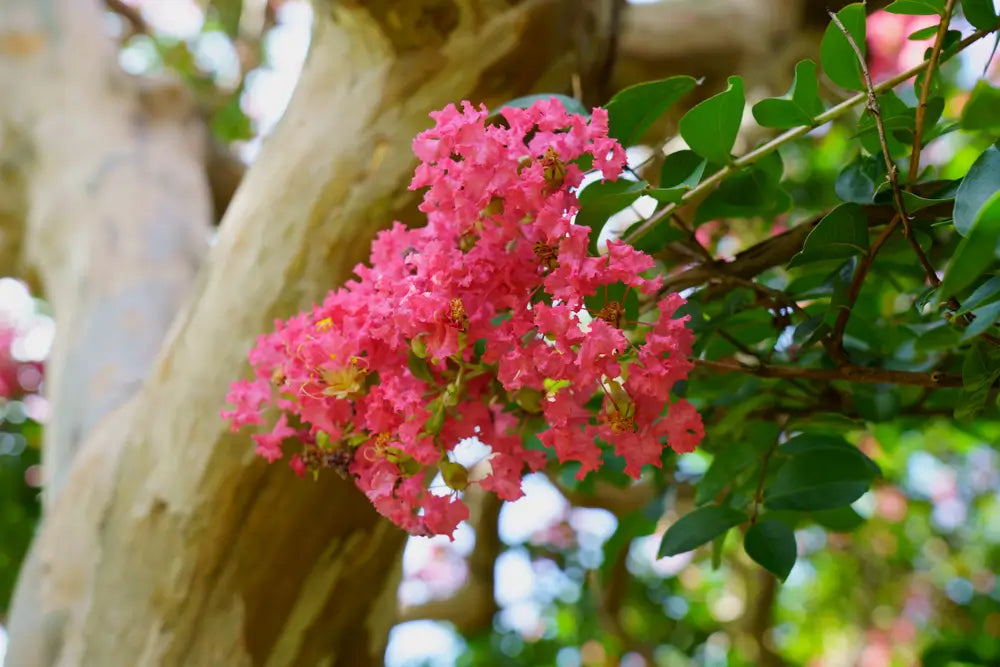
The height and spread of a Red Rooster Crepe Myrtle can vary slightly depending on its growing conditions, especially soil type, water availability, and sunlight exposure. When grown in full sun with well-draining soil, this plant thrives and reaches its potential height more quickly, boasting lush foliage and abundant flowers. Proper care, including regular pruning, can help maintain its shape and encourage healthy growth. Pruning also allows gardeners to control its size and form, making it ideal for those who prefer a more tailored or structured appearance in their landscape design.
Crepe myrtles (Lagerstroemia spp.) are renowned for their vibrant, long-lasting summer blooms and graceful, peeling bark, making them a favorite in gardens across the United States. However, to maintain their beauty and health, proper pruning is essential. The art of crepe myrtle pruning includes various styles, each with its purpose and aesthetic appeal. This comprehensive guide will explore three primary crepe myrtle pruning styles: natural, pollarded, and standard. Additionally, we'll discuss the optimal times to prune these beloved flowering shrubs.
Definitely. With proper pruning and tree management, you can keep Natchez Crepe Myrtle small. Though the tree gets large, with regular trimming and removal of excess branches, you can keep the tree small. To maintain it at a manageable height, the tree must be pruned before the new growth period that begins in the spring. Of course, this type of tree's natural growth habit will still need a lot of regular trimming and maintenance.
This hardy plant thrives in extreme heat and drought conditions which makes it perfect for sandy or dry soil environments. The tree requires less maintenance compared to many flowering tree species. Regular pruning maintains its form and stimulates healthy growth yet this tree requires little additional care. Landscapers choose this plant for its attractive multi-seasonal appeal because its smooth peeling bark maintains visual interest throughout winter months while its bare silhouette remains striking.

Crepe myrtle pruning offers various styles to suit different preferences and garden designs. Natural pruning preserves the shrub's wild beauty, pollarded pruning provides precision and formality, and standard pruning offers elegance and vertical presence. By understanding the techniques and timing associated with each style, gardeners can enhance the health and aesthetics of their crepe myrtles, ensuring they remain a captivating feature in their landscapes for years to come.
Prune the shrub before spring to help strengthen the root system and adaptability of the bush. These shrubs multiply on the western coast of the United States and throughout the southern states. Please provide them with full sun for at least 6 hours per day. The Red Rocket Crape Myrtle grows well in moist, well-drained soils and tends to be drought-tolerant once established.
4. Size Control: Pollarded pruning is ideal for creating compact, formal hedges or defining boundaries in a garden. It allows for precise control of the shrub's size and shape. While pollarded crepe myrtles can appear stark and formal during winter, they burst with foliage and blossoms in the summer, making them an eye-catching addition to formal gardens or landscapes with structured designs.
4. Pruning Timing: Standard pruning is best performed in late winter or early spring when the crepe myrtle is dormant and before new growth begins. Standard-pruned crepe myrtles offer an elegant focal point in gardens and landscapes. Their tree-like appearance provides a vertical element that can be particularly appealing in smaller spaces or as an accent in mixed plantings.
Not only is the Natchez Crepe Myrtle beautiful, but it is also a low-maintenance tree for gardeners. This is due to the fact that it is resistant to both powdery mildew and aphids. This tree does have a natural fault; it is breakable and will need some pruning to keep it from getting weak and overgrown.
Please provide them with full sun and well-drained soil to care for Natchez crepe myrtles. Regular pruning can help shape the tree to promote healthy growth. Natchez crepe myrtles are also known for resisting powdery mildew, making them a reliable choice for gardens in humid climates.
Pruning: Pruning is necessary for the shape and health of Crepe Myrtles. It's best to prune during the dormant winter months to encourage vigorous growth and abundant flowers in the following season. Avoid over-pruning or "topping" the plant, leading to weak growth and fewer blooms.
Bushy Bluestem Pruning: Crepe Myrtles benefit from regular pruning, typically performed during late winter or early spring. When pruning, avoid the controversial practice known as "crepe murder," which involves severe cutting back of branches. Instead, opt for careful pruning to maintain the plant's natural beauty.
Some Crepe Myrtle varieties exhibit a more shrub-like or bushy growth habit. These types are versatile additions to any landscape, suitable for hedges, borders, or mass plantings. Their compact nature makes them easy to manage and shape, allowing for creative pruning and artistic expression.
For pruning, wait until late winter. Remove damaged, crossing, or crowded branches first. Skip severe topping. It creates weak shoots and extra stress. Good pruning builds a stronger shape and cleaner flowering, which is exactly what most homeowners want from a low-maintenance yard.
Standard pruning, known as "tree form" or "specimen tree" pruning, transforms crepe myrtles into small, tree-like specimens. This style combines the beauty of the crepe myrtle's bark and branching structure with the elegance of a tree. Here's how standard pruning is achieved:
These trees are native to swampy areas and do well when planted near water sources. These trees require little pruning since they do not tend to grow too large or become diseased very often due to their hardy nature.
Plant them in well-drained soil with total sun exposure. Pruning in late helps maintain their shape and encourages robust flowering. Water them deeply during dry spells, and you'll be rewarded with a spectacular display of lavender-pink blossoms.
Keep in mind, over-pruning later is usually a fix for poor planning now. We would rather help you space trees by their mature width from the start than see you cut back healthy branches every year.
Natural pruning, also known as "crape murder," involves minimal interference with the natural growth of crepe myrtles . Those who appreciate these shrubs' wild, untamed look prefer this style. Here's how natural pruning is done:
In late winter/early spring, before any new growth has begun, be sure to prune your tree. Having this done helps to maintain the tree's natural shape, and it'll be easier to keep the growth healthy.
These two picks help you compare tree-like structure against shrub-like fullness before you plant. We grouped them here so you can match bloom color, screening needs, and pruning goals to your yard without guessing.
