
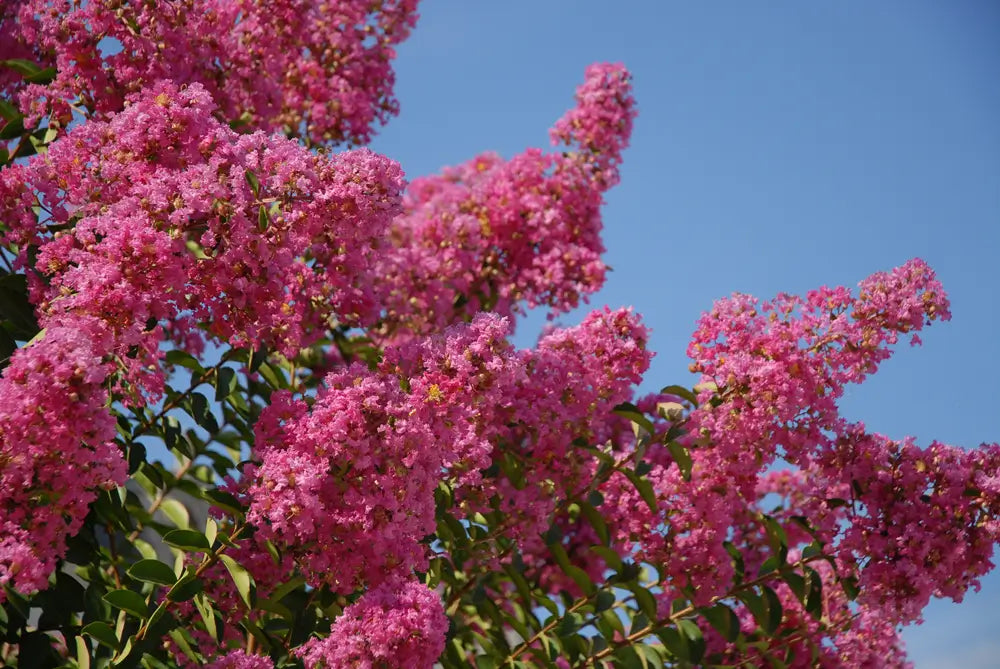
The Muskogee crepe myrtle, scientifically known as Lagerstroemia 'Muskogee,' is a true southern gem. This cultivar is prized for its beautiful lavender-pink flowers that burst in late spring and continue through summer. The Muskogee crepe myrtle is known for its exceptional resistance to powdery mildew, making it a popular choice for gardeners in hot and humid climates. Muskogee crepe myrtles typically reach a mature height of 15 to 20 feet, forming a vase-shaped canopy that provides ample shade in your garden. Their striking, smooth bark peels away to reveal a mottled gray, brown, and pink pattern, adding to their year-round visual appeal. To care for Muskogee crepe myrtles:
Crepe Myrtles have become beloved additions to gardens and landscapes worldwide with their diverse colors, graceful forms, and low-maintenance care requirements. From the enchanting lavender-pink Muskogee crepe myrtle to the fiery blooms of the Red Rocket variety and the elegant white blossoms of Natchez crepe myrtles, each cultivar offers a unique charm that can transform any outdoor space. Whether you're a seasoned gardener or a novice, there's a crepe myrtle variety suited to your preferences and growing conditions. With proper attention to their specific needs, crepe myrtles will reward you with abundant beauty year after year, making them a genuinely enchanting addition to any garden.

Thus, ultimately, the Crepe Myrtle acts as a vivid testament to the beauty and resilience of nature. With its cultural history, importance, and seasonal displays, the plant provides an atmosphere of joy and solace in gardens and public spaces alike. On residential streets, commercial boulevards or the landmark tree on a square, however you find it, the Crepe Myrtle is a friend of all those who love the seasons of nature. A hardy plant, as long as we plant and care for it there will always be the feeling of community mingling with the joys that are found in a constantly blooming garden.
The Red Rooster Crepe Myrtle is often touted as one of the reddest crepe myrtle varieties available, living up to its name with vivid red blooms that capture the attention of anyone who passes by. Its flowers are characterized by a valid deep red color that resists fading under the sun's intense rays. This vibrant hue makes it a standout selection for gardeners who desire the most intense shade of red possible in their landscape. It maintains its brilliant color even in the hottest months, ensuring the garden remains lively and colorful throughout the summer.
The tree maintains visual appeal throughout all seasons through its smooth peeling bark which reveals a decorative pattern of cinnamon and cream colors. The tree displays a stunning mix of fiery orange and red leaves in the fall which maintains its impressive look across different seasons. Professional gardeners and landscapers chose this plant because of its aesthetic value and adaptability to different environments, which makes it an ideal choice for use in both personal and public landscapes.
With their captivating blossoms, exquisite foliage, and easy-care nature, they are a perfect choice for novice and experienced gardeners. Whether you want to enhance your garden's aesthetics, create focal points, or add seasonal color, Crepe Myrtles will be a stunning and rewarding addition to your outdoor space. By following the proper cultivation and care guidelines, you can enjoy the vibrant beauty of Crepe Myrtles year after year.
Andre Michaux the renowned botanist introduced the plant to North America in the late 1700s by bringing it to Charleston, South Carolina. The plant became a Southern garden staple because it thrives in warm climates while resisting drought and maintaining a long-lasting floral display. Selective breeding improved the plant's color diversity along with increasing its resistance to disease and adaptability to different soil types.
Many designers use this plant as part of their landscape arrangements to establish attractive focal points and maintain continuous visual interest throughout the year. The tree's delicate flowers form extended clusters but its distinct peeling bark provides texture to landscapes throughout dormant periods. The tree displays flexibility by functioning in multiple landscapes whether lining walkways, standing alone in gardens, or outlining fences.
This tree expresses its enduring strength and environmental compatibility through a narrative of beauty and resilience with each passing season. The combination of its vibrant colors together with its fragile blossoms and unique bark results in its status as a cherished landscape element across the world. The tree will maintain its heritage of beauty and usefulness in gardens throughout succeeding generations.
When buying a Red Rooster Crepe Myrtle, selecting a healthy plant is critical to its success in the garden. Look for a specimen with multiple strong branches. Nursery staff can often advise on the best practices for planting and care, ensuring that your crepe myrtle thrives from the start. Once planted, a deep watering will help settle them.
The Red Rocket Crape Myrtle requires average amounts of water once well established, and they tend to be very resistant to cold temperatures. The mature plant reaches 20 - 30 feet and can spread about 15 - 20 feet wide. When planting multiple Crape Myrtles Crape Myrtles, keeping them at least 10 feet apart is best.
If you want a crape myrtle tree that blooms hard in summer and stays easy to manage, start with placement. We plant these in full sun , with at least six hours of direct light, and in soil that drains well after rain. Wet feet slow growth fast. Drying out between waterings is much safer.
The tree's blossoms support thriving insect populations which attract frequent visits from birds like hummingbirds. Ecological research shows that certain moth species deposit their eggs on its foliage which helps maintain local ecosystem stability. It creates habitats necessary for pollinators and wildlife that protect biodiversity and improve the visual appeal of its environment.
Homeowners still ask for color with contrast. Tuscarora crape myrtle gets attention for its vivid pink bloom, while black diamond crape myrtle is chosen for dark foliage that makes summer flowers look sharper. And white crape myrtle remains a clean, bright pick near brick homes, dark mulch, and formal entries.
Red Rooster Crepe Myrtles are renowned for their adaptability and hardiness and can withstand various soil types and weather conditions. Proper planting and care will reward gardeners with years of vivid color and natural beauty, embodying a true blend of elegance and boldness that only this crepe myrtle can deliver.
Small songbirds find refuge in its branches which they utilize as both shelter and nesting sites. This tree provides essential sustenance and protection which makes it vital for wildlife in urban areas where green spaces are limited. The planting of this tree transforms the landscape while maintaining natural equilibrium.
