
Daylilies Perennials and Zone-Smart Planting That Works
See how we build layered beds with spring flower bulbs, hardy garden mums, and the right picks for sun, shade, moisture, and space in zone 7 perennial flowers.
Plant for the Spot, Not the Wish
- Choose plants by zone first, especially if you are planting in Zone 7 or 7b conditions.
- Check sun exposure honestly. Six hours of direct sun is very different from bright afternoon shade.
- Plan for moisture before you plant. Dry slopes and soggy beds need different perennial choices.
- Use low-maintenance combinations that bloom in sequence, so one planting does more work over time.
Match Perennials to Light, Soil, and Upkeep
Before you buy, study the spot first. daylilies perennials usually fit sunny beds with average soil, good airflow, and enough room for clumps to widen over time.
We tell customers to check three things with a shovel and a simple walk-through. Watch how many hours of sun the area gets. Then see whether water drains in a few hours or sits overnight. Last, decide how much spreading room and cleanup work you want.
How to choose the right daylilies perennials?
Start with light, drainage, and winter hardiness. If your planting area gets six or more hours of sun and does not stay soggy, daylilies are often an easy fit.
Full sun vs part shade
Sunny beds usually give you better bloom count and stronger stems. Part shade can still work, especially where afternoons run hot, but flowering may be lighter.
For zone 7 perennial flowers, we usually suggest matching the plant to your summer heat, not just the winter low. Look, a bed that bakes near a driveway acts very differently than a border beside a lawn.
Dry soil vs moist soil
Dry soil favors tougher, established clumps once roots settle in. Moist soil can support bigger growth, but only if it drains well. Keep in mind, wet winter soil shortens the life of many perennials faster than summer drought does.
Good drainage is not a bonus. It is often the line between a plant that returns and one that fades after one season.
Compact beds vs spreading plantings
In narrow foundation beds, choose plants that stay tidy and do not lean into walkways. In wider borders, use mass plantings for repeat color. That is where daylilies earn their space, because the foliage fills gaps even after the first flush of bloom.
Hardy garden mums work well near entries, mailboxes, and patio edges where you want dependable fall color. But give them sun and avoid low, wet pockets.
Low-care vs more hands-on maintenance
Some homeowners want a bed they can mostly leave alone. Others do not mind dividing clumps, trimming spent stems, and rotating bloom seasons. So be honest with yourself before planting.
- Low-care spots: sunny areas with decent drainage and room to spread
- More hands-on spots: mixed borders where you want long bloom succession
- Season-stretching plan: add spring flower bulbs ahead of summer and fall perennials
- Common question: are tulips perennials? Sometimes, but many act short-term in warm, damp gardens
And that is the real test. Perennial performance depends on hardiness, drainage, and your local climate. If you match those first, your planting has a much better shot at lasting for years.
Starter Plant Packages for Zone 7 Perennial Flowers
If you want a simpler way to plant with confidence, we grouped these live-plant packages around real garden goals. You'll find small starter sets, larger mixed packages, and climate-focused picks that help cut down on mismatch, whether you're building around daylilies perennials, adding hardy…


A Classic Foundation for Easy Perennial Planting

Old-Fashioned Perennials for a Familiar, Long-Lasting Garden Backbone
If you want the tried-and-true look that anchors cottage borders and front-yard beds, our 15 Old Fashioned Perennial Favorites gives you that traditional base in one planting. We like this kind of collection for homeowners who want dependable color first, then room to add specialty plants later for shade, wet spots, or dry soil. Keep in mind, even classic picks still need the right siting, since this mix performs best from full sun to partial shade across planting zones 3-9.
- Mixed bloom color for a layered, old-fashioned flower garden look
- Grows in planting zones 3-9, including many zone 7 perennial flowers gardens
- Bare-root plants that ship now for a straightforward start to spring flowering beds
Zone 7 Perennial Flowers for Tough Spots
Easy garden success starts with matching the plant package to the problem. We grouped these picks for deer pressure, wet soil, dry beds, living groundcover, and water edges, so you'll find site-ready options instead of forcing one planting style everywhere.


Build a Perennial Bed With Simple Layers
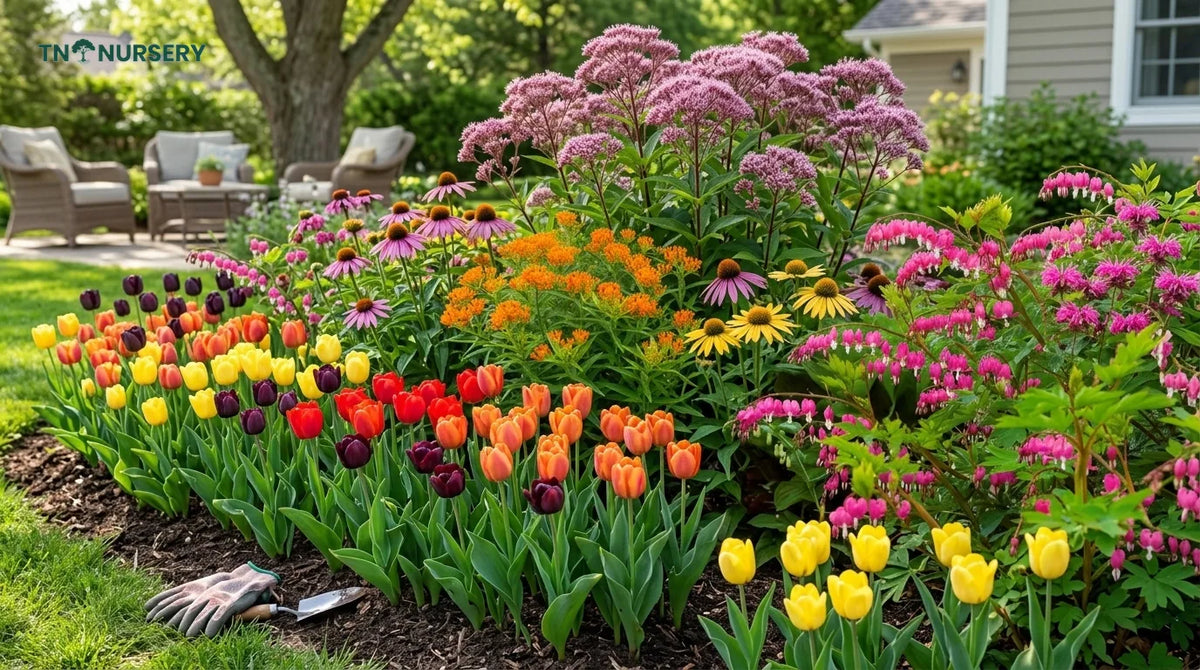
A finished bed starts with placement, not guesswork. When you plant daylilies perennials in clear layers, the whole space reads clean from the curb and stays easier to maintain through summer.
How to choose the right daylilies perennials?
Pick for the light you actually have, then build from back to front. In a sunny bed, start with taller plants in back, place rounded bloomers through the middle, and finish with low spreaders that shade bare soil.
For broad planting ideas, you can browse our daylily perennial collection and our zone 7 perennial flowers collection. If your winters fit that range, this gives you a practical starting point without forcing every bed to look the same.
Simple layouts that work
- Sunny front bed: Put taller clumps in back, daylilies in the middle, and low groundcover along the edge.
- Part-shade side yard: Use fewer colors and wider spacing so the bed does not look crowded by midsummer.
- Rain garden edge: Keep moisture-tolerant plants at the front where runoff settles after storms.
- Dry slope: Pair a classic perennial mix with a drought-tolerant trio and leave room for spread.
What are the best daylilies perennials to buy?
The best choice is the one that fits your site and gives you structure after bloom. If you also want late color, add interest from our hardy garden mums collection so the bed keeps working after summer peaks.
Look, spacing matters more than people think. Give each clump room at planting, mulch lightly to hold moisture, and water deeply during the first season while roots settle in.
Keep in mind, not every favorite acts the same year to year. People often ask are tulips perennials; sometimes they return, but many fade without ideal drainage and winter chill, so treat them as a bonus rather than the backbone of the bed.
"A layered bed looks fuller faster, but the real payoff comes in year two when the plants knit together and weeds have less open soil to claim."
And if you are mixing in spring flower bulbs, tuck them between slower-emerging perennials so early color fades behind fresh foliage. That small step makes the planting look planned instead of patchy.
Frequently Asked Questions
What is the difference between annuals and perennials?
Annuals finish their life cycle in one growing season. Perennials come back for more than one year from the same root system. That matters when you want a bed that fills in over time instead of starting from scratch each spring. In our guide, daylilies perennials are a classic example because they return reliably and handle typical home landscapes well.
Are tulips perennials?
Sometimes, but not always in the way most homeowners expect. If you're asking are tulips perennials, the honest answer is that some tulips can return, yet many bloom best the first year and fade after that. So if you want dependable repeat color, we usually tell customers to treat tulips as less reliable than long-lived perennials.
Are dahlias perennials?
If you're wondering are dahlias perennials, the answer depends on winter conditions. Dahlias are perennial in mild climates, but they are not as cold-hardy as many long-term garden choices. Keep in mind that freezing soil can damage the tubers, so they need more attention than tougher landscape staples.
Are pansies perennials?
Most gardeners grow pansies for cool-season color, not for years of repeat growth. When people ask are pansies perennials, we tell them they are usually treated as annuals or short-lived plants in home beds. They shine in cool weather, but summer heat often cuts the show short.
When should I plant spring flower bulbs?
Plant spring flower bulbs in fall, after summer heat breaks and before the ground freezes. That timing gives roots a chance to form before winter. Look, bulbs need cold soil to set up spring bloom, so waiting until late winter usually means weak results or no flowers at all.
What are reliable zone 7 perennial flowers?
For many homeowners, hardy repeat bloomers and cold-tolerant fall color are the safest picks. Our daylilies collection is a strong place to start, and our fall blooming perennials include dependable choices like hardy garden mums for late-season color. If you are planting in mixed beds, zone 7 perennial flowers should handle both summer heat and normal winter lows.
How often should newly planted perennials be watered?
Water deeply right after planting, then keep the root zone evenly moist while the plant settles in. We suggest checking the soil with your finger instead of watering on autopilot. If the top inch feels dry, water again. But don't keep the bed soggy, because roots need air as much as moisture.
How does TN Nursery ship plants, and what is your return policy?
We ship all items by 3-4 day ground shipping. We do not offer refunds, and we do not accept returns. If there is a problem and product is available, we may offer a reshipment. If it is not available, we may offer in-store credit. We do not offer a warranty unless you purchased an extended warranty at the time of order. Need help? Email us at customerservice@tennesseewholesalenursery.com or write to Tennessee Wholesale Nursery, 12847 State Route 108, Altamont TN 37301, United States.
Conclusion
Key Takeaways
- Choose plants by zone, light, and moisture before you choose by color.
- Start with broad collections, then solve specific problem areas in your yard.
- Daylilies work well for dependable summer blooms, while fall-blooming perennials extend color later in the season.
- Some flowers return differently by climate, so local growing conditions matter.
