
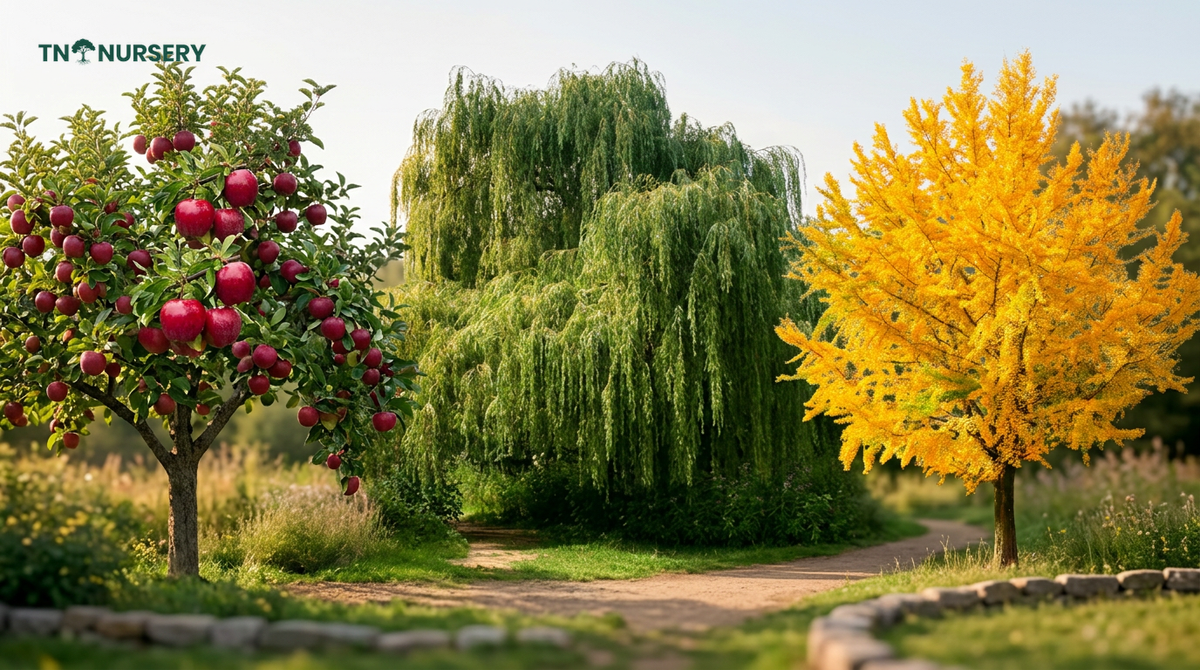
Willow Tree, Apple, or Ginkgo? Our 2026 Yard Guide Starts Here
We compare fruit harvest, flowing shade, and long-term toughness so you can match the right tree to your zone, soil, and real yard conditions.
Choose the Tree by Purpose, Not by Search Bar
- Apple trees suit homeowners who want backyard harvests, spring flowers, and pollinator activity in one planting.
- Willow works best where you need fast growth, soft shade, and a natural look near ponds, swales, or damp ground.
- Ginkgo fits streetside and front-yard planting when you want a tidy form and strong stress tolerance.
- Our broad live-plant catalog and zone-based shopping make it easier to filter trees by climate instead of guesswork.
Our Top Pick for Fast Shade and Water-Friendly Planting

Willow Tree for Quick Growth, Shade, and Graceful Movement
If you want a willow tree that changes the look of your yard fast, this is the one we’d put near open lawn, ponds, or streams. We like it for its familiar weeping shape, quick establishment, and strong growth in moist, well-drained soil. But keep in mind that it matures over 25 feet tall, so you’ll want enough room and careful siting away from structures and utilities. If you’ve been searching for a nursery near me willow tree, this gives you dramatic presence at a mid-range price.
- Fast-growing habit for quicker shade and earlier landscape coverage
- Matures at over 25 feet for a bold screen, strong silhouette, and natural privacy
- Thrives in moist, well-drained soil and helps with erosion control near wetter areas
Choosing Apple, Willow, and Ginkgo for Real Yard Conditions
If you're comparing an apple, a ginkgo, and a willow tree, start with the job you need the tree to do. We guide customers this way every day, because these trees solve very different problems once they are in the ground.
What are the best willow tree to buy?
For most homeowners, the best willow choice is the one planted in a large, open spot with steady moisture. We only suggest willow when you have room for a broad root zone and you want quick shade or a soft, natural screening effect.
Best Tree for Edible Harvest
Apple trees fit sunny yards where you want fruit, spring bloom, and pollinator traffic. If you're already searching for pear trees for sale or thinking about persimmon, you're probably building a home orchard, and apple is usually the first tree we would place near the house for easy picking.
Best Tree for Fast Shade
Willow works best on larger sites, especially where the soil stays damp after rain. But keep this in mind: it is a poor match for tight foundations, dry corners, or small patios. If you're researching plants adaptation in the desert, skip moisture-loving willow and focus on tougher, lower-water picks instead.
Best Tree for Long-Term Structure
Ginkgo is the clean, steady choice for urban lots and low-maintenance landscapes. It handles street-side conditions better than many broadleaf options, and once established, it asks for far less attention than fruiting trees.
How to choose the right willow tree?
Check four things before you plant: sun exposure, drainage, mature spread, and your patience. Apple needs full sun for better fruiting. Willow needs space and moisture. Ginkgo rewards the homeowner who wants long-term shape more than quick results.
- Sunny yard: Choose apple for harvest and blossom.
- Moist low area: Choose willow for fast canopy growth.
- Street-facing or simple-care site: Choose ginkgo for structure.
We also tell shoppers this: metal raised garden beds work well for nearby herbs or vegetables, but trees still need in-ground planning. Their roots, height, and spread are long-term decisions.
Correct plant ID matters. When you're comparing landscape plants, do not guess at ferny or finely divided foliage. Some harmless species can resemble plants that look like poison hemlock, and that is a mistake worth avoiding.
If you've been typing nursery near me or nurseries near me into search, come in with your site notes. We can help you match the tree to the yard, not just the photo.
Compare Favorite Trees From Our Nursery Near Me Picks
These three trees solve very different yard goals. You'll find fruit, fast landscape movement, and bold fall color here, so it's easy to compare beauty and long-term use at a glance.


Frequently Asked Questions
Which tree is best for fruit production?
For dependable backyard harvests, fruit trees are the clear pick. If you want eating fruit from your own yard, start in our Fruit Trees collection. A willow tree gives fast shade and movement, but it will not produce the kind of edible crop most homeowners expect from fruiting trees.
Which tree grows fastest?
Willow tree varieties are usually the fastest choice when you want quick screening or a softer look near water. They put on growth faster than many fruiting trees. Keep in mind, though, fast growth often means more pruning and more surface roots, so give them room away from foundations and tight planting spots.
How do I choose the right tree for my yard and USDA zone?
Start with your zone, sun, and soil. Then match the tree to the job. If you want fruit, shop fruiting trees. If you want shade or a focal point, shop our Home & Garden > Plants > Trees selection. And if you garden in hot, dry areas, think about plants adaptation in the desert before you buy. We always suggest checking mature size too, especially if you plant near drives, patios, or metal raised garden beds.
When should I plant fruit trees in spring or summer?
Spring is usually the better window for most homeowners because roots get time to settle before peak heat arrives. Summer planting can work, but you'll need to water more closely and watch stress sooner. So if you have the choice, plant earlier and avoid the hottest stretch.
Do you sell trees that help with common plant ID questions?
We focus on live plants in our catalog, not plant identification services. But we know shoppers often ask about plants that look like poison hemlock when planning family-safe yards. If you're unsure what is already growing on your property, identify that plant first before adding new trees nearby.
How are orders shipped?
We ship all items by 3-4 day ground shipping. That applies across our plant nursery near me and nurseries near me shoppers who order online from TN Nursery. We keep the process straightforward, and we use the shipping method listed in our policy.
Can I return a tree if it does not work for my yard?
No. We do not offer refunds, and we do not accept returns. If there is a qualifying issue and the product is available, we may offer a reshipment. If it is unavailable, we may offer in-store credit. Also, there is no warranty unless you purchase an extended warranty at the time of order.
How can I contact TN Nursery?
You can reach us at customerservice@tennesseewholesalenursery.com. If you prefer mail, write to Tennessee Wholesale Nursery, 12847 State Route 108, Altamont TN 37301, United States. Look, if you have a question before ordering, contact us first. That is the best way to confirm fit for your yard.
Conclusion
Key Takeaways
- Apple trees fit homeowners who want edible value and a productive home orchard.
- Willow works best where you have space, steady moisture, and want fast shade.
- Ginkgo is the best long-term pick for toughness, tidy form, and strong landscape structure.
- Match your tree to growing conditions first, then choose the look you want.
- TN Nursery offers zone-conscious selections to support better planting success.
