
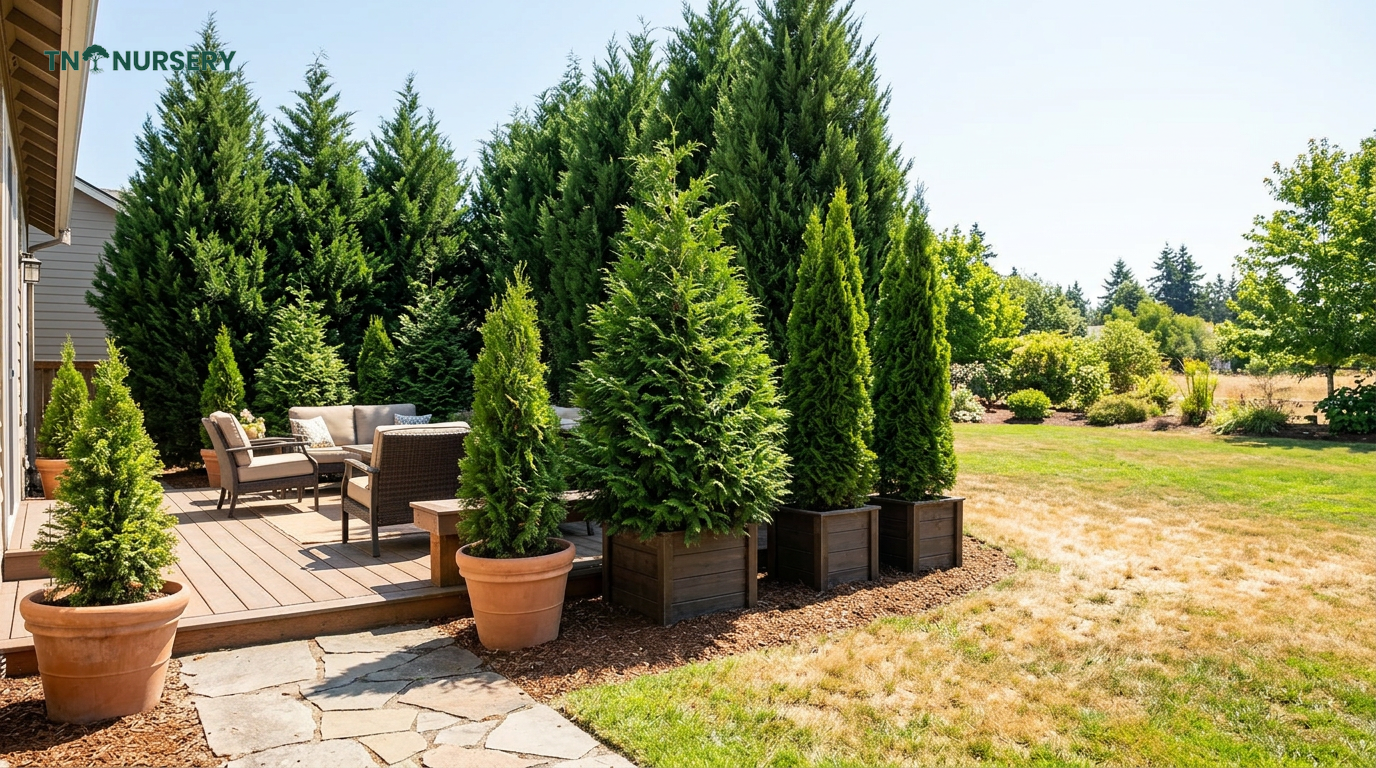
White Cedar Solutions for Hot, Sunny Yards
We help you choose white cedar and other privacy evergreen trees for cooling shade, year-round screening, and zone-ready planting that fits real yard conditions.
Hot Yard, Hard Sun, and Year-Round Screening
- See how evergreens help with privacy, wind buffering, and year-round structure in exposed yards.
- Learn the difference between white cedar, arborvitae, true cedars, junipers, and eastern red cedar.
- Find out how sun exposure, soil moisture, and USDA zone affect long-term plant survival.
- Understand where deer resistant privacy trees fit, especially in rural and edge-of-woods landscapes.
- Get practical ideas for pairing tall screens with shrubs for shade and shade-loving ground layers.
White Cedar Names, Privacy Screens, and Shade Placement
When shoppers ask us for white cedar, they usually mean a tall, narrow evergreen screen. In many yards, that name points to arborvitae, especially American Arborvitae, not a true cedar in the strict botany sense. That sounds fussy. But it matters when you want the right height, width, and winter color.
What are the best white cedar to buy?
If you want a classic living screen, American Arborvitae is usually the clearest match for what most homeowners mean by that name. If you type “cedar” but really want a slim wall of green along a fence or drive, you are often shopping for arborvitae-shaped form more than cedar family labels.
White cedar vs. eastern red cedar
Eastern red cedar is a different plant from the arborvitae many customers picture. It tends to read more rugged and native in the landscape, while arborvitae gives you that tighter, more formal privacy line. Keep this in mind: if deer pressure is heavy, no evergreen is magic, but many buyers start their search with deer resistant plants because browsing can ruin a young screen fast.
- White cedar: often used as a common-name shortcut for arborvitae types
- American Arborvitae: the usual answer when you want narrow screening
- Eastern red cedar: a separate cedar choice with a more natural, less clipped look
- Cedar-like evergreens: many homeowners use broad cedar terms when they really want privacy evergreen trees
How to choose the right white cedar?
Start with sun and placement. For shade trees for hot yards, we tell customers to focus first on western exposures, patios, and the side of the house that bakes in late afternoon. A well-placed tree can cool outdoor sitting areas and help cut heat gain indoors.
For property lines, think about mature width before you plant. Too tight, and you spend years correcting crowding. Too loose, and the screen never closes the gap you wanted.
As taller evergreens fill in, you can soften the base with evergreen hedges and shrubs, then add shrubs for shade and shade loving plants along the filtered edges. Look, that layered approach reads finished, not flat.
"Plant for the size you need in ten years, not the size you see in the pot today."
We keep the process practical. You will find a broad live-plant catalog, zone-based shopping, and clear collection paths like Evergreens and Shade Trees, so you can match your site with more confidence.
Our Top Pick for White Cedar Privacy Planting

American Arborvitae: The Residential White Cedar Screen Tree
If you mean white cedar for a home privacy row, this is the closest fit we’d point you to. Our American Arborvitae Tree grows in an upright, pyramidal form with deep green foliage, so you get four-season structure, useful screening, and a narrower footprint than many larger evergreens. Keep in mind that it establishes best with consistent watering and moist, well-draining soil, especially in sunny sites.
- Upright pyramidal habit with deep green foliage for hedge rows, screens, and year-round structure
- Fast-growing evergreen that reaches about 20 to 40 feet tall with a 10 to 15 foot spread at maturity
- Grows in full sun to partial shade and prefers moist, well-draining soil with steady water during establishment
Plant eastern red cedar and arborvitae for sunny privacy that lasts
Hot, open yards need evergreens that hold their shape in full sun and keep working through every season. We picked these four trees for practical jobs: white cedar style screening, large-scale shade trees for hot yards, and fast privacy where you want coverage sooner.


Frequently Asked Questions
Is white cedar the same as arborvitae?
Yes. In garden talk, white cedar usually refers to arborvitae. If you are shopping for privacy evergreen trees, you will often see arborvitae listed in our Evergreens and Evergreen Shrubs collections.
Which evergreen is best for privacy in a hot yard?
For dense screening, we usually point customers to arborvitae when they want a narrow wall of green. Emerald green arborvitae for privacy works well where you need a tidy shape. Keep in mind, hot sun and dry soil still mean regular watering during establishment.
Are arborvitae deer resistant?
Arborvitae can offer some screening, but we do not treat them as dependable deer resistant arborvitae in heavy browse areas. If deer pressure is strong on your property, start with our Deer Resistant Plants or Deer Resistant Shrubs collections instead.
What is the best evergreen conifer tree for full sun?
If your yard gets long hours of direct sun, juniper is often the tougher pick. Customers comparing types of juniper trees usually want heat tolerance, year-round color, and a plant that handles open exposure better than softer-needled evergreens.
How far apart should privacy trees be planted?
Spacing depends on the mature width of the tree you choose. We suggest checking the expected spread before planting, because tight spacing fills in faster but can crowd roots and airflow later. For evergreen hedges and shrubs, plan for the size they will reach, not the size they are on planting day.
Can I plant shrubs for shade or perennials beneath evergreens later?
Yes, but give the trees time to establish first. Once the canopy and roots settle in, you can add shrubs for shade or shade loving perennials beneath them. Look, the tradeoff is root competition, so smaller companion plantings usually settle in better than large thirsty ones.
How does TN Nursery ship live trees?
We ship all items by 3-4 day ground shipping. That keeps transit straightforward and helps you plan when to receive and plant your order after you buy cedar trees online.
What is TN Nursery’s return policy, and how can I contact you?
We do not offer refunds, and we do not accept returns. If a problem comes up, we may offer a reshipment if the product is available, an extended warranty only if you purchased one at the time of order, or in-store credit if the product is out. You can reach us at customerservice@tennesseewholesalenursery.com or write to Tennessee Wholesale Nursery, 12847 State Route 108, Altamont TN 37301, United States.
Conclusion
Key Takeaways
- Choose Cedar Tree for large spaces that need broad evergreen height and strong visual presence.
- Use American Arborvitae for traditional residential screening and a narrower privacy line.
- Pick Green Giant Arborvitae when you need faster privacy growth and better deer resistance.
- Keep mature size, sun exposure, zone fit, and maintenance time in mind before planting.
- Complete the plan with evergreen shrubs, perennials, and groundcovers suited for spring and summer 2026 planting.
