
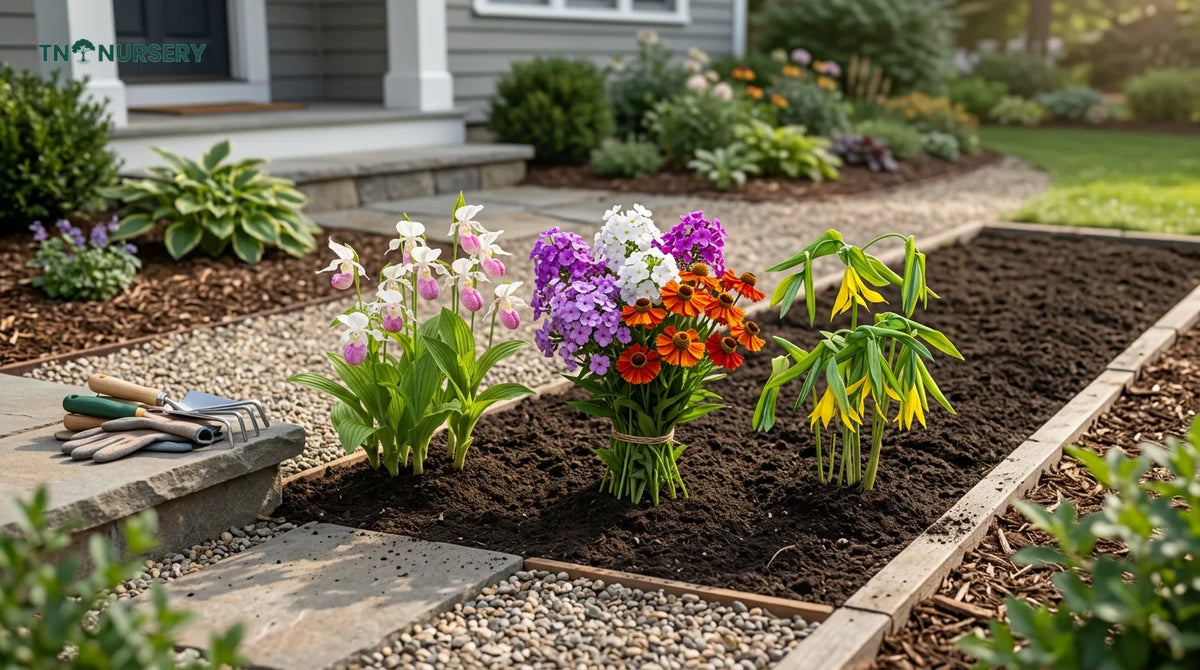
Reset Beds Now With Garden Mums
Late summer is the right time to fill bare spots fast. You'll find bundled color, easier planning, and zone-friendly plants for sale for a polished fall yard.
Back-to-School Garden Prep Starts With Fewer, Better Plant Choices
- Late-season color that helps refresh front beds and entry borders
- Pollinator support from flowering perennial combinations and seed-based fillers
- Shade-to-sun flexibility across our broader live-plant catalog
- Budget-conscious landscape upgrades that fill beds faster with fewer buying decisions
Our Top Pick for Back-to-School Garden Refresh

25 Flowering Plants Collection for Full Beds Fast
When you want broad coverage before fall routines take over, this 25 Flowering Plants Collection keeps the process simple. We send 25 assorted best-selling plants as bare-root perennials, so you can refresh entry beds, mailbox plantings, borders, and cottage-style spaces with mixed bloom color, pollinator appeal, and deer-resistant variety.
- 25 assorted best-selling flowering plants for filling larger garden spaces in one order
- Pollinator-friendly mix that attracts hummingbirds, butterflies, and birds
- Deer-resistant varieties that handle full sun or partial shade in zones 4-9
Layered Beds That Carry Fall Color
Garden mums earn their spot when summer beds start to thin out. We use them as the front-facing color anchor, then build depth behind and below them so your planting still looks full in August and September.
That layered approach is simple. Put your rounded focal plants in the middle view, taller bloomers behind them, and low growers at the edge. You get better coverage, less bare soil, and a bed that still reads as intentional after school starts back up.
What are the best garden mums to buy?
The best ones for a home bed are the plants that fit your light, spacing, and watering habits. We suggest using mums as a seasonal focal point, not as the only plant in the bed, because mixed layers hold shape longer and need fewer fill-in replacements.
blue salvias behind the focal layer
Place taller spikes behind the mums so each plant keeps its outline. Blue salvias perennial forms work especially well in sunny beds because the upright flower wands contrast with the rounded mum shape.
Keep enough room between plants for air to move. In most homeowner beds, crowding causes more trouble than underplanting. Add mulch after planting, but keep it pulled back from the crowns.
How to choose the right garden mums?
Start with the bed edge and work backward. Use lower ground covers in front to knit the soil surface together, then repeat one flower color two or three times across the bed so the whole planting feels connected.
If you want a softer transition into lawn or walkway, add a wildflower seed mix look at the outer edge. Keep it controlled, though. A narrow drift works better than scattering seed across the whole border.
Layering works because each plant has a clear job: height in back, color in the center, and coverage at the front.
plant supports and simple upkeep
Most layered beds need only light maintenance. Water deeply after planting, refresh mulch before cold weather, and use discreet supports where taller stems lean after heavy rain. That small step keeps the bed tidy without turning it into a weekly project.
- Sunny border: mums in repeating clumps, taller salvia behind, low ground cover at the front edge.
- Part-shade foundation bed: mums as color pockets, shade-tolerant perennials between shrubs, ground cover to reduce exposed soil.
- Pollinator-friendly mailbox garden: compact layers with repeated bloom color, airy edge planting, and enough spacing to keep the view clean from the street.
If you are browsing plants for sale, think in groups, not singles. We find homeowners get a stronger result when they repeat the same few plants across the bed instead of mixing too many one-off choices.
Late-Season Bundles That Echo Blue Salvias
We grouped these plant bundles for real yard jobs, not passing trends. You'll find slope coverage, heirloom borders, bold color planting, a wildflower seed mix look with less guesswork, and shade-friendly support that pairs neatly with garden mums.


Late-Season Garden Bed Checklist
Start with the obvious. Pull spent annuals, trim broken stems, and look hard at empty spots before you plant garden mums. You will see the bed more clearly once the tired growth is gone.
Then check the light. Morning sun, hot afternoon sun, and dry shade each call for different picks. We sort our Cool Season Planting Favorites by growing needs, so you can shop by zone first and avoid choices that struggle after one season.
How to choose the right garden mums?
Place them where you need strong color now, not hidden behind taller plants. We suggest anchoring them near walks, porch beds, or mailbox plantings where their rounded shape reads from the street. Keep in mind that dense blooms need deep watering right after planting, especially in warm August and early September soil.
Quick late-season checklist
- Clear out fading annuals and remove weak stems.
- Mark bare patches that need cover before cool weather settles in.
- Set long-blooming perennials at the middle or back of the bed.
- Use a wildflower seed mix only where you can leave space for natural spread.
- Add mulch after planting to slow moisture loss and reduce soil swing.
- Water deeply so roots move down instead of staying near the surface.
What are the best garden mums to buy?
The best placement is usually in front of taller late bloomers, with blue salvias behind or beside them for contrast. If you are planning for next year too, blue salvias perennial color helps bridge summer into fall without leaving the bed flat in September.
Think in layers. Low groundcover can hide open soil, mid-height bloomers carry the main color, and taller stems add movement. And yes, plant supports still help late in the season when rain or wind pushes taller flowers off center.
Practical planting wins over trend chasing. When you match light, moisture, and zone from the start, you usually get better survival than with impulse plants for sale picked only for color.
Look, a tidy fall bed does not need dozens of new plants. It needs better placement, deeper watering, and a few durable layers that hold through the season change.
Conclusion
Key Takeaways
- Bundled planting speeds up fall garden prep and improves bed coverage.
- Choose the 25 Flowering Plants Collection for the fastest full-yard color.
- Use smaller perennial bundles for budget-friendly upgrades in existing beds.
- Ground cover packages help clean up open soil and soften bed edges.
- Naturalized areas benefit from heritage blends and seed-based color mixes.

