American Hazelnut (Corylus americana)
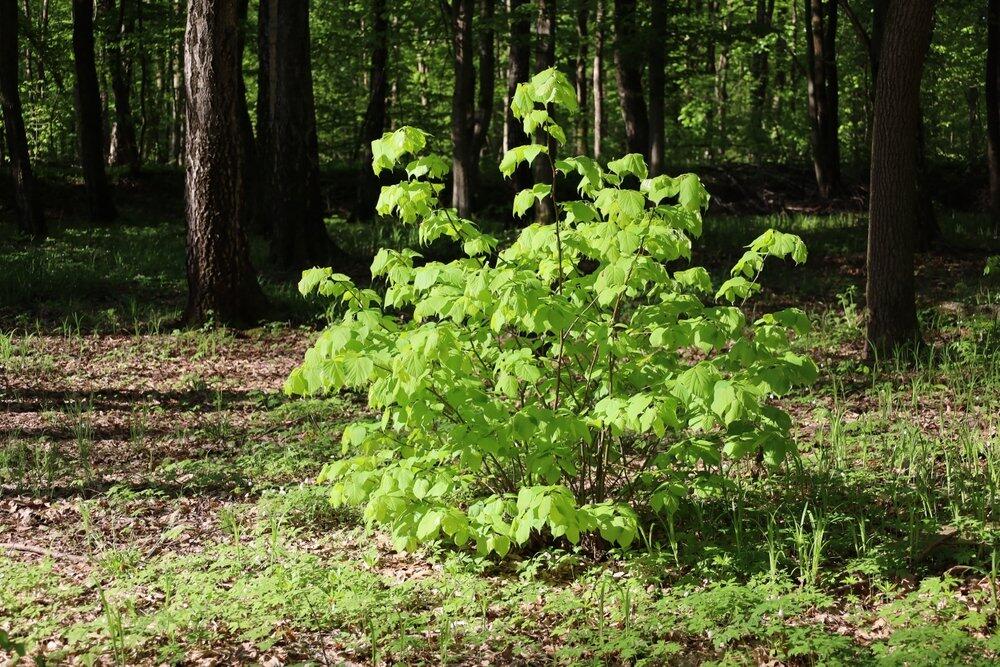
Most people who plant an American hazelnut aren't after a specimen tree — they want a living fence that also feeds them. Corylus americana is a suckering native shrub, 10 to 15 feet tall, that spreads into a dense thicket over time, produces edible nuts by late summer, and turns gold and orange in fall. TN Nursery ships it bare root, Buy 1 Get 1 Free, in 1–2 ft and 2–3 ft sizes, and it's hardy in USDA zones 4–9.
It's native to a wide swath of North America — common from eastern Canada south through New York, Ohio, Kentucky and Virginia, and out toward the foothills of the Rockies. In the wild you'll find it in moist woods and along riverbanks, usually growing in loose colonies rather than as a single trunk.
Why it spreads instead of standing alone
American hazelnut suckers from the base, which means a single plant gradually sends up new stems around itself and fills in as a multi-stemmed colony rather than a lone tree. That habit is exactly why it works so well as a privacy screen or informal hedge — plant a short row and give it a few seasons, and the gaps close in on their own. It adapts to sandy, loamy or clay soil, so the planting site rarely rules it out.
Getting an actual nut harvest
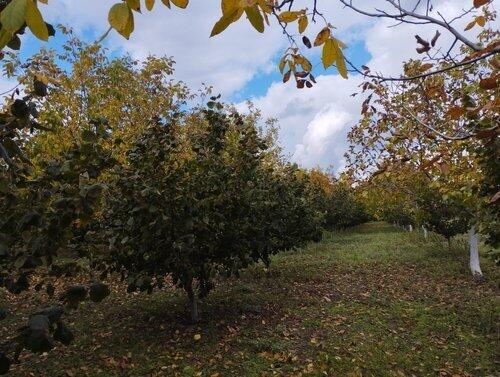
Hazelnut flowers are easy to miss: male catkins dangle and release pollen on the wind in late winter, while the female flowers are tiny red tufts on the same plant. Because it's wind-pollinated and mostly self-incompatible, a lone hazelnut rarely sets a good crop — plant two or more within pollination range and you'll get a meaningfully better harvest. The nuts ripen in late summer to early fall and can be eaten straight off the shrub, roasted, or ground into nut butter.
Sun, soil, and where it fits in a landscape
Give it full sun to partial shade and reasonably moist soil for the best growth, though established plants tolerate drier conditions. Beyond the obvious use as a hedgerow, it works as a wildlife planting, a windbreak component, or simply a native shrub border — birds and small mammals use both the cover and the nuts, and the spring catkins are an early pollen source when little else is blooming.
Planting a bare-root hazelnut
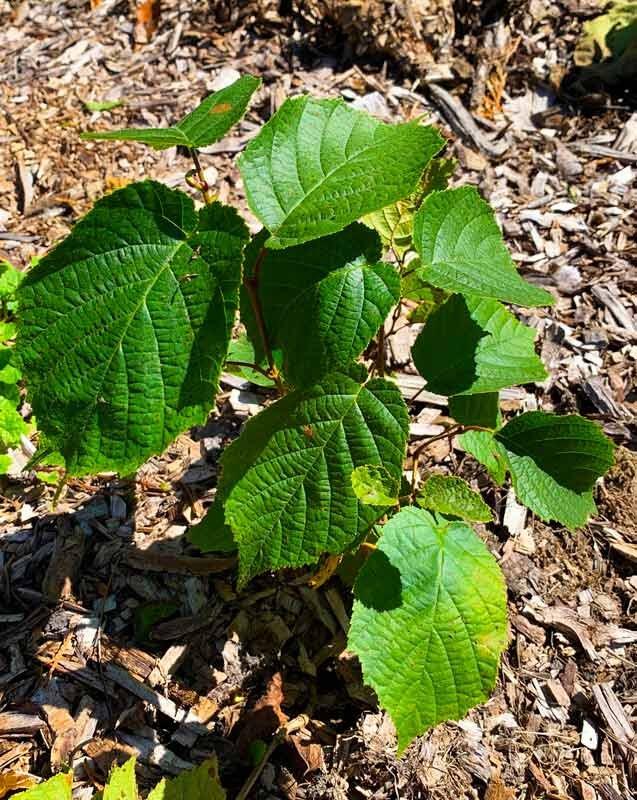
Plant while the shrub is dormant, from late fall through early spring, setting the crown at the same depth it grew in the field. Soak the roots for 30 minutes to an hour first, dig a hole twice the width of the root spread, backfill with the native soil, and water deeply. If you're building a hedge, space plants 6 to 8 feet apart — closer spacing fills in faster but needs more thinning down the line.
Pairs well with
For a wildlife-forward border, hazelnut sits comfortably alongside spicebush and witch hazel, giving the planting flowers and berries spread across three seasons instead of one. See our full shrubs collection for more native options to round out a hedgerow.
At a glance
Botanical name: Corylus americana
Family: Betulaceae
Mature size: 10–15 ft tall, spreading by suckers
Growth rate: Moderate
Light: Full sun to partial shade
Soil & water: Adapts to sandy, loamy, or clay soil; best with regular moisture
Bloom time: Late winter to early spring (catkins)
Nut harvest: Late summer to early fall
Fall color: Yellow to orange
Zones: 4–9
Native range: Eastern and central North America
Ships as: Bare root, 1–2 ft and 2–3 ft
Notable traits: Edible nuts, thicket-forming, wildlife habitat, natural privacy screen
Questions people ask
How tall does American hazelnut get?
Most reach 10 to 15 feet, spreading wider over time as the shrub suckers and fills in.
Do I need more than one plant to get nuts?
Yes, effectively. It's wind-pollinated and largely self-incompatible, so two or more plants within pollinating distance give a far better nut set than one alone.
When do the nuts ripen?
Typically late summer into early fall, after the husks dry and begin to split.
Is it good for a privacy hedge?
Yes. Its suckering habit naturally fills gaps over a few seasons, making it a practical, low-input hedge or screen.
What soil does it need?
It tolerates sandy, loamy, and clay soils, which is part of why it shows up in so many different habitats in the wild.
Does it have fall color?
Yes — the foliage turns yellow to orange before dropping.
About TN Nursery
TN Nursery has grown native plants on our own Tennessee ground since 1959, more than 65 years now, and our trees and shrubs have gone into projects at the Washington Monument and Arlington National Cemetery. We field-grow American hazelnut, dig it while dormant, and ship it bare root so it establishes quickly. Browse our full shrubs collection for more native hedging and wildlife options.