
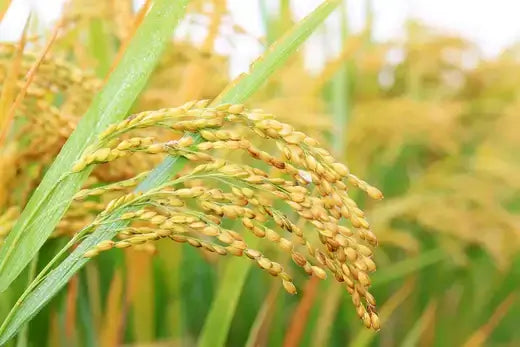
The wild rice plant is a water grass that grows in 6 inches to 3 feet of slow-moving water, best at 1 to 2 feet, over a soft, mucky bottom in full sun. It is an annual that dies each fall and returns only from the seed it drops. You can grow your own from fresh, unparched seed.
What the wild rice plant is: northern and southern species
Wild rice is not a true rice. It is a tall aquatic grass in the genus Zizania, and its long, dark grain has fed people and wildlife in North America for centuries. To the Ojibwe it is manoomin, a food and plant of deep cultural importance. Two species are the ones most gardeners and landowners meet.
- Northern wild rice (Zizania palustris): native to the Great Lakes region and the upper Midwest, including Minnesota, Wisconsin and Michigan, and north into Canada. It is the wild rice that is harvested and sold as food, and it grows in lakes, slow rivers and marshes.
- Southern wild rice (Zizania aquatica): native to the eastern United States, from the Atlantic and Gulf coasts inland along rivers. It often grows in tidal freshwater marshes, stands taller, and carries a thinner, smaller grain.
| Trait | Northern wild rice | Southern wild rice |
|---|---|---|
| Latin name | Zizania palustris | Zizania aquatica |
| Native range | Great Lakes, upper Midwest, Canada | Eastern U.S., Atlantic and Gulf coasts |
| Typical water depth | 6 inches to 3 feet, best at 1 to 2 feet | About 1 to 4 feet, including tidal freshwater |
| Life cycle | Annual, returns from dropped seed | Annual, returns from dropped seed |
| Grain | Larger, harvested for food | Thinner and smaller |
A third species, Texas wild rice (Zizania texana), is a perennial, but it grows only in one Texas river and is federally protected. It is not a backyard plant.
What does wild rice plant look like?
Wild rice changes shape as the season goes on, which helps when you are trying to identify it.
- Spring: thin, green, ribbon-like leaves grow underwater from the seed on the bottom.
- Early summer: the leaves reach the surface and float flat on the water. This is called the floating-leaf stage.
- Midsummer: stiff stems rise and stand several feet above the water, looking like a tall, airy grass.
- Flowering: each stem ends in a loose flower head. The upper branches hold the female flowers upright, pale green with long bristles. The lower, spreading branches hold the male flowers, which dangle yellow to purple tassels.
- Late summer: slender seeds with a long bristle form on the upper branches and turn from green to brown as they ripen.
Where does wild rice grow best?
Wild rice is particular about where it grows. When a site meets these needs it can come back on its own for years. When it misses one, the seed often fails.
- Water depth: 6 inches to 3 feet, with the best stands in 1 to 2 feet of water. Shallower water lets other plants crowd it out. Deeper water keeps seedlings from reaching the surface.
- A soft, mucky bottom: several inches of loose, organic sediment that the seed can settle into and the roots can grip. Hard sand, gravel and rock are poor sites.
- Slow-moving water: a gentle flow through a lake inlet, a slow river or a marsh suits it best. Fast current and strong waves pull young plants out.
- Steady water levels: a sudden rise in early summer, during the floating-leaf stage, can uproot the plants.
- Full sun: an open site with no trees or tall plants shading the water.
- Clear, fresh water: cloudy water blocks light from the young underwater leaves.
When and how to plant wild rice seed
Wild rice is grown from seed, and the seed must be alive. Grocery-store wild rice has been dried and parched, so it will not sprout. Buy fresh, unprocessed seed from a wild rice seed supplier and keep it cool and wet until you sow it. Seed that dries out dies. Northern seed also needs about two to three months of cold, wet conditions before it will sprout. Planting in fall gives it that cold time naturally.
Fall planting versus spring planting
- Fall (best): sow from September to late October, before ice forms. The seed sinks, spends the winter on the bottom and sprouts in spring as the water warms. This copies what the plant does in the wild.
- Spring: store the seed all winter in containers of water in a refrigerator or another cold spot just above freezing, changing the water now and then. Sow right after the ice goes out. This works, but it takes more care and fails more often.
Seeding steps
- Choose a sunny spot with 1 to 2 feet of water over a soft, mucky bottom and little other plant cover.
- Check the rules first if the water is public or shared. Some states require a permit to seed public waters.
- Keep the seed in water in a cool place until the day you plant.
- Scatter the seed evenly over the water's surface, by hand or from a boat. The seed is heavy and sinks to the bottom on its own.
- Leave the site alone over winter. Do not drain it or let it dry out.
- Watch for thin, underwater leaves in spring and floating leaves in early summer.
- Keep water levels as steady as you can through early summer, and keep geese and carp away from young plants where possible.
Growing wild rice in a backyard pond or tub
You do not need a lake. A small pond with a shallow shelf, or a deep container such as a stock tank or a lined half barrel, can grow a small stand of wild rice for its looks and a modest handful of grain. The container should be at least 24 inches deep, so it can hold soil plus a foot or more of water.
-
Place it in full sun
Set the tub or choose a pond shelf that gets sun most of the day, away from trees.
-
Add heavy soil
Put 6 to 8 inches of heavy garden soil or clay loam in the bottom. Avoid potting mix, peat, bark or perlite, which float and cloud the water.
-
Fill it slowly
Add water gently until it stands 12 to 18 inches above the soil. Rainwater is ideal. Let the mud settle for a few days.
-
Choose fall or spring
The seed needs a cold winter in water. If your tub stays liquid under its ice, sow in fall. If it freezes solid, keep the seed in a jar of water in the refrigerator over winter and sow in early spring.
-
Sow the seed
Scatter live seed over the water so it settles into the mud. A few dozen seeds are plenty for a stock tank.
-
Thin and top up
When the floating leaves appear, thin seedlings to about 6 inches apart. Top up the water through summer so the level stays steady.
-
Bag the seed heads
In late summer, slip a mesh or paper bag over each seed head and tie it loosely. Ripe seed drops easily, and the bag catches it.
-
Save seed for next year
Keep a share of the seed wet and cold, then sow it again. A tub will not reseed itself reliably, so this is how it comes back.
Harvesting wild rice
Wild rice blooms in mid to late summer, and northern wild rice ripens from late August into September. The grain on one head does not ripen all at once. It ripens from the top down over a week or two, and ripe seed falls off at a touch.
In lakes and rivers, wild rice is traditionally harvested by canoe. One person poles the boat while another gently bends the stalks over it and taps the ripe grain loose with two light sticks. Unripe grain stays on the plant for later, and much of what falls lands in the water to seed next year's crop. Some states, including Minnesota, require a license to harvest from public waters, so check your state's rules. In a tub or small pond, the bagging method above is simpler.
Freshly harvested grain is green and must be dried, parched, hulled and winnowed before it can be cooked or stored.
Does wild rice grow back every year?
No, not from its roots. Northern and southern wild rice are annuals. Each plant dies in fall, and the stand comes back only from the seed that dropped into the water. A healthy natural stand reseeds itself, though its size can swing a lot from year to year.
Tip: Do you need to reseed each year? In a new planting, a tub or a small pond, yes: save some seed and sow it each fall. In an established stand where plenty of ripe grain falls into the water, no, as long as you leave enough seed behind when you harvest.
Pond plants to grow alongside wild rice
Wild rice likes open, sunny water to itself, so give companion plants their own space at the pond's edges, on the shore or in deeper water nearby. Strong spreaders such as cattail and horsetail are best kept in pots or a separate area so they do not crowd the rice bed. You can find more choices among our pond plants.
Blue Flag Iris Plant: A native iris with blue-violet flowers in spring and early summer, about 2 to 3 feet tall. It suits pond edges and tolerates shallow standing water.
Water Lily Plant: Floating leaves and showy flowers for calm water with about six hours of sun. Keep it in deeper water, away from the rice bed, so its leaves do not shade the young rice.
Bulrush Plant: A tall wetland plant, 3 to 10 feet, that steadies soggy banks and gives wildlife food, shelter and nesting material. It spreads by rhizomes, so give it its own area away from the rice bed.
Cattail Plant: The classic brown-topped wetland plant, 4 to 10 feet tall, for the wettest edges. It spreads fast, so keep it in a container or a separate area away from the rice bed.
For texture along the margin, horsetail adds hollow, upright green stems at damp edges. To plant a new pond edge in one order, the aquatic plants box includes 5 bulrush, 5 river cane and 5 crested iris. Bulrush and river cane both spread, so set them along the bank, not in the rice bed.
Wild rice plant FAQ
Does wild rice grow back every year?
Not from its roots. Northern and southern wild rice are annuals that come back only from seed dropped the year before. A healthy natural stand reseeds itself, but a new planting, tub or small pond needs seed sown again each fall.
Where does wild rice grow best?
In 1 to 2 feet of clear, slow-moving fresh water over a soft, mucky bottom, in full sun, where water levels stay steady through early summer.
Can I grow my own wild rice?
Yes. Sow fresh, unparched seed in fall in a sunny pond shallow or a tub at least 24 inches deep, with 6 to 8 inches of heavy soil and 12 to 18 inches of water above it.
What does wild rice plant look like?
It starts as ribbon-like leaves underwater, then floats its leaves on the surface, then stands as a tall grass several feet above the water. Its flower heads hold upright, bristled female flowers above dangling male tassels.
Is wild rice okay to eat?
Yes. The grain of northern wild rice is a traditional food. It must be dried, parched, hulled and winnowed after harvest before it is cooked.
