
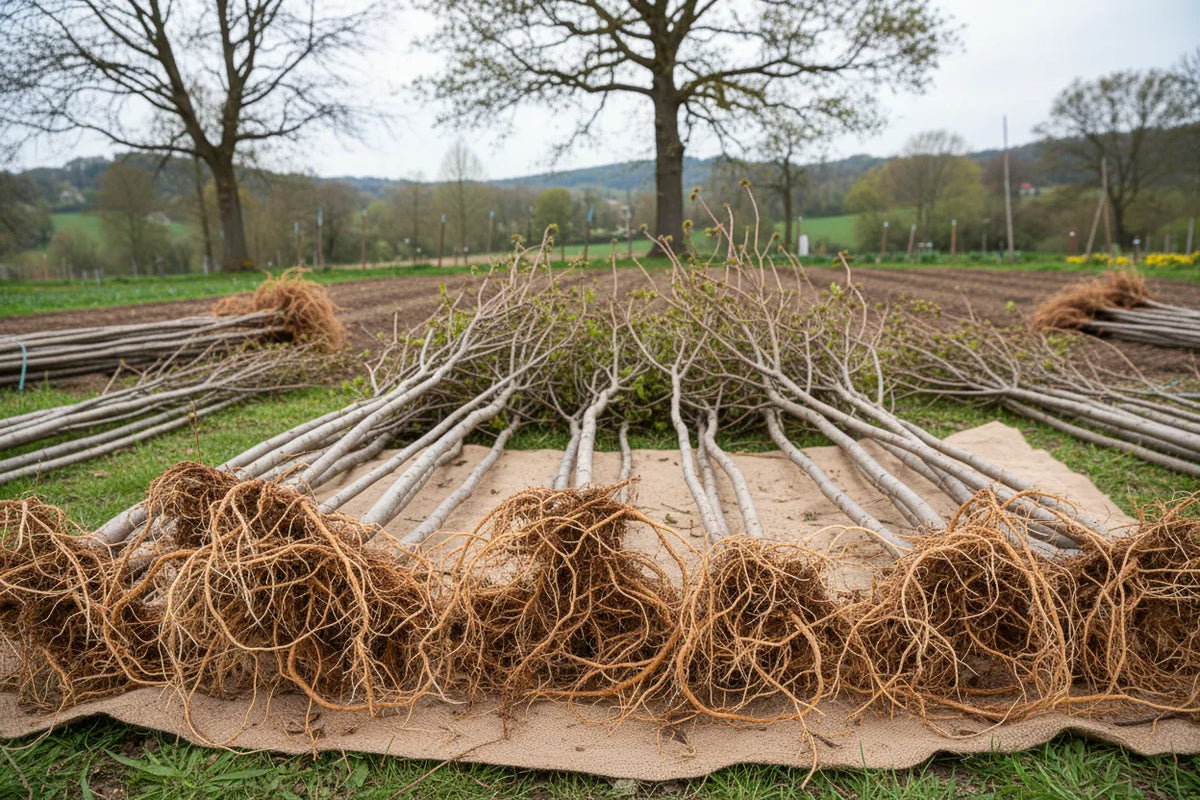
Most customers who place orders for plants online are surprised to see bare-root plants without soil or pots. This is a typical nursery technique, and by comprehending the bare-root meaning, it can be explained that it assists the plants to travel safely when they are in the dormant state.
TN Nursery delivers most of the plants in the form of bare-root plants, where the gardeners are provided with healthy and freshly excavated plants that are ready to be planted by them. Such plants are dormant in shipping and are without soil and exposed roots, and grow fast after planting. TN Nursery is a good source for buying plants because it has years of experience in shipping bare-root trees, ferns, and native plants to its customers throughout the country.
What Are Bare-Root Plants, and Why Are They Shipped This Way?
"Bare root" refers to the shipment of plants with their roots exposed as opposed to plants in soil or pots. Nurseries prepare bare-root plants by planting them when they are not actively growing, usually in late fall or early spring. Roots are thoroughly washed, examined, and sheltered in moisture-preserving materials that ensure that the roots remain alive during transportation.
The advantages of bare-root plants are the following:
Less complicated shipping: Soil-free plants are lighter and more transportable.
-
Better root systems: The exposed roots can be checked for quality.
-
Reduced transportation cost: The reduced weight comes with reduced transportation costs.
- Enhanced success of transplantation: Dormant plants are more successful in facing transplantation stress.
The USDA Natural Resources Conservation Service offers free information on sustainable gardening that includes information on how to care for plants and conserve them.
Benefits of Bare Root Plants for Gardeners
Bare-root plants have a lot of benefits, and this is why many professional growers and landscapers prefer these plants. The interpretation of bare-root meaning in the real-life situation shows why this shipping technique is always helpful to gardeners.
Key advantages include the following:
-
Heartier root development: Bare-root plants develop natural root development as opposed to circling roots.
-
Reduced cost of planting: Lightweight and flexible roots reduce the cost of installing them.
-
Having savings on costs to customers: Because of the cost reduction in shipping and production, there is an improved price.
- Eco-friendly shipment: No plastic containers and unused soil decrease the waste.
The most effective way for growing bare-root plants begins with the realization that these dormant specimens have enormous power upon being planted with the right kind of planting.
Popular Bare Root Plants Available at TN Nursery
TN Nursery has a variety of plants, which are shipped successfully.
Maidenhair Fern
This is a small native fern, which has fan-like fronds with the help of swirly black stipes. The Maidenhair Fern is a fast-growing and healthy bare-root plant that requires little time to put down roots in shaded places.
Fiddlehead Fern
This is a very aggressive native fern that grows edible fiddleheads in the spring. The Fiddlehead Fern exhibits quality in learning how to grow bare-root plants.
Sensitive Fern
This is a native fern with very broad fronds that naturalize well in moist soils. The Sensitive Fern is the dependable bare-root plant that TN Nursery delivers.
Walking Fern
This is a distinctive native fern, having long, tapering fronds, the roots of which are at the ends. Walking Fern is a good example of specialty bare-root plants that are available.
Fern Moss
This is a fine moss that grows in shady, moist areas in the form of soft carpets. The Fern Moss vessels are also able to use the bare-root tree-care principles successfully.
How to Plant Bare-Root Plants Successfully
To know how to grow bare-root plants, one has to adhere to established methods. There are similarities between bare-root tree care and overall bare-root planting.
In these steps, do the following:
-
Soaking roots: Before planting, soak bare-root plants for 2-4 hours to replenish moisture.
-
Make loose and nutritious soil: Add organic matter and compost to heavy clay or sandy soils.
-
Plant roots: Spread roots in the planting hole. Do not force the roots into the planting hole.
- Water: Water thoroughly after planting. Eradicate air spaces, and keep roots in damp soil.
Mulching with 2-3 inches of organic material also helps in the care of bare-root trees and the planting of ferns.
Why Does TN Nursery Ship Plants Bare-Root?
The experience of nursery in TN Nursery has proved that bare-root plants have a higher transportation and success rate when shipped during the state of dormancy. This grower-direct shipping is used to exclude the middlemen and deliver fresh plants.
Dormant bare-root plants are better, as they
-
Endure shipping stress: Dormant plants can endure shipping without the need for light.
-
Lower shipping expenses: Light packages are cheaper to ship.
- Guarantee successful transplanting: Move plants when they are in the dormant stage, and they grow fast.
The reputation of TN Nursery as a reliable supplier implies adherence to the principles of quality bare-root tree care. Customers looking at the bare-root nursery near me can find out that TN Nursery delivers quality specimens to any part of the country, so the location is not as critical as nursery experience.
Conclusion
The normal and healthy mode of shipping plants is through bare-root, in which trees, ferns, and native perennials are better shipped. The knowledge of bare-root meaning makes customers value this tried-and-tested technique. These dormant specimens develop fast and grow actively once planted well according to the instructions and principles of how to grow bare-root plants and take care of a bare-root tree.
TN Nursery is a company that specializes in providing a broad range of bare-root plants, with some of them being Maidenhair Fern, Fiddlehead Fern, Sensitive Fern, Walking Fern, and Fern Moss. Instead of browsing through a bare-root nursery near me, gardeners around the country can use TN nursery to place an order of good specimens. Planting should be done in the proper way to produce the best results.
FAQs
What are bare-root plants?
In the traditional bare-root sense, bare-root plants are dormant plants shipped bare-root as opposed to being shipped in soil or containers.
Why are roots important for plants?
Roots hold plants down, take in water and nutrients, and bear advantageous soil organisms vital to good growth.
Is it better to buy bare-root or potted plants?
Natural root pattern plants are also more likely to establish well, are less expensive to ship than bare-root plants, and are easier to ship than potted plants.
How long do bare-root plants take to grow?
According to the guidelines of how to grow bare-root plants, the majority of the plants leaf out in a few weeks' time and become established in just a single season.
Will bare roots bloom the first year?
Several bare-root plants invest the first year in root development, and flowering is determined by the species and the quality of care for bare-root trees.
How should I store bare-root plants before planting?
Prepare root plants and moisten them by heeling roots into wet soil or wrapping roots in moist media before planting.
Where can I buy bare-root plants online?
TN Nursery provides good-quality bare-root plants that are shipped all over the country.


