
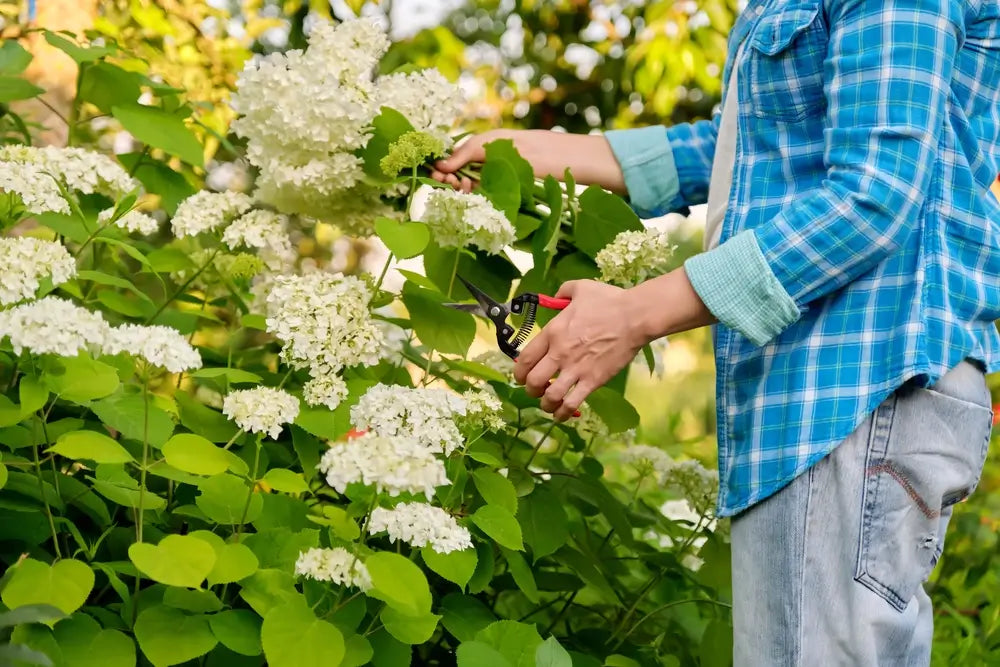
Pruning might seem daunting but is easy to achieve and can be done well with just a little knowledge. The type of pruning required and the time to prune varies by species, as some hydrangeas bloom on old wood, while others bloom on new wood. Plants that flower on old wood should be pruned immediately after flowering , as the flower buds for next year set in late summer. Plants that flower on new growth should be pruned in late winter or early spring before flowering, as the buds for flowering have not had time to harden. In general, dead or weak branches are the only ones removed from a hydrangea bush. It will make your shrub look healthier right off the bat, help to prevent disease from spreading through your shrub, and even encourage the shrub to flower; healthy branches support flowers better. A well-trimmed hydrangea will be the pride of your garden, woodland or otherwise!
PeeGee Hydrangea stands as an admired element within both classical and modern landscape designs. The ability of this plant to grow in different soil conditions and climates makes it an ideal selection for gardeners who desire both aesthetic appeal and dependable performance. As a specimen plant it thrives in mixed borders and hedgerows to create dramatic seasonal interest. Garden compositions gain depth and movement from towering panicles, which begin in creamy white and then shift through rich shades of pink and bronze. The pruning process transforms this plant into a tree-like structure which provides an elegant architectural appearance to structured landscapes. Cottage gardens gain romantic old-world charm from it whereas modern minimalist designs benefit from its striking blooms which serve as sculptural focal points. Its dynamic presence improves any location whether it is used in thick groupings or a singular display.

Hydrangeas grown for color do not need to depend on soil pH alone, there is a set of practices that can be used to improve flower color. Besides the location of the plant in the landscape, some species enjoy partial shade while others thrive in full sun. Pruning affects both color and health. Regular pruning helps to promote new color-bearing growth, and hydrangeas will not experience the same flower color fading that is common for cultivars grown in dry conditions if sufficient water is provided during dry spells. Additionally, the fertilizer selected, especially if it is geared toward flowering-plants'>flowering plants, can be used to help stress the flowering plants. Through the above processes, the hydrangeas can be grown to be the best and most colorful plants they have the potential to be.
Overall, hydrangea shrubs have a lot to offer to those who take the time to care and nurture them, and a good hydrangea bush can form part of the character of any garden the bush graces, no matter what the conditions are, and they are particularly at home in the shaded groves of a woodland garden. With proper care, the knowledge of pruning techniques, and an understanding of the different types available, anyone can maintain their own hydrangea paradise. As gardeners, I think we are grateful for more than the variety of colors, the choice of forms and shapes of flowers. In every blossom that opens, we find the promise of beauty, joy, and the wisdom that comes from learning to tend to the living world of plants around us.
In conclusion, hydrangeas are a wonderful plant to grow in your garden, with proper pruning and fertilizer. As long as you know your soil conditions, you can keep your hydrangeas healthy and looking great for many years to come with a few simple tips. Not only do you have dozens of propagation varieties to share with your friends and family, but now that you know the differences between these types of hydrangeas, you'll be on your way to having a beautiful rainbow collection in no time! It's time to roll up your sleeves and start being the hydrangea keeper! Watch your own hard work and care come to life in each petal of these lovely plants.
While there are plenty of pros to growing the Nine Bark Hydrangea as part of your collection, there are a few cons to consider. Unlike other hydrangeas, the Nine Bark is a larger plant and may require more space or pruning, especially in the more compact gardens, to maintain its hydrangea form. Another possible con is that the Nine Bark does tend to spread quickly, which, if left unpruned, could lead to overcrowding of other plant species of the landscape. Furthermore, while the Nine Bark Hydrangea is fairly resistant to mildew which is a positive for high humidity places, it may, however, be victim to other pests such as spider mites or aphids.
No, it is not a good idea to trim Ninebark Hydrangea in the fall. This will allow the plant to encourage new soft growth that will not survive the cold, and will cause the plant to look bad when it has sprouted new leaves in the spring. It is better to wait until the last part of the winter or the very early spring to do the trimming, which should help the overall look of the plant going into winter without losing structure.
A Nine Bark Hydrangea loves moist and well-drained soil, which makes this plant easy to care for, as long as it has the right conditions. This plant can grow in multiple soil types, but it grows better in slightly acidic, or neutral, soil. A Nine Bark hydrangea grows the best in the sun, and to keep it looking nice, it will need to be watered and pruned regularly.
Preparing hydrangeas for winter is easy; however, pruning techniques vary between varieties. And sometimes, pruning isn't even necessary. When pruning is desired, it may take place in late fall, winter, or early spring; however, there is an advantage to cutting them back in late fall because there are fewer plants to protect against the coming cold.
Pruning should be done as each flower fades. Many varieties of Shrub Hydrangeas grow flower buds at the end of the season for the following year. I am waiting to could result in these new shoots being lopped off. That is a common cause of failing to bloom Hydrangeas failing to bloom.
Unless pruning all stems to ground level, permanently remove dead and weak stems and spent flowers, leaving healthy buds intact. Before and after the pruning of each shrub, clean the blades of your pruning shears with rubbing alcohol to prevent the spread of disease and pests from one plant to another.
By pruning the Nine Bark Hydrangea, you can shape the shrub into the shape and size you want. Nine Bark Hydrangea is a very flexible and adaptable shrub able to work with many different design styles to best fit the customers needs.
