
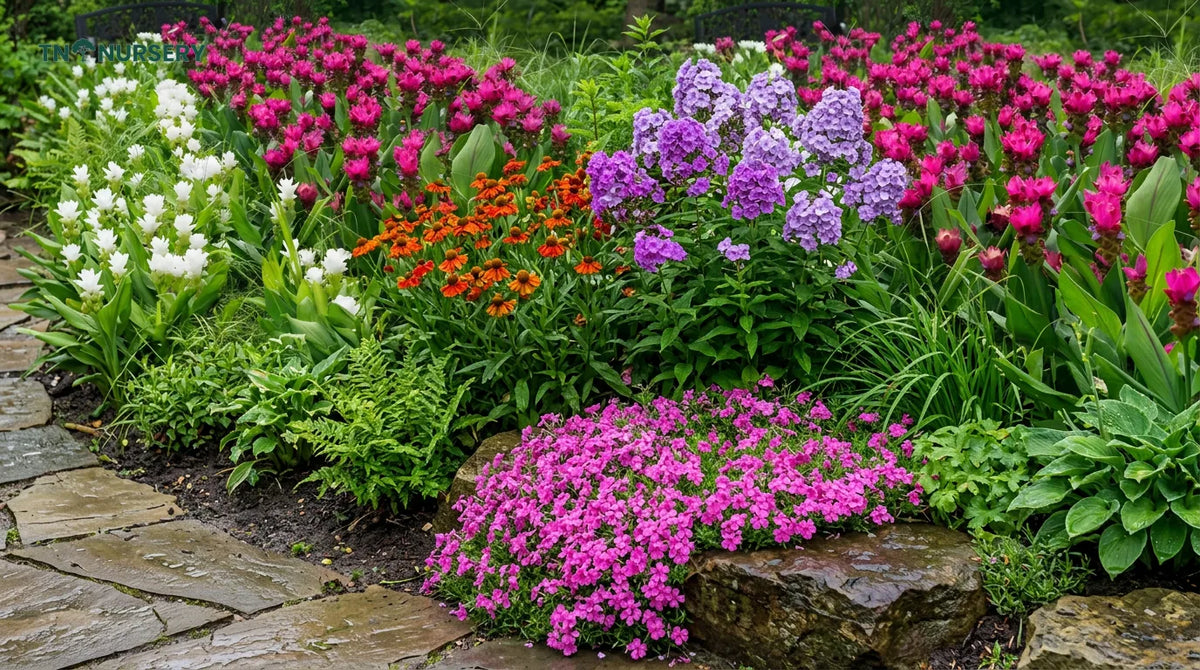
Summer Perennials for Wet Soil That Handle August Rain
Soggy beds from downspouts or clay soil? We’ll show you seven planting ideas with bloom, shade coverage, and low-maintenance structure for damp spots that stay useful all summer.
Why Wet Beds Need a Different Plant Plan
- How to layer heights so wet beds look full instead of flat
- Where groundcovers help reduce splash erosion on soggy edges
- Which shade loving perennials fit damp tree lines and low-light beds
- How to use practical garden bed ideas for runoff paths and low spots
- What to plan now for rain garden plants for August color
Compare Starter Picks for Perennials for Rainy Garden Areas
If you are building a damp border, these four packages give you different ways to start. We suggest matching each one to your sun exposure, zone, and how water moves through the bed, because summer perennials for wet soil do better when the fit is right.


7 Summer Fixes for Wet Garden Beds
Wet beds can look rough by August. Still, summer perennials for wet soil give you a way to keep color, structure, and roots working with the site instead of fighting it. We plant these spots by reading where water sits after rain, where tree shade lingers, and where the ground finally dries by late afternoon.
That matters. A soggy fence line needs a different plan than a pond edge. And a downspout bed often stays wet in spring, then turns unevenly dry in August heat.
What are the best summer perennials for wet soil to buy?
Start with plants matched to light first, then moisture depth. We use tall back-of-bed plants, midsize bloomers, and spreading front-edge plants so the bed looks full from June through late summer.
1) Plant in layers
Put the tallest growers at the back. Set broad, mounding plants in the middle. Finish with low spreaders at the front to hold soil and soften the edge. This simple layout makes wet ground look planned, not messy.
2) Keep color moving through midsummer
For perennials that bloom all summer, focus on repeat color instead of one short flush. We would rather see steady bloom in July and August than a huge June show followed by bare stems.
3) Mix flowers with foliage
Use bloom for pollinators, but anchor the bed with strong leaves too. In perennials for rainy garden areas, foliage keeps the planting from looking thin after a hard storm.
4) Use shade plants where wet soil meets tree cover
Some wet spots never get enough sun for heavy flowering. That is where shade-loving perennials earn their place. Browse our Shade Perennials if your bed gets morning light and afternoon cover.
5) Stabilize edges with low growers
Front edges wash out fast. Low clumping and spreading plants work well as low-maintenance plants for damp soil, especially along walks, lawn transitions, and shallow swales.
6) Save the wettest pockets for natives that can take it
At pond margins or beside downspouts, use rain garden native plants that handle standing water better than average border plants. Keep in mind, these zones may stay cold and slow in spring.
7) Amend only where it helps
We do use selective soil amendments for garden beds that drain poorly but do not stay boggy. But not every wet area should be heavily amended. Sometimes the better fix is matching plants to the site and leaving the wettest ground alone.
When a bed stays wet after every storm, we do not rush to dry it out. We first decide whether that spot wants moisture-loving roots instead.
How to choose the right summer perennials for wet soil?
Watch the bed in three moments: one day after rain, one week later, and during August heat. If the surface cracks by evening, it is not the same as a boggy low spot. For broad planting ideas, you can browse our Long Blooming Perennials and Sun Perennials.
- Downspouts: Use tough roots and wider spacing.
- Fence lines: Layer tall to low for airflow.
- Pond margins: Reserve for the toughest moisture lovers.
- Low lawn transitions: Use spreading edges to stop erosion.
An Easy Start for Summer Perennials for Wet Soil

10 Perennials to Test in Damp, Trouble Spots
If you want to improve a side yard, shaded border, or low spot near the patio, we like starting with our 10 Perennial Plants Package. You get 10 bare-root perennials that return year after year, support pollinators, and handle full sun to partial shade. Keep in mind, mixed selections can vary, so we always suggest you confirm your zone and the bed’s moisture and light before planting for the best long-term success.
- Ten bare-root perennial plants that bloom again each year
- Pollinator-friendly mix that attracts hummingbirds and butterflies
- Deer-resistant varieties for flower beds in full sun or partial shade
Build a Fuller Border for Perennials for Rainy Garden Areas
Use these three plant packages to shape a wetter bed with purpose. We set them up for different jobs, from bigger bloom volume with 25 Flowering Plants Collection to easier spread with 15 Ground Cover Package and cottage-style texture from 15 Old Fashioned Perennial Favorites.
Frequently Asked Questions
What are the best traits to look for in perennials for rainy garden areas?
When you shop for summer perennials for wet soil, look for plants that handle poor drainage, bounce back after heavy rain, and keep decent structure through August. We suggest starting with our Long Blooming Perennials if you want color that lasts, or our Shade Perennials if your bed stays dim and damp. Keep in mind, a plant that likes moisture still needs some airflow. Crowded beds stay soggy longer and can struggle.
Can I plant in summer if my bed stays wet?
Yes, but timing matters. We plant and ship for real garden conditions, and you can still set plants out in summer if the soil is moist rather than waterlogged. Try to plant after a rain cycle breaks, then firm the soil well around the roots. If the spot squishes under your boots, wait a bit. Wet is workable. Mud is not.
Do I need soil amendments for garden beds with heavy clay?
Sometimes yes, but not always a full rebuild. Heavy clay holds water, so we usually tell customers to improve the planting area with organic matter and shape the bed so water can move, not sit. That helps with drainage and root growth. But do not over-loosen one tiny hole in solid clay. That can trap water like a bowl.
Are shade loving perennials a good option for wet areas under trees?
They can be a very good fit, especially where sun dries out only the top inch and roots from trees keep competing below. Our Shade Perennials collection works well for those spots because the plants are chosen for lower light conditions. Still, tree roots can make planting tougher than open ground. So dig wide, water in slowly, and expect a little more patience the first season.
How do I keep a rain garden attractive in August?
Use layers. We like mixing plants with different bloom times and leaf shapes so the bed still looks full when early flowers fade. Our Long Blooming Perennials are a strong place to start for rain garden native plants and dependable rain garden plants for August. Cut spent blooms when needed, pull weeds early, and leave enough spacing so foliage dries after storms.
Which TN Nursery collections are easiest for beginners?
For a simple start, we recommend our Long Blooming Perennials and Shade Perennials collections. They make planning easier because you can shop by growing condition instead of guessing plant by plant. If your site gets long hours of direct light, our Sun Perennials collection is the better pick. Match the light first. That saves more headaches than anything else.
What is TN Nursery's shipping policy?
We ship all items by 3-4 day ground shipping. That applies across our plant categories, so you can expect the same shipping method whether you order perennials, seedlings, groundcover, flowering trees, or trees.
What is your return or refund policy, and how can I contact you?
We do not offer refunds, and we do not accept returns. If a reshipment is available, we may offer that instead. If the product is out, we may offer an extended warranty on a plant or in-store credit. For help with an order, email us at customerservice@tennesseewholesalenursery.com or write to Tennessee Wholesale Nursery, 12847 State Route 108, Altamont TN 37301, United States.
Conclusion
Key Takeaways
- Match each planting area to its real moisture level instead of treating the whole bed the same.
- Combine flowering perennials with groundcovers to keep color going while helping stabilize soggy soil.
- Plan for late-summer performance, especially in August, not just early spring bloom.
- Choose zone-compatible plants for better long-term survival and fewer replacements.
