
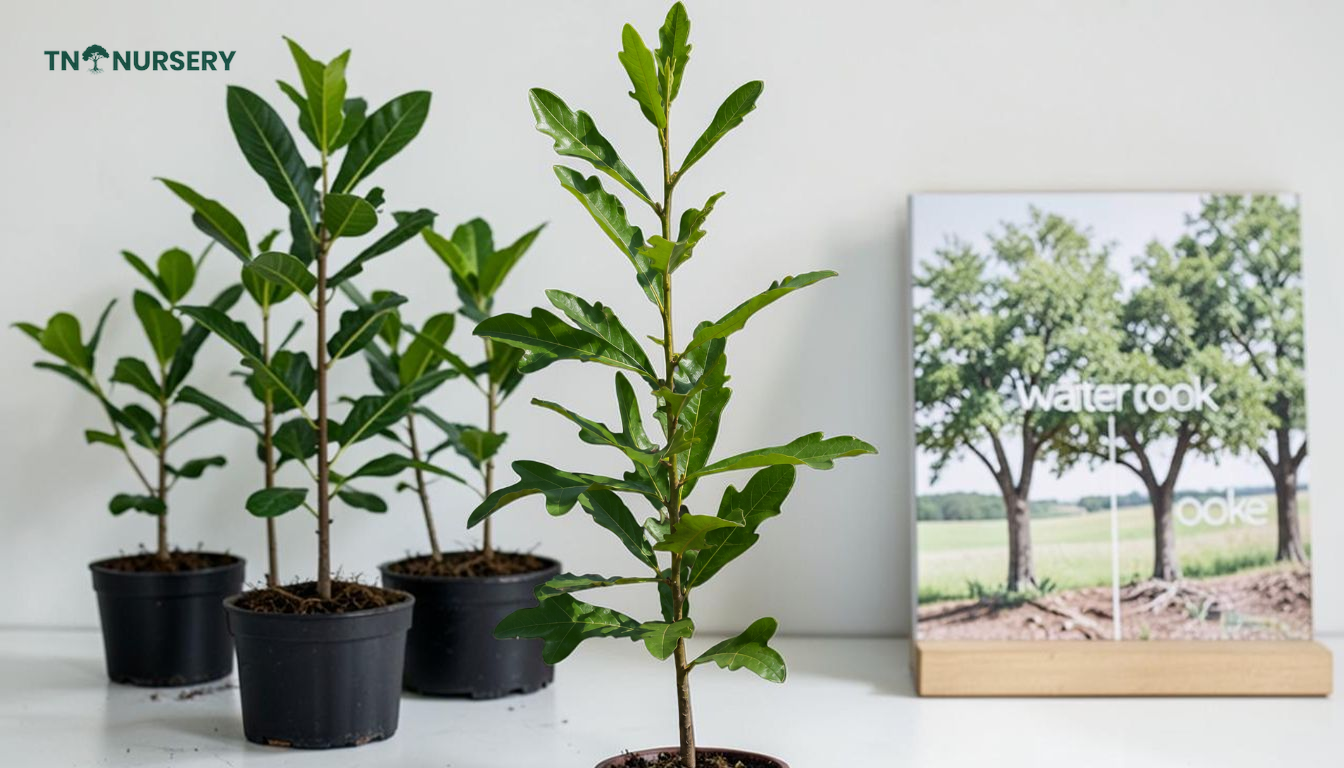
Water Oak vs Live Oak: Pick the Right Oak for Lasting Shade
We break down growth, canopy, and site fit so you can choose the right oak tree for curb appeal that holds up for years.
Water Oak vs. Live Oak: Quick Answers Before You Plant
- Fast growth: Water Oak Seedlings can add several feet per year in healthy conditions.
- Shade value: Mature trees reach about 50-80 feet tall with a broad, dense canopy.
- Site fit: Best for zones 6-9, with full sun to partial shade and moderate moisture.
- Native adaptability: Handles wet soils, compacted sites, and restoration plantings well.
- Yard match: Best for large properties, not tight spaces near driveways or foundations.
Compare Water Oak and Southern Live Oak Alternatives for Big Shade
If you're weighing water oak against a live oak tree or other large oak choices, this lineup makes the differences easier to see. You'll find fast-growing shade trees, wet-site performers, and broad-spreading canopies for bigger landscapes.


How to Compare Oak Trees for Size, Soil, Shade, and Care
If you are comparing oaks for a home landscape, start with water oak and work outward from there. We carry several strong choices, but they do very different jobs once they mature. Some handle wet ground. Others want loamy or rocky soil. And some cast a broad, dense canopy that changes how your yard feels by midsummer.
How to choose the right water oak?
Choose by matching the tree to your site first. We suggest checking four things: mature size, soil moisture, shade pattern, and how much pruning or patience you can handle over the years.
Mature size and canopy spread
Water Oak Seedlings grow fast and typically reach 50 to 80 feet tall with a 30 to 60 foot spread. That speed is useful when you want coverage sooner, but keep in mind that quick growth can mean heavier limbs that need dormant-season pruning.
If you want a broad crown with a more open look, Swamp White Oak Seedlings mature around 50 to 80 feet with a spread that is roughly equal to height. Willow Oak Tree can also get large, from 40 to 75 feet tall, though its form often reads lighter because of its narrow leaves.
Soil tolerance: wet ground or dry slope?
- Wet or poorly drained soil: Water Oak, Overcup Oak, and Swamp White Oak all handle moisture well. Overcup Oak even tolerates occasional standing water and heavy clay.
- Well-drained loam: Cherrybark Oak Seedlings fit best on loamy, well-drained sites with direct sun.
- Rocky, sandy, or acidic ground: Chestnut Oak Tree is the better fit, especially where clay stays soggy.
- Drier, tougher spots: Black Oak Seedlings tolerate moderate drought and poorer soils once established.
live oak tree vs shade pattern
Many readers ask about a live oak tree or even a southern live oak. We do not stock those here, so the closest comparison in habit is to think about canopy character instead. Water Oak forms a dense, wide shade pattern. Swamp White Oak feels more open underneath. Willow Oak gives a finer texture overhead, which can make a large yard feel less heavy.
Pick the oak for the ground you have, not the picture in your head. That choice saves years of stress.
Long-term maintenance and leaf character
For lower maintenance, Chestnut Oak and Willow Oak are easier fits in many home landscapes. Water Oak grows faster, but you should watch for limb breakage as the canopy fills with foliage and acorns. Black Oak also needs early care because it develops a deep taproot and prefers quick, careful transplanting.
And if leaf detail matters, look closely at live oak tree leaves when comparing species in general. In our lineup, Water Oak has spoon-shaped leaves, Willow Oak has long narrow leaves, and Swamp White Oak shows a dark green top with a whitish fuzzy underside. Those details change the whole look of an oak tree canopy from the street and from your patio.
- Measure overhead and side clearance.
- Check whether your soil stays wet after rain.
- Decide if you want fast shade or slower, steadier structure.
- Plan for the mature canopy, not the seedling size.
Planting Oaks for Strong Roots and Long-Term Shade
If you're planting water oak, start by matching the tree to your site, not just your wish list. We carry oaks for wet ground, dry slopes, and big open lawns, and that difference matters in the first two years.
How to choose the right water oak?
Choose by zone, soil moisture, and mature size. If your ground stays damp after rain, water oak seedlings, overcup oak seedlings, and swamp white oak seedlings fit better than upland types.
For drier or rockier sites, we point customers toward chestnut oak tree or black oak seedlings. If you have loamy, well-drained soil and full sun, cherrybark oak seedlings can establish well. Keep in mind, it does not like saturated ground when young.
Zone and light checks before you plant
- Zones 4-8: Water Oak Seedlings and Chestnut Oak Tree work in broad parts of this range.
- Zones 5-9: Overcup Oak Seedlings and Willow Oak Tree handle warmer planting areas well.
- Full sun: Swamp White Oak Seedlings, Cherrybark Oak Seedlings, and Red Oak Trees grow best with direct light.
- Part shade tolerance: Water Oak Seedlings, Black Oak Seedlings, and Willow Oak Tree can handle some shade early on.
What are the best water oak to buy?
For wet or compacted ground, our pick is Water Oak Seedlings. They grow fast, handle full sun to partial shade, and adapt to sites from riparian edges to urban soils.
If you want stronger flood tolerance, choose Overcup Oak Seedlings or Swamp White Oak Seedlings. And if you're comparing shape and canopy to a live oak tree or even a southern live oak, remember these oaks still need wide spacing because most mature well over 25 feet tall.
Spacing and early establishment tips
- Give them room: Large oak roots and canopies need open space away from buildings, drives, and tight corners.
- Water deeply: Bare-root stock needs regular watering while roots settle in.
- Match soil to species: Wet-site trees go low. Well-drained-site trees go high.
- Mulch the base: This helps hold moisture and cuts weed competition, especially for Black Oak Seedlings.
- Prune with restraint: Remove damaged branches when dormant, especially on fast growers with heavy limbs.
"Plant for the size the oak will be in 20 years, not the size it is in your hand today."
Look, every oak tree here can become a major part of your landscape. But the details matter. If you need quick shade, broad wildlife value, or specific leaf character like the narrow form of willow oak tree or the pointed shape seen on red oak trees, you'll get better results when the site and species line up from day one. You can browse more options in our oak seedlings and Shade Trees collections.
Compare Water Oak and Southern Live Oak Alternatives for Shade and Site Fit
Choosing between a water oak, a live oak tree, and other large oak options comes down to soil, speed, and space. We pulled these eight trees and seedlings together so you can match wet ground, open yards, and broad canopies.
Common Mistakes When Buying Oaks
Buying an water oak for your yard sounds simple. It is not. We see the same mistakes over and over: people ignore mature size, plant into the wrong soil, or pick a species that fights the site for years.
If you want quick shade, water oak seedlings grow fast and can reach 50 to 80 feet tall with a 30 to 60 foot spread. That speed helps on big properties. But keep in mind, fast growth also means you need room and some branch monitoring as the canopy fills out.
How to choose the right water oak?
Start with the ground, not the name tag. If your site stays damp after rain, Water Oak Seedlings handle wet soils well, while Cherrybark Oak Seedlings want loamy, well-drained soil and direct sun.
And measure your space honestly. A small front yard is rarely the place for a broad oak tree that will eventually throw heavy shade and wide roots.
Live oak tree leaves and site fit
Many shoppers ask about live oak tree leaves because they want year-round presence. Fair point. But a southern live oak look only works if your climate and space support that habit, so site fit still comes first.
Choose the tree for the soil you have, the sun you get, and the space it will need in 20 years.
What are the best water oak to buy?
For wet or low ground, the best pick here is usually Water Oak Seedlings. They grow in planting zones 6 to 9, take full sun to partial shade, and work well for landscaping or restoration.
If your site is wet but you want a slower, steadier oak, Overcup Oak Seedlings handle occasional standing water and clayey soils. For moist ground with a broad open crown, Swamp White Oak Seedlings fit better than forcing the wrong tree into a dry slope.
- Mistake 1: Planting too close to the house when mature height is over 25 feet
- Mistake 2: Using poorly drained soil for species that need drainage, like Cherrybark Oak Seedlings
- Mistake 3: Choosing by leaf shape alone instead of sun, moisture, and zone
- Mistake 4: Forgetting that a young live oak tree still becomes a very large tree over time
Frequently Asked Questions
What are the best water oak to buy?
If you need quick shade or a fast screen, our water oak pick is Water Oak Seedlings. They grow fast, handle full sun to partial shade, and adapt well to wetter ground. Keep in mind that this oak tree gets large over time, with a broad canopy and heavy limbs, so it fits best where you have real space.
How does water oak compare with a live oak tree for home landscapes?
Water oak usually grows faster and handles wet soils better. A live oak tree, especially a southern live oak, is known for its massive, long-lived canopy and evergreen to semi-evergreen look in warm areas. We focus on oaks that fit a wider range of zones, so our Water Oak Seedlings are a practical choice for many customers in planting zones 6-9.
What should I know about live oak tree leaves versus water oak leaves?
The biggest visual difference is leaf shape. Water oak leaves often look spoon-shaped or like a drop of water, while live oak tree leaves are usually more oval and leathery. So if leaf shape matters to your landscape look, water oak gives you a softer, more unusual outline.
Are Water Oak Seedlings good for wet or problem areas?
Yes. We recommend Water Oak Seedlings for low spots, restoration work, and places where erosion control matters. Their roots help stabilize soil, and the tree tolerates moisture better than many upland oaks. But give it room. Mature trees can reach 50 to 80 feet tall.
How are your oak seedlings shipped?
We ship our trees by 3-4 day ground shipping. Our Water Oak Seedlings ship now and are sent bare-root, in a package of 25 plants. Bare-root stock is easier to plant in bulk, but you should get them in the ground soon after delivery so roots do not dry out.
Do you accept returns or offer refunds on tree orders?
We do not accept returns, and we do not offer refunds. We also do not offer a warranty unless you purchase an extended warranty at the time of order. If you need help with an order, contact us at customerservice@tennesseewholesalenursery.com or write to Tennessee Wholesale Nursery, 12847 State Route 108, Altamont TN 37301.
Conclusion
Key Takeaways
- Water oak grows faster and handles moist to wet sites better than most large landscape oaks.
- Live oak offers heavier structure and stronger evergreen presence, but it needs wide open space.
- Large oaks work best when you match soil moisture, mature size, and hardiness zone before planting.
- For wet ground and quicker shade, Water Oak Seedlings are one of our most practical landscape picks.
Plant the right water oak today
Need fast shade, wildlife cover, or a long-term anchor tree? We stock oak seedlings for wet ground, open yards, and restoration sites, so you can match your space before the best planting window passes you by.


