What Is a Virginia Pine Tree?
Virginia pine (Pinus virginiana), also called scrub pine or Jersey pine, is a hardy evergreen native to the eastern United States. It typically grows 15 to 40 feet tall with a spread of 10 to 30 feet, forming an open, irregular crown that gives it a rugged, natural character.
How Do You Take Care of Virginia Pine Trees?
Virginia pine trees are famously tough and easy to grow. They thrive in well-drained soil and are right at home in poor, dry, rocky, sandy or clay soils where many other trees struggle. Water young trees regularly through their first growing season; once established, Virginia pine is very drought tolerant and rarely needs fertilizer.
How Much Sunlight Does a Virginia Pine Need?
Virginia pine is a sun-loving tree. Plant it in full sun for the densest growth and best form.
What Does a Virginia Pine Tree Look Like?
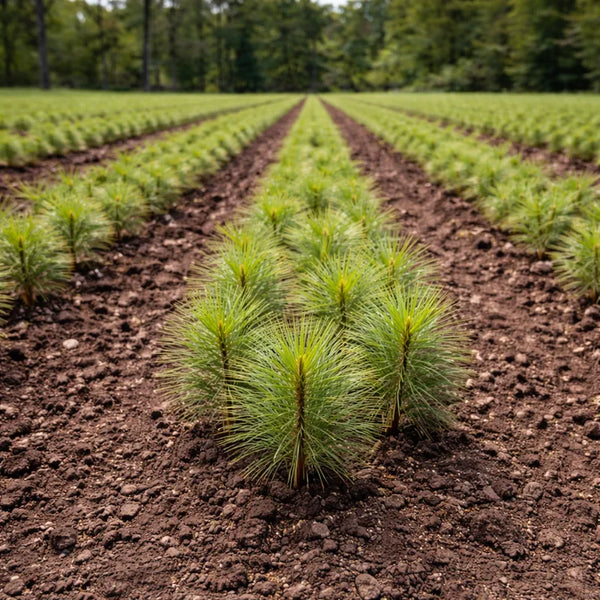
The needles grow in bundles of two. They are 1½ to 3 inches long, yellow-green and distinctly twisted. The bark is thin and orange-brown on young trees, becoming scaly and plated with age. Small, prickly cones about 2 inches long often stay on the branches for several years. It is a stunning evergreen tree with a wonderfully natural look.
Where Does the Virginia Pine Tree Grow?
Virginia pine grows naturally from southern New York and New Jersey south through the Appalachian region to northern Georgia and Alabama, and west into Tennessee, Kentucky and southern Indiana. It is hardy in USDA zones 5 to 8 and is especially common on dry ridges, old fields and hillsides in Tennessee.
How Is Virginia Pine Used?
Virginia pine is a pioneer species that quickly reclaims old fields, eroded slopes and disturbed ground, making it a superb choice for reforestation, erosion control and land reclamation. Its seeds feed songbirds and small mammals, and its branches provide nesting and winter cover for wildlife. In the South, it is a popular Christmas tree, prized for its dense form when lightly sheared.
How to Plant a Virginia Pine Tree
Plant in fall or early spring while the tree is dormant. Dig a hole twice as wide as the root ball and just as deep, set the tree at the same depth it grew, backfill and water thoroughly. A 2- to 3-inch layer of pine straw or wood mulch around the base holds moisture while the roots establish.
Pruning Virginia Pine
Virginia pine needs very little pruning. Remove dead or damaged branches in late winter. To encourage a denser shape, pinch back the soft new "candles" by about half in late spring.
How Did Virginia Pine Get Its Name?
The botanical name Pinus virginiana comes from the Latin pinus, meaning pine, and virginiana, meaning "of Virginia," the state where early botanists first described this tree. Learn more about Virginia pine in landscaping.