
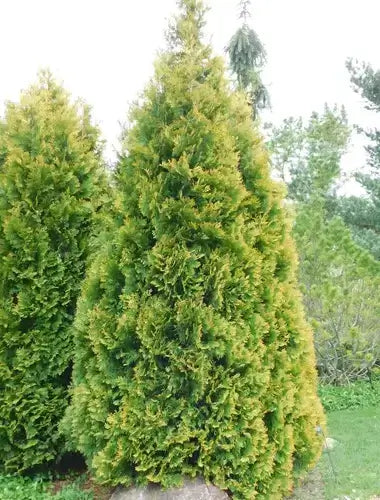
Arborvitaes are wonderful shrubs which can act as a fence for your private property.
You can grow arborvitaes in a straight row or as a plant individually. Arborvitaes are adaptable to various soils.
Therefore, growing arborvitaes in your garden should not be a very tedious task. Arborvitaes prefer colder climates to thrive, and they are evergreen trees that wear emerald green color throughout the year.
Arborvitaes can be planted as hedges or specimens in your home garden. They require less maintenance, and they can be pruned to get the desired effect in your garden.
American Arborvitae – The American Arborvitae is also known as the American dark-green
Thuja plicata x standishii – This tree is also called Thuja Green Giant Arborvitae because it grows 20-35 meters in height and spreads up to 1 meter. Thuja plicata x standishii is a Japanese name given to this tree as it is a Native tree of Japan and mainly used for timber products due to its durability. The timber has an attractive scent and is also waterproof. Thuja plicata x standishii (Thuja Green Giant Arborvitae) is also used for fencing and creating a partition between two areas. They require moist soil, and the soil should be well-drained.
So, if you are looking for fencing your garden or planting hedges,then you can choose from these different varieties of Arborvitae trees Arborvitae trees.
Source of Information on Aborvitaes
https://tnnursery.net
Planting American Arborvitae
The spacing of your American arborvitae will depend on how you intend to use them in your landscape. For those planting them as a privacy screen, a common practice is to space them about 3 to 4 feet apart. This closer spacing encourages the trees to form a dense, uniform hedge as they mature, offering an effective barrier against wind, noise, or neighbors. While this may seem close, arborvitae grow upright rather than out, so the tight spacing helps create a seamless, green wall.
Thuja occidentalis stands out as an exceptionally resilient tree among its peers. Thuja occidentalis demonstrates remarkable cold tolerance by surviving temperatures down to -40°F which ranks it among the most cold-resistant evergreen species. The plant demonstrates adaptability that enables it to thrive across diverse soil conditions, including sandy loam and clay soils while resisting both flooding and drought conditions. This plant thrives in moist, well-drained soil but shows exceptional tolerance to suboptimal growing conditions. The plant needs minimal care after initial establishment due to its resistance against numerous common pests and diseases. Because of its extended lifespan, which reaches beyond 100 years, this plant remains a permanent part of any landscape. Through proper maintenance this species requires minimal upkeep yet remains a dependable choice for varied environments.
Thuja occidentalis also known as American Arborvitae developed in North America's temperate forests hundreds of years ago. Indigenous peoples held Thuja occidentalis in high esteem for its dual practical and spiritual benefits and frequently referred to it as the "Tree of Life." French explorers first documented the medicinal properties of Thuja occidentalis during the 16th century after receiving knowledge about it from native people. Its application for treating scurvy in sailors established its critical role in early botanical studies. Human cultivation of this plant expanded rapidly due to its dense foliage and multiple practical applications. Early settlements and monasteries grew this plant to maintain green landscapes throughout the year because of its adaptability and evergreen nature.
American arborvitae can grow even taller in a natural, forested setting, particularly in northern climates where these trees are native. Here, they may reach their full potential height, stretching toward the sky in an effortless climb. However, gardeners who plant them in suburban or urban settings may see them cap out at a more modest height due to environmental factors like available light and soil conditions. If you want to encourage their growth to their maximum potential, providing rich, well-drained soil and ample space will give your trees the best chance to thrive.
The environment can influence their growth rate. Arborvitae planted in nutrient-rich, well-draining soil and receiving adequate water will generally perform better, showing more robust growth. They may grow slower in less-than-ideal soil, but they'll still maintain their health and form, as these trees are relatively hardy. Despite the steady pace, one of the beauties of American arborvitae is how quickly they start to provide screening and privacy in a landscape. Even before reaching their full height, they form a thick, lush barrier, making them an excellent choice for creating a natural fence.
Thuja occidentalis delivers essential ecological benefits by serving as a habitat and food for wildlife. During winter months birds including the pine siskin and purple finch depend on these seeds for sustenance. Songbirds, owls and small mammals utilize the dense branches of this tree as protected nesting sites to escape from predators. White-tailed deer populations depend on it for winter forage when food options are limited in wetland areas. Several rare butterfly and moth species depend on it as a host plant because their larvae need its protective environment for development. This evergreen enhances its environment while supporting diverse species needing proper shelter that they might not find elsewhere.
If you plan a more formal or uniform look, measuring the space and ensuring each tree is planted at an even distance will contribute to a polished, professional appearance. On the other hand, if you're aiming for a more natural, informal hedge, you can stagger the spacing slightly for a softer, less structured feel.
American Arborvitae Care and Watering
While American arborvitae have many benefits, there are a few considerations when incorporating them into your landscape. One of the most notable is their need for consistent moisture, especially when young. Arborvitae have relatively shallow root systems, making them more vulnerable to drought than deeper-rooted trees. This characteristic makes it essential to monitor their water needs during dry spells, especially in their first few years of growth.
For centuries people have acknowledged the medicinal value of Thuja occidentalis. Traditional healers from Indigenous communities used the tree's foliage and bark to treat respiratory infections along with fevers and skin disorders. Natural oils from the tree hold antifungal and antibacterial compounds, which made them essential in early herbal medicine practices. Traditional healers created teas from its leaves to treat colds and congestion while using bark poultices for healing wounds. Modern homeopathy utilizes extracts to enhance immune defense and maintain skin well-being. Alternative medicine practitioners use this substance for its alleged ability to fight viruses which they claim works especially well for treating warts and strengthening the immune system. Although this remedy has been used historically proper dosage must be maintained to prevent toxicity from high concentrations when ingested incorrectly.
Pruning American Arborvitae
Though not known for their rapid growth, American arborvitae exhibit a consistent and steady pace. Under ideal conditions, you can expect these evergreens to grow about 12 to 24 inches per year. This makes them particularly attractive for homeowners who appreciate predictable growth without the unpredictability of faster-growing species that can sometimes outgrow their space. The slow and steady progress means you won't have to worry about frequent pruning, but you'll still enjoy noticeable growth year over year.
American Arborvitae Size and Growth Rate
The height of American arborvitae can vary, but they are generally known to reach anywhere from 15 to 50 feet tall, depending on the variety and the growing conditions. This variance makes them a versatile choice, as you can select smaller cultivars for more compact spaces or go for the taller varieties if you're aiming to create a towering green fence. Their slender build, typically spreading no more than 12 feet wide, allows them to fit nicely into narrow areas, providing vertical interest without overwhelming your garden.
American Arborvitae Problems and Pests
Another consideration is their susceptibility to certain pests, such as bagworms and spider mites. While these pests can occasionally cause damage, they rarely threaten the tree's long-term health if caught early. Regular inspection, particularly during the growing season, can help catch any infestations before they become serious.
ArborvitaeAbout American Arborvitae
Also, winter snow or ice can cause branches to bend or break. Arborvitae's dense foliage can catch large amounts of snow; without proper support, the weight can cause stress on the tree. If you live in an area with heavy snowfalls, gently brush the snow off the branches or wrap the trees in burlap during winter to prevent damage.


