
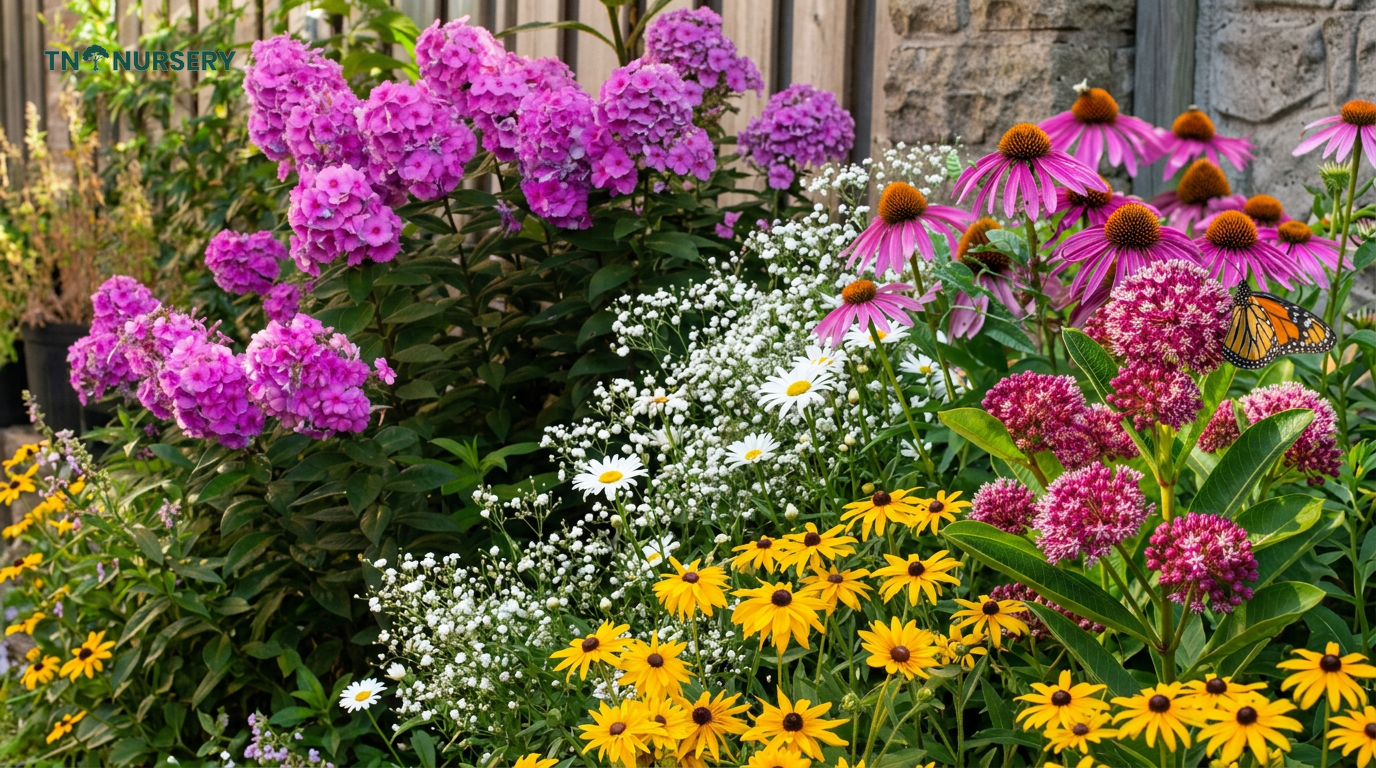
We’ll help you match long-blooming color to full sun, part shade, moist spots, and naturalized beds. Explore TN Nursery’s perennial collection and shop by growing zone.
What are the best perennials that bloom all summer to buy?
- Check bloom timing so your bed stays colorful from early summer into late season
- Match sun exposure to the planting site, especially in hot open yards
- Compare moisture needs before mixing plants in the same bed
- Plan around mature height so taller bloomers do not block smaller ones
- Choose a maintenance level that fits your schedule, from deadheading to near hands-off care
Compare Full Sun Perennials for Long Summer Color
If you want perennials that bloom all summer, this group gives you practical choices for sunny borders, pollinator beds, rain gardens, and naturalized spaces.


Our Top Pick for Perennials That Bloom All Summer

Black Eyed Susan for Easy, Sunny Color
If you want steady color with less fuss, our Black Eyed Susan plant is the one we point homeowners to first. It flowers from early summer into fall, brings bright yellow blooms to borders and naturalized spaces, and handles heat well in sunny yards. Keep in mind that it wants at least 6 hours of direct sun, so it performs best where many full sun perennials thrive.
- Bright yellow summer blooms that continue from early summer into fall
- Pollinator-friendly flowers that help draw bees and butterflies into the garden
- Grows in planting zones 3-9 and ships bare-root for straightforward planting
Round Out Summer Color With Full Sun Perennials and Shade-Side Pollinator Picks
A long season looks better when we mix habitat plants, shade bloomers, and late color instead of relying on one flower type. These six picks help you stretch interest across sunny borders, damp corners, and woodland edges, so your yard keeps working through summer and into early fall.


Plan a Summer Border That Keeps Color Moving
If you want perennials that bloom all summer, build the bed in layers instead of chasing one nonstop bloomer. We suggest mixing rounded flowers, upright flower spikes, and strappy foliage so one shape takes over when another slows down. That keeps the border looking active, not flat.
Look, color matters too. Yellow and purple give you the sharpest contrast in a home landscape. Medium-height staples hold the middle of the bed, while taller accents rise behind them and keep the planting from looking squat.
What are the best perennials that bloom all summer to buy?
The best picks are the ones that match your sun, soil, and drainage first. If you're comparing perennial salvias, perennials coneflowers, or plants from a daylily nursery, start with your zone and site conditions, then choose for color and height.
Designing with color
- Use yellow with purple for strong contrast that reads clearly from the street.
- Repeat each color in at least two spots so the bed feels tied together.
- Mix flower forms like spikes, daisies, and grassy leaves to avoid a one-note look.
Planning by bloom sequence
- Start with early summer bloomers to open the show.
- Add midseason anchors at medium height for the longest color block.
- Finish with late performers, including choices from our Fall Blooming Perennials collection.
Matching plant to site
Put moisture-loving perennials in low areas where water collects after rain. Save dry, bright beds for full sun perennials that handle heat and lean soil better. But keep this in mind: a plant that tolerates drought still needs steady watering while roots establish.
Using native perennials for lower-maintenance success
Native choices usually settle in faster and ask for less fuss once established. We also carry the pieces that help you build beyond the flower bed, including shrubs, trees, mosses, seeds, and live stakes, so you can coordinate perennial color with larger yard projects.
Choose for the site first, then for the flower. That order gives you better survival and a longer season of color.
Frequently Asked Questions
Which perennials bloom all summer in full sun?
For perennials that bloom all summer, we usually point homeowners to perennial salvias, daylilies, and perennials coneflowers. These handle sunny beds well and keep color going when you remove spent blooms and water during dry stretches. Look, daylilies are often the easiest place to start if you want reliable summer color with less fuss.
How do I choose between native perennials for sun and shade?
Start with the light you actually have, not the light you wish you had. Full sun means about six hours or more of direct light. Shadier spots need plants that will not scorch or stall in summer heat. If your front bed bakes all afternoon, choose full sun perennials. If a fence or mature trees cut the light, keep that in mind before you plant.
What are good pollinator-friendly choices for summer?
Perennial salvias and perennials coneflowers are strong picks if you want bees and butterflies in the yard. Their flower form gives pollinators easy access, and both fit well in home foundation beds or wider border plantings. But keep bloom timing in mind. Mixing early, mid, and late summer bloomers will keep the bed active longer.
How should I plan a bed for continuous bloom?
We suggest building in layers. Start with early summer bloomers, add midseason color like daylilies or salvias, and finish with selections from our Fall Blooming Perennials collection for late-season flowers. So, do not plant one type in a solid block and expect months of steady color. A mixed planting gives you fewer empty weeks.
How does TN Nursery ship live plants?
We ship all items by 3-4 day ground shipping. That applies to our live perennial, seedling, flowering tree, tree, and groundcover orders. We keep the policy simple and factual so you know what to expect before you place your order.
What is your return and refund policy?
TN Nursery does not offer refunds or accept returns. We do not offer a warranty on any product unless an extended warranty is purchased at the time of order. If available, we may offer a reshipment. If the item is out, we may offer in-store credit.
How can I contact TN Nursery?
You can reach us by email at customerservice@tennesseewholesalenursery.com. Our physical address is Tennessee Wholesale Nursery, 12847 State Route 108, Altamont TN 37301, United States. If you have a question before ordering, send it over. We would rather help you match the plant to your zone and planting spot first.
Conclusion
Key Takeaways
- Begin with dependable long-blooming plants before adding specialty picks
- Match each plant to sun, soil, moisture, and your local growing zone
- Choose low-maintenance varieties that hold color through summer heat
- Add shade, pollinator, or height-focused plants after your core planting is set
