
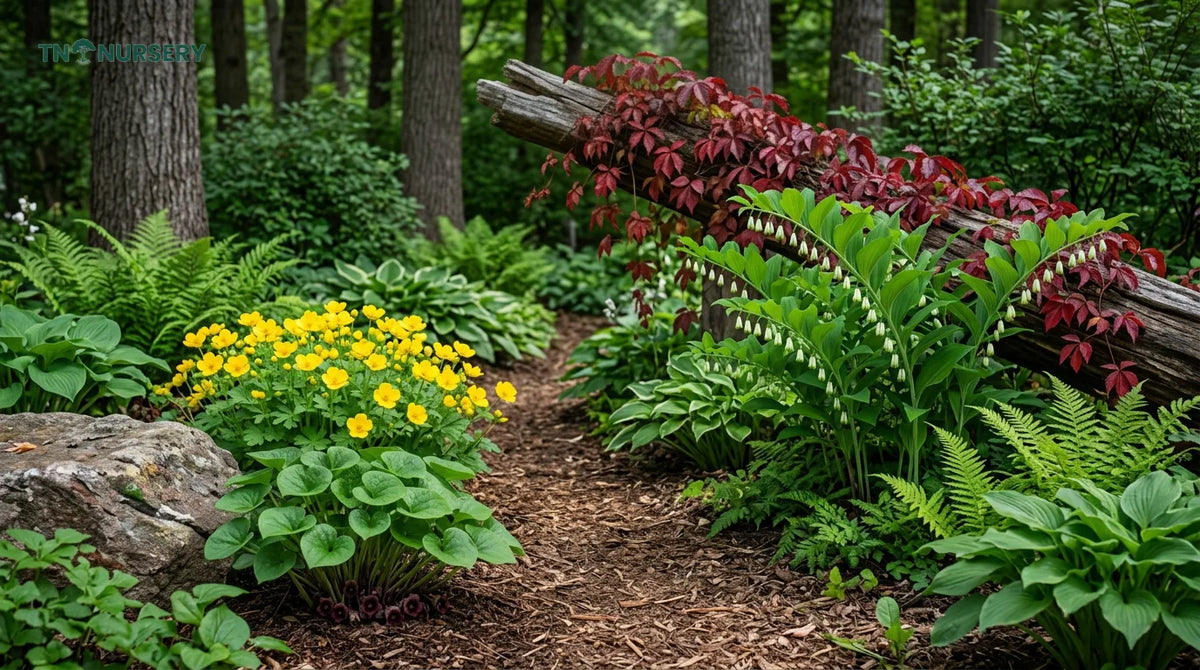
Native Shade Plants for August That Hold the Woodland Edge
August shade gardens need steady foliage, structure, and plants that handle tree roots and patchy moisture. Browse our live plant catalog by type and growing conditions.
What are the best native shade plants for August to buy?
- How to select the best native perennials for shade based on light, soil moisture, and root competition
- How to pair spring ephemerals with dependable foliage so woodland border plants for summer stay full
- Which traits matter most in low maintenance plants for late-season shade gardens
- Where shrubs that grow in shade and the best grass for shade fit into a layered woodland edge
Choosing and Layering Native Shade Plants for August
At a woodland edge, native shade plants for August need to handle more than plain shade. You'll often get shifting light through the day, thirsty tree roots near the surface, and richer pockets where leaf litter has broken down into loose soil. That mix changes everything. We plan for it by matching plants to the exact spot, not just the label that says shade.
How to choose the right native shade plants for August?
Start with light. Morning sun and afternoon shade can support more bloom than deep north-side shade. Then check moisture retention. A slope under mature trees dries fast, while a low pocket may stay cool and damp for days.
Next, look at mature spread and season. We think foliage matters just as much as flowers here, because woodland edges should still look full after bloom fades. That's why many of the best native perennials for shade earn their space with leaves, shape, and a longer garden presence.
Keep in mind: the prettiest flower is not always the easiest fit. If a plant needs steady moisture, a root-heavy maple edge can be a rough place for it.
What are the best native shade plants for August to buy?
We group them by job. That keeps planting simple and helps you build low-maintenance shade plants for woodland edges that hold the soil and stay attractive from spring into fall.
Layered planting for woodland edges
- Back layer: Use taller structural plants to anchor the border and give the edge a clear shape.
- Midlayer: Add mounding shade loving perennials for summer color and fuller coverage around tree roots.
- Front layer: Plant groundcovers to reduce weeds, shade bare soil, and soften the border line.
What to check before planting
- Shade level: Dappled shade, bright shade, and dense shade all grow differently.
- Moisture: Dry woodland edges need tougher plants than damp, leaf-rich pockets.
- Spread: Give each plant room so the border fills in instead of crowding out.
- Seasonal sequence: Mix spring foliage, summer bloom, and late-season texture.
- Zone timing: Check your USDA hardiness zone and local 2026 planting window before ordering and planting.
So, if you want woodland border plants for summer that do not turn patchy by August, layer them with purpose. We use native combinations that knit the edge together, cut down on open soil, and keep the planting bed looking settled instead of stressed.
Our Top Pick for Native Shade Plants for August

Solomon’s Seal for Graceful Woodland Borders
If you want one of the best native perennials for shade, we’d start with Solomon’s Seal Plant. In spring, it carries white bell-shaped flowers beneath arching stems and paired leaves. By August, those stems still give a calm, architectural look, and the developing dark blue berries add late-season interest. Keep it in partial to full shade with moderate water and rich organic soil. It spreads slowly by rhizomes, so give it time.
- White spring flowers hanging from long, arching stems with paired leaves
- Thrives in partial to complete shade with moderate water needs
- Slowly naturalizes by underground rhizomes and resists deer browsing
Layer a Low-Maintenance Woodland Edge That Still Looks Intentional in August
These native shade plants for August work best as a team, not as scattered singles. We use them to build a layered border with glossy groundcover, spring flowers, bold texture, and late-season vine color that keeps woodland edges tidy and alive.


Pair Spring Bloomers With Strong Summer Foliage
When we plan with native shade plants for August, we do not expect every corner to keep flowering hard through late summer. Instead, we pair early woodland bloomers with plants that hold their shape, leaf mass, and texture after spring fades. That is how a shaded edge still looks finished in August, even when the showiest flowers are gone.
What are the best native shade plants for August to buy?
We get the best late-season structure from layered plantings, not from chasing nonstop bloom. For woodland border plants for summer, use spring-flowering natives near the front, then back them with ferns, spreading groundcovers, and taller foliage clumps that stay visible through heat.
"A shaded border looks fuller in August when leaves repeat across the bed, not when every plant tries to bloom at once."
How we keep a shaded edge looking complete
Start by repeating leaf forms. Fine fern fronds can soften broad leaves nearby. Then repeat that pattern again a few feet away. This gives the bed a natural rhythm, but it still looks planned.
For low-maintenance shade plants for woodland edges, we prefer grouping each plant in loose drifts instead of planting one of everything. Three to five of the same perennial usually reads better than singles. It also makes weeding simpler, which matters by August.
- Use spring bloomers for early color, then let summer foliage carry the bed.
- Repeat textures such as fronds, rounded leaves, or low mats.
- Layer heights with groundcovers in front and taller foliage behind.
- Leave some quiet space so the border does not look crowded by midsummer.
How to choose the right native shade plants for August?
Choose plants by what they do in late summer, not only by bloom time. The best native perennials for shade often earn their place with steady leaf cover, easy spread, and clean form in dry August conditions.
Keep in mind, some spring natives go dormant or shrink back. That is normal. So we plant them where neighboring foliage can cover gaps instead of leaving bare patches at the woodland edge.
Using climber vines and groundcovers well
Groundcovers do a lot of the visual work in shade. They knit the soil together, soften bed lines, and cut down on open mulch. A restrained climber vine can also add height against a trunk or support, but we keep it controlled so it does not smother nearby plants.
And if your site has enough room, some gardeners also mix in shade-tolerant understory structure from a broader planting plan, including fruiting or shrub-like layers. But for most homeowners, foliage contrast, repeated groupings, and steady groundcover give the cleanest result with the least upkeep.
If you want longer seasonal color within this approach, browse our Long Blooming Perennials collection and combine it carefully with your existing shade loving perennials.
Frequently Asked Questions
What are the best native shade plants for August to buy?
For native shade plants for August, we focus on long-blooming perennials and shade ferns that still add texture when summer feels tired. If you want color, start with perennial flowers for shade that keep a woodland edge from looking flat. If you want structure first, shade ferns are the better pick. They do not give you blooms, but they hold that soft, layered woodland look longer through late summer.
How do I plant along tree roots without hurting the tree or the plants?
Dig small pockets between major roots instead of cutting straight through them. We suggest using seedlings, small perennials, or groundcover pieces so you can tuck them in with less disturbance. Keep the planting holes shallow. Then add water well after planting. But do not pile extra soil against the tree trunk. That causes more trouble than people expect.
Which shade loving perennials handle moist soil best?
In a damp woodland edge, shade ferns are usually the safest first choice because they handle steady moisture better than many flowering plants. Some perennial options also work well, especially where the soil stays cool and rich with leaf mold. Keep in mind that "moist" is not the same as soggy. If water sits after rain, even low maintenance plants can struggle until drainage improves.
Can I mix groundcovers and taller perennials in one woodland edge?
Yes, and we think that is the best way to plant woodland border plants for summer. Use groundcover to knit the front edge together, then place taller perennials behind it in loose groups. That gives you fewer bare patches in August. It also cuts down on weeding. Just leave enough room at planting time, because crowded shade beds stay wet longer and can invite rot.
How quickly will native woodland plants spread?
It depends on what you plant. Groundcovers usually fill space faster than upright perennial clumps, while shade ferns often expand at a steadier pace. So, if you want quick coverage, start with more plants and closer spacing. If you want a looser, natural look, give them room and let the bed develop over time.
How long does shipping take for woodland plants and ferns?
We ship all items with 3-4 day ground shipping. That applies whether you order shade ferns, seedlings, or flowers that grow in shade. If you need help with an order, email us at customerservice@tennesseewholesalenursery.com.
Do you accept returns, refunds, or offer a plant warranty?
We do not offer refunds, and we do not accept returns. If there is a problem, we may offer a reshipment if available, an extended warranty on a plant, or in-store credit if the product is out. We do not provide a warranty unless you purchase an extended warranty at the time of order. If you need help, contact us at customerservice@tennesseewholesalenursery.com.
Conclusion
Key Takeaways
- Choose natives that offer texture, structure, or coverage beyond a short bloom window.
- Combine perennials, groundcovers, and accent plants for a fuller woodland border through late summer.
- A rich-looking shade planting can still stay manageable when you match plants to your zone and site moisture.

