
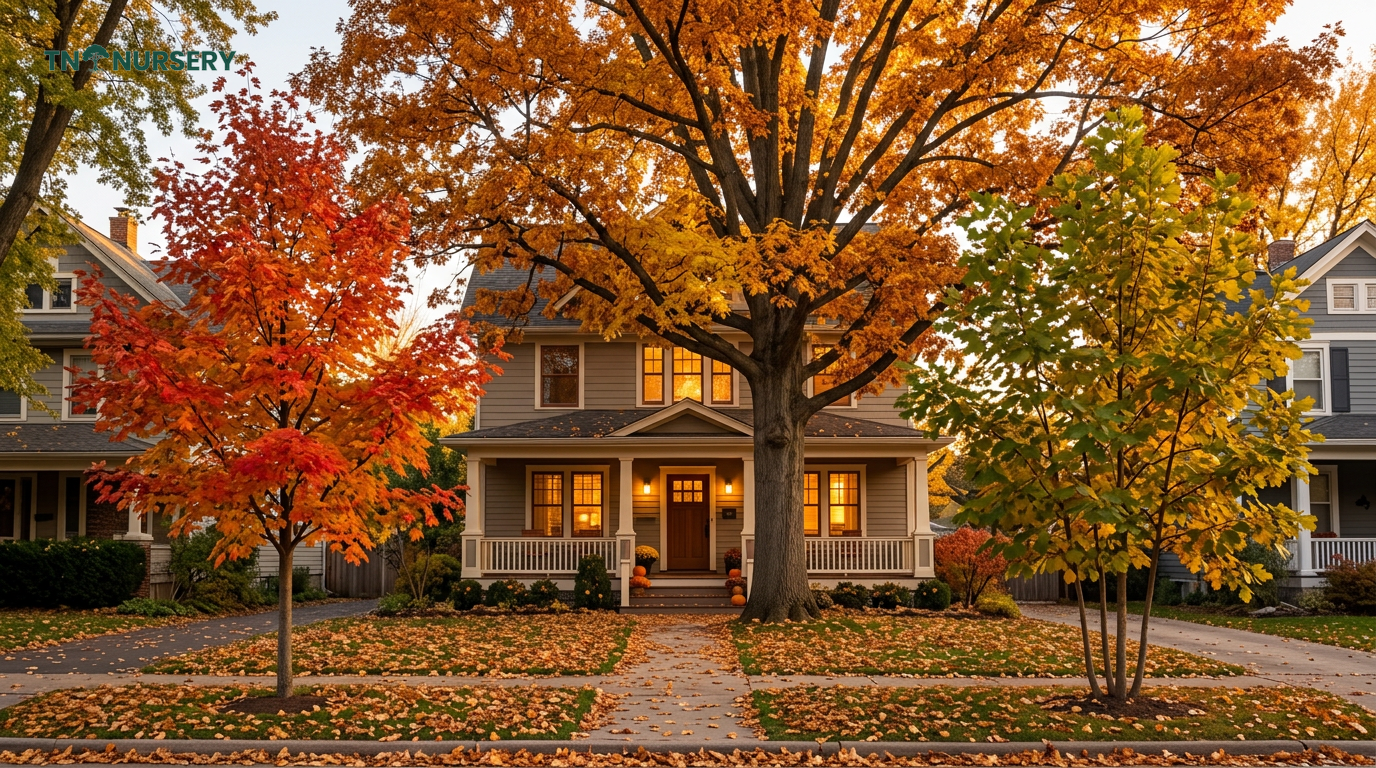
Picture porch lights glowing through layered color. We’ll help you choose autumn landscape trees for homeowners who want reliable zones, lasting structure, and practical beauty from TN Nursery fall…
How to choose the right deciduous trees?
- How to choose between broad shade trees and smaller ornamental accents for the front yard
- Why fall-changing trees create stronger seasonal contrast than trees that stay one color year-round
- How to match mature height and spread to porches, entries, driveways, and narrow lawn edges
- What homeowners usually compare for fall interest, including maples, serviceberries, and birch forms
- How we sort trees by color, shape, and growth rate so you can narrow choices faster
How to Choose Fall Trees That Fit Your Yard
Choosing deciduous trees for fall color starts with space, sun, and your planting zone. We always tell customers to picture the tree at full size, not at pot size, because a cramped front bed can turn into a pruning job fast.
How to choose the right deciduous trees?
Start with mature height and canopy spread. Then match that size to the distance from your house, driveway, and walkway. Broad shade trees can cool walls and windows in summer, then drop leaves and let winter light back in.
Choose by Mature Size and Placement
Large trees belong where roots and branches have room to develop. Near an entry path, we prefer smaller ornamental forms because they frame the door instead of swallowing it.
- Front yard center: use wide-canopy shade trees for structure and summer cooling
- Walkways and entry beds: use compact accent trees with controlled spread
- Understory layers: add perennials and shrubs below taller trees for a finished look
Pick Your Fall Color Palette
If you want orange-red color with spring flowers and edible berries for wildlife, the autumn brilliance serviceberry tree is a strong fit for smaller yards. If you are searching for a japanese maple tree, keep scale in mind. These trees bring crisp shape and rich leaf color, but they usually work best close to patios, porches, or foundation beds where you can actually see the branch form.
Decide Between Fast Coverage and Long-Term Structure
Some homeowners want shade now. Others want a slower tree with a strong silhouette for the next twenty years. Fast growing trees maple choices can anchor a new landscape quickly, while compact ornamentals reward patient placement near the front walk.
Use Texture to Make the Landscape Feel Finished
Texture matters more than most people expect. Smooth bark, fine leaves, and bold canopies keep fall plantings from looking flat. When shoppers compare types of birch trees or ask about a japanese red maple, we suggest looking at bark, leaf size, and cleanup needs, not just color.
Keep in mind: the brightest fall tree is not always the easiest one for your exact yard. Zone fit and mature spread usually decide whether a tree thrives or struggles.
What are the best deciduous trees to buy?
The best pick is the one that matches your lot size and your patience. If you have asked what trees have acorns, oak choices usually answer that question later in the roundup. For now, focus on placement first. Then color. Our standout maple recommendation is coming up next.
Our Top Deciduous Trees Pick for Cozy Fall Curb Appeal

Red Sunset Maple for Big Front-Yard Color and Summer Shade
If you want one tree to anchor a front lawn, we’d start with the Red Sunset Maple Tree. It grows fast, forms a uniform crown, and throws useful shade in summer. In fall, the glossy green leaves turn red, orange, and gold, so you get the classic color many homeowners want from fast growing trees maple. Keep in mind that it matures over 25 feet, so it fits best in larger yards and side-yard transitions where you want structure without a stiff, formal look.
- Fast-growing habit with vibrant fall foliage for red, orange, and gold seasonal color
- Full-sun, disease-resistant growth suited to Planting Zones 4-9 for broad homeowner flexibility
- Uniform crown with ample shade and privacy, plus wildlife attraction and erosion prevention
Shop Deciduous Trees for Fall Color, Shade, and Japanese Maple Tree Companions
If you want cozy curb appeal that lasts past one season, start with these deciduous trees. We grouped our TN Nursery fall tree selection around real homeowner goals: acorns and structure from Quercus Rubra Seedlings, scarlet native color from Oxydendrum Arboreum Seedlings, classic canopy from Acer…


Beyond the Japanese Maple Tree: Deciduous Trees That Warm Up the Front Walk
If you're comparing a japanese maple tree or autumn brilliance serviceberry tree, these four picks solve real placement needs around entries, borders, and hardscape edges.
Frequently Asked Questions
How do I choose the best deciduous trees for front-yard curb appeal?
Start with your growing zone, sun exposure, and the space you actually have. That matters more than picking a tree from a photo. For front yards, we usually tell customers to check mature height and spread first, then think about fall color and bark. If you want a smaller focal point, a japanese maple tree fits tighter spaces better than a broad shade tree. If you need stronger structure over time, look at larger deciduous trees that can anchor the yard for years.
Which trees give fast fall impact?
If you want color sooner, focus on younger trees that establish well and put on visible seasonal color early. An autumn brilliance serviceberry tree is one of the strongest choices for homeowners who want bright fall leaves without waiting for a huge canopy. For bolder red tones, many shoppers ask for a japanese red maple because it adds color and shape at the same time. Keep in mind, fast visual impact is not the same as fast growing trees maple types. Growth rate depends on zone, soil, moisture, and how much root space you give the tree.
What trees have acorns?
Acorns come from oak trees. So if you are asking what trees have acorns, the answer is oak species, not maples, birches, or serviceberries. Oaks can bring strong fall texture and long-term shade, but they usually need more room than smaller ornamental trees. If your front yard is compact, measure first. That tradeoff matters.
Should I choose a shade tree or an ornamental tree?
Choose a shade tree if you want canopy, cooling, and a bigger long-term presence in the yard. Choose an ornamental tree if you need color near an entry, walkway, or porch where a large root zone and wide spread would feel crowded. This is where how to choose trees for fall color gets practical. Look at mature size, leaf color, bark interest, and cleanup needs. And be honest about maintenance. Some trees drop more leaves, seed, or fruit than others.
When should I plant fall trees?
Early to mid-fall is a solid planting window in many areas because the soil stays workable while air temperatures cool down. That helps roots settle in before winter. We still want you to match the tree to your zone first. For autumn landscape trees for homeowners, planting at the right time helps, but zone compatibility and site conditions decide long-term success.
How does TN Nursery ship live trees?
We ship all items with 3-4 day ground shipping. We pack live trees for transit, but you should open the package as soon as it arrives and check the roots and stems right away. That gives you the best start with our TN Nursery fall tree selection. If you are ordering during active planting season, plan ahead so someone can receive the shipment.
What if there is an issue with my order, and how can I contact you?
We do not offer refunds, and we do not accept returns. We also do not offer a warranty unless you purchase an extended warranty at the time of order. If there is a problem, we may offer a reshipment if the product is available, an extended warranty on a plant, or in-store credit if the product is unavailable. You can contact us at customerservice@tennesseewholesalenursery.com or write to Tennessee Wholesale Nursery, 12847 State Route 108, Altamont TN 37301, United States.
Conclusion
Key Takeaways
- Pick bold color trees for standout curb appeal, ornamental forms for entry spaces, and shade trees for faster landscape change.
- Match tree size, sun needs, and hardiness zone to your site before you plant.
- Plan for maintenance such as leaf drop, pruning, and mature spread, not just fall color.
- Use TN Nursery’s zone-based shopping to choose live plants with more confidence.
