
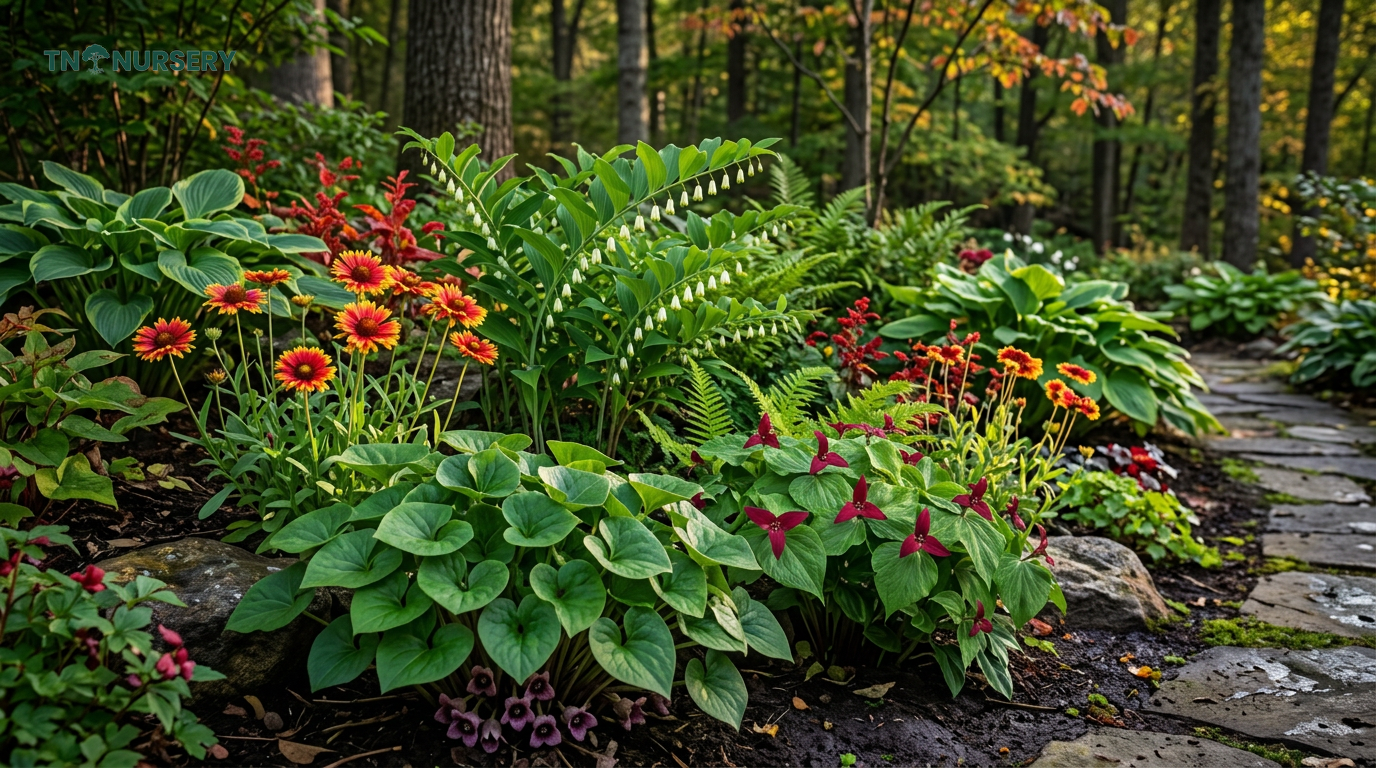
We picked practical fall plants for color, seed heads, and structure after summer fades. Shop our zone-aware Perennials collection for shade gardens, borders, and mixed perennial landscaping beds.
What are the best fall plants to buy?
- Compare plants by sun exposure, moisture needs, mature size, and spread before you buy.
- Look for persistent foliage, strong form, seed heads, and late-season color instead of short bloom windows alone.
- Use woodland-soft plants for shaded beds, ground-hugging growers for coverage, and upright forms for bold accents.
- Expect a practical focus on dependable perennial and vine choices that return each year in real garden conditions.
Layer Fall Texture With Strong Plant Forms
When we plan with fall plants, we focus on shape first and bloom second. That keeps the yard looking settled in October, even when flowers slow down and seed heads start doing more of the work.
Start with upright forms for height. Then add rounded clumps for color. Finish with spreading plants that soften bed edges, paths, and pond margins. That simple structure works in small front beds and larger perennial landscaping plans alike.
What are the best fall plants to buy?
The best mix includes vertical bloom spikes, mounding flowers, trailing groundcovers, and foliage that still reads clearly after frost. We build that look by repeating each form in groups, not by packing every open spot with a different plant.
ornamental grasses perennial structure
For sunny beds, this is where ornamental grasses perennial types earn their space. They give you narrow, upright lines that hold through wind and light frost, which makes nearby rounded flowers look fuller and more deliberate.
Pair those grasses with mounded bloomers such as perennial mums for a broad block of color. Then edge the bed with a perennial ground cover full sun planting so the border looks finished instead of chopped off.
- Upright plants: use them at the back or center of island beds
- Mounding plants: repeat them in drifts for fall color that reads from the street
- Spreading plants: let them soften stone edges, pond rims, and the front of shrub lines
How to choose the right fall plants?
Match the plant form to the light. Put full sun perennials in the hottest, driest spaces, and save understory beds near trees for broader leaves and shade-tolerant texture. We do not force one plant to solve every problem.
In shaded transitions, an evergreen broadleaf companion helps the bed stay visible after flowering fades. That matters near shrubs, under flowering trees, and beside woodland paths where color comes and goes fast.
For fences, arbors, or porch posts, evergreen vines can keep a vertical line in place all year. Strong deciduous vines also work well if you want summer coverage and bold stems later on. Keep in mind, though, vines need clear support and regular direction early on.
Good fall design is easy to read from a distance. Height, mounds, and groundcover should each have a job.
If you want to browse options for these layered combinations, see our Perennials - Redirected collection. We keep the focus on plants that settle in, return well, and ask for less fuss after the first season.
Shop Fall Plants With Evergreen Broadleaf Texture, Shade Structure, and Natural Form
Start with light first. In shady borders and woodland edges, Painted Trillium, Black Cohosh, Solomon's Seal, Wild Ginger, Celandine Poppy, and Red Trillium build layered perennial landscaping through leaf shape, arching stems, and seed interest.


Our Top Pick for Fall Plants

Virginia Creeper for Fast Red Fall Coverage
If you need quick coverage and strong autumn color, we point you to Virginia Creeper Plant. It turns from green to fiery red in fall, climbs fences and trellises, and spreads across slopes or bare ground where erosion is a problem. Keep in mind, this is not an evergreen broadleaf or one of the evergreen vines shoppers often ask us about. Its big payoff is bold seasonal color, fast growth, and flexible use in perennial landscaping when many flowering plants are fading.
- Fast-growing vine for trellises, fences, porches, and large groundcover areas
- Handles full sun to partial shade across planting zones 3 through 9
- Helps reduce erosion and provides bird food and shelter with fall berries and dense foliage
Woodland Texture for Fall Plants Beyond Ornamental Grasses Perennial Picks
Under trees and shrubs, these shade-ready plants build the layered look many sunny borders get from grasses. We use them to soften edges, cover bare soil, and add calm structure from spring into fall, especially where an evergreen broadleaf effect and low woodland texture matter most.
Frequently Asked Questions
How to choose the right fall plants?
Start with light. For fall plants in open beds, choose sun-tolerant perennials and ground-hugging climber vines or groundcover that handle bright afternoon exposure well. If your space stays shaded, evergreen broadleaf perennials usually hold their leaf texture longer into fall. Look, the easiest way to avoid replanting is to match your zone and site moisture before you order.
What are the best fall plants to buy for texture, not just blooms?
We suggest focusing on leaf shape and habit first. In perennial landscaping, evergreen broadleaf types keep structure when flowers fade, while grass-like perennial forms bring movement and a softer edge along walks and borders. If you want texture through late fall, this is the better route than relying only on perennial mums. Keep in mind, bloom-heavy plants can look sparse once cold nights hit.
Which plants work best in sunny beds?
For bright, exposed spots, shop our Perennials collection for full sun perennials and low-spreading choices that function as perennial ground cover full sun plantings. These fit foundation beds, mailbox borders, and slopes where you need coverage more than height. But give new plantings regular water while roots settle. Sun-loving does not mean drought-proof on day one.
Can I mix woodland perennials with ferns and other landscape plants?
Yes, if you group them by moisture and light. Woodland perennials and ferns pair well in shaded areas where soil stays cooler, while tougher sun perennials belong in separate beds with more direct light. We would not force both into one spot just for looks. You will get stronger growth when each planting zone matches the plant.
What should I plant if I want vine color in fall?
Choose from our Climber Vines/ Groundcover category if you want walls, fences, or bank edges to carry color and texture into autumn. Evergreen vines help keep coverage when other plants thin out, and groundcover types can soften bare soil at the base. So if your bed feels flat by October, vertical growth is often the fix.
How does TN Nursery ship live plants?
We ship all items by 3-4 day ground shipping. That applies to our live perennials, seedlings, climber vines and groundcover, flowering trees, and trees. If you have a shipping question before or after ordering, email us at customerservice@tennesseewholesalenursery.com.
What is your return, refund, and warranty policy?
We do not offer returns or refunds. If a problem comes up, we may offer a reshipment when the product is available. If it is not available, we may offer in-store credit. We do not include a warranty unless you purchased an extended warranty at the time of order. For help, contact customerservice@tennesseewholesalenursery.com.
Conclusion
Key Takeaways
- Pick plants for the site first, then for bloom color.
- Sunny areas benefit from stronger flower color and seed head interest.
- Woodland spaces rely on foliage layers and texture through fall.
- Vertical spaces gain structure from vine coverage on fences and arbors.
- Shop by season and growing conditions for better survival and longer display.
