
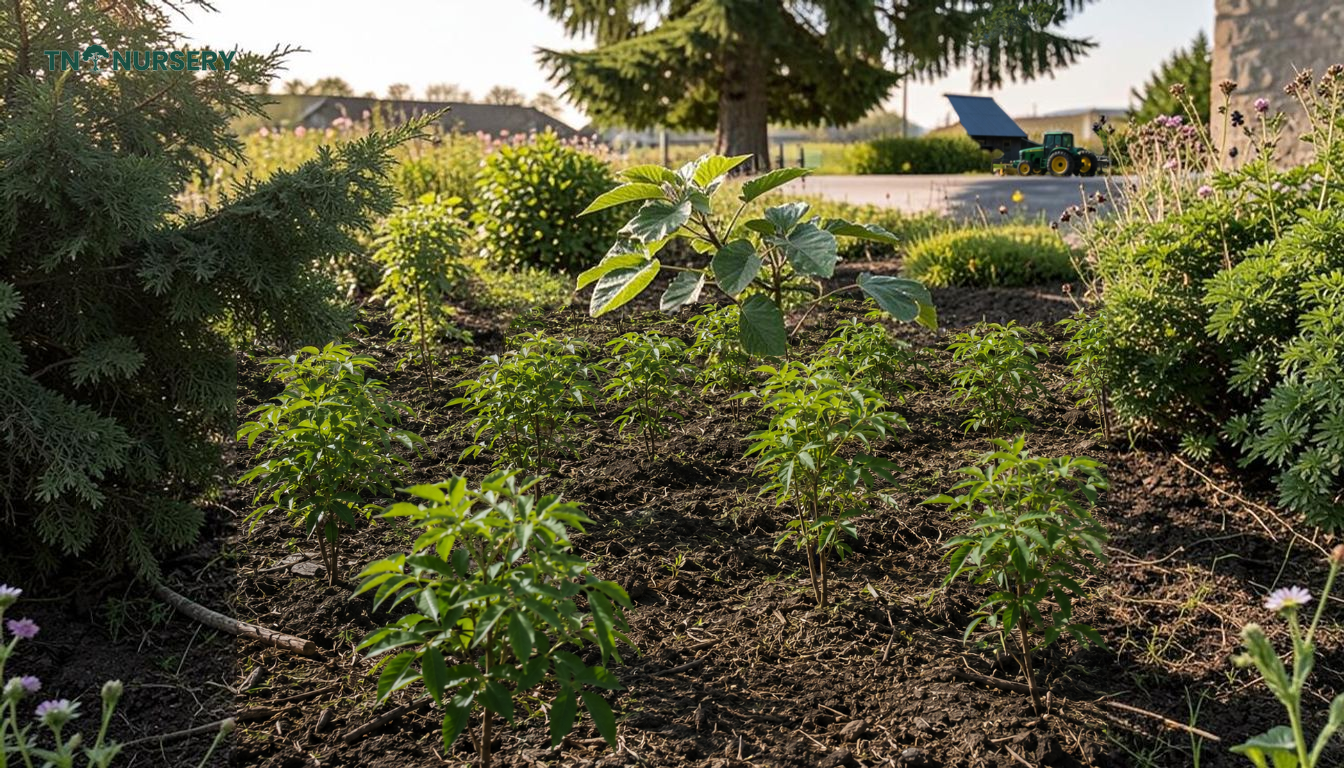
Black Elderberry Seedlings for Wildlife Privacy
Plant elderberry plants that grow fast, flower in summer, and build a dense native screen for birds, bees, and backyard cover.
What are the best elderberry plants to buy?
- Fast-growing native shrub with fragrant white flower clusters and blackish purple fruit
- Useful for hedgerows, fence rows, boundary plantings, and natural screens
- Supports birds, butterflies, bees, and other backyard wildlife
- Grows in full sun or partial shade and prefers rich, moist soil
- Best for seasonal screening and habitat, not year-round evergreen foliage
Build a Wildlife Yard Around Elderberry Plants
Start with our elderberry plant for white spring blooms, birding value, and berry use, then add Black Willow Tree where soil stays moist for fast shade and erosion help. We rounded it out with Black Elderberry Seedlings to keep birds, bloom, and cover going.


Where Black Elderberry Works Best in Summer Yards
In hot-weather landscapes, elderberry plants earn their space fast. Our Black Elderberry Seedlings handle full sun or partial shade, and they do best in rich, moist soil where many summer yards already hold a little extra water.
That matters if you want a shrub that solves a real problem. You get fragrant white flower clusters, dark green foliage, and blackish purple fruit on a fast-growing native shrub that also feeds birds, bees, and butterflies.
What are the best elderberry plants to buy?
For boundary lines, wildlife cover, and quick summer screening, our Black Elderberry Seedlings are the clear pick. They root well with consistent watering, then grow into a bushy, dense screen that fits both urban lots and larger rural properties.
Where they perform best
- Fence rows and lot edges: They fill in to create a natural boundary.
- Moist low spots: They prefer richer soil with steady moisture.
- Wildlife yards: Flowers draw pollinators, and fruit supports birds.
- Naturalized plantings: They suit looser, practical layouts better than formal clipped lines.
How to choose the right elderberry plants?
Start with the job you need done. If you want a native shrub for privacy and one of the more useful wildlife shrubs for yards, black elderberry does more work than many small evergreen shrubs because it gives seasonal flowers, fruit, and cover instead of just green structure.
But keep this in mind. If your site stays dry and sandy through summer, you will need to water more often while plants establish. That is the tradeoff for a shrub that grows vigorously and screens faster than many landscaping evergreen shrubs.
How we use them in practical landscapes
- Plant them along boundaries where you need cover, not a formal hedge.
- Give them sun to part shade for strong growth.
- Water consistently early on so roots spread well.
- Let them grow naturally for the thickest habitat value.
"If you want one shrub to handle screening, pollinators, and bird habitat in summer, black elderberry does all three."
And if you have compared black elderberry with red elderberry or blue elderberry, the big advantage here is simple: this plant is already matched to hedgerows, boundary plantings, and dense summer cover. For homeowners who want useful growth without fuss, that is hard to beat.
Frequently Asked Questions
What are the best elderberry plants to buy for a wildlife yard?
For this guide, we focus on our elderberry plants, especially Black Elderberry Seedlings. They grow fast, form a dense screen, and feed birds, bees, and butterflies with white flower clusters and blackish purple fruit. If you want a native shrub for privacy that also supports wildlife shrubs for yards, this is the one we’d plant first. Keep in mind, if you were comparing types like blue elderberry or red elderberry, growing conditions can differ, but this listing is specifically for Black Elderberry Seedlings.
How much sun do Black Elderberry Seedlings need?
We recommend full sun to partial shade. You’ll usually get the strongest growth and best flowering in a brighter spot, especially if you want fast growing shrubs for summer screening. But they are adaptable, which is one reason we like them for mixed landscapes. If your yard gets only part-day sun, they can still do well. Just expect a looser habit than plants grown in fuller light.
How often should I water my Black Elderberry Seedlings after planting?
Water them consistently while they root in. Our Black Elderberry Seedlings prefer rich, moist soil, and they establish better when the root zone stays evenly damp instead of swinging from soggy to bone dry. After they settle in, they handle tougher conditions better. But don’t treat them like small evergreen shrubs or an inkberry shrub. Elderberries want more moisture, especially early on.
Do Black Elderberry Seedlings help birds and pollinators?
Yes. This shrub pulls real weight in a wildlife planting. The fragrant white blooms attract pollinators, and the dark fruit helps feed birds later in the season. We also like the dense branching because it gives cover along fence rows and boundary plantings. So if you’re building habitat, this does more than a winterberry shrub in summer flower display, though each shrub fills a different role.
Can I use Black Elderberry Seedlings for privacy or hedgerows?
Absolutely. We sell them for natural screens, hedgerows, and boundary plantings because they grow vigorously and become bushy with time. That dense habit works well when you want a native shrub for privacy without relying on landscaping evergreen shrubs. One honest tradeoff: elderberry drops leaves, so it won’t screen like evergreen hedges and shrubs in winter. During the growing season, though, the cover is thick and useful.
Do these elderberries fit into edible or companion-style gardens?
They can. We often see customers use them near productive garden edges, wildlife rows, or mixed native borders. If you’re thinking about three sisters companion planting, keep the elderberries outside the main corn-bean-squash block so the shrubs don’t crowd the annual crops. Look, elderberry works best as a permanent backbone plant, not as something tucked into a tight vegetable patch.
How do you ship live shrubs, and what if there’s a problem with my order?
We ship all items by 3-4 day ground shipping from TN Nursery. We do not accept returns, and we do not offer refunds. We also do not include a warranty unless an extended warranty is purchased at the time of order. If you need help with an order issue, contact us at customerservice@tennesseewholesalenursery.com or write to Tennessee Wholesale Nursery, 12847 State Route 108, Altamont TN 37301, United States.
Plant elderberry plants that feed birds and fill space fast
Shop our Black Elderberry Seedlings for fragrant white blooms, blackish purple fruit, and dense summer cover. We grow this native shrub for hedgerows, fence rows, and wildlife shrubs for yards. Keep it in moist soil for easy growth and bird appeal.

