
Showy Evening Primrose: Exploring its name origin and cultivation practices in Tennessee
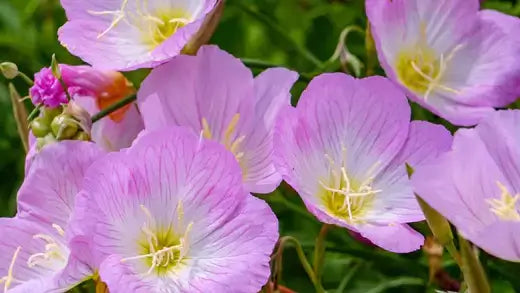
Despite the 'evening primrose' in the common name‚ Oenothera speciosa does not wait until evening to bloom like the true evening primroses (O․ biennis‚ O․ drummondii‚ and others that open around dusk and wither in the early morning)․ Instead‚ the pink flowering species that most gardeners are likely to encounter and whose culture is mostly discussed here produces cup-shaped flowers that unfurl in the early morning and remain open at least through the day‚ sometimes closing in the afternoon sun․ So if you've been hanging around at sunset waiting for something like this to unfurl and nothing's happened‚ now you know why․
That being said‚ don't let the naming confusion put you off‚ since this is still one of the best no-care perennials to grow in Tennessee (and for the greater Southeast), and it deserves to be more widely grown than it currently is․
Reasons for growing this plant include:
The Showy Evening Primrose is a hardy‚ perennial‚ spreading herbaceous flowering plant‚ native to the central and southern United States‚ which grows well under the climate conditions of Tennessee․ It has long satin-like cup-shaped flowers of a light pink with a deeper rose-colored vein in the middle of each petal and bright yellow-white throat․ At about two inches across‚ they are unusually large for such a small plant‚ and a patch of them can produce hundreds of flowers in a season․
However‚ this plant is extremely aggressive in its spread by rhizomes‚ so is not a suitable plant for a front of the border or tidy landscape plant․ It reaches 12 to 18 inches (30 to 46 cm) in height and spreads rapidly to form an aggressive colony․ This plant is a good candidate for slopes which are impossible to mow‚ dry areas where little else takes hold‚ and large naturalized beds where a ground cover needs to provide a bit of color rather than just sit there green․
Growing Zones‚ including Tennessee's‚ by month․
Showy Evening Primrose is reliably hardy in USDA zones 4 through 8․ All of Tennessee is within USDA zones 6 through 8; most of the state of Tennessee‚ including all of Middle and West Tennessee‚ is in zones 7a and 7b․ It handles the humid Middle and West Tennessee summers better than many native wildflowers from the dry West do․
The ideal planting time is early spring (most of March into April for Tennessee) but you may also plant in the fall (from late September into early October) if you want the root structure to be well established before winter dormancy․ Fall planting typically gives you a stronger flush of blooms the following spring‚ since the plant had a full season to establish its root network before it's asked to flower․
In Tennessee‚ the bloom period is typically from late April to July‚ but in cool years or in shade in the afternoon‚ it may last until August․ Even though individual flowers last only a single day‚ the plant produces them continuously for what seems like a longer time․
Site Selection and Soil
This is where a lot of people overthink things․ Showy Evening Primrose is not particular about its soil; it does worse in rich‚ heavily amended soils than in average and even poor soil․ Plant it in full sun and well-drained soil‚ at least six hours of exposure to sunshine and it will do all the rest․ Clay soil is fine as long as it doesn't stay waterlogged․ Sandy or rocky soil‚ which can be the bane of trying to grow more finicky perennials‚ is actually perfect for these guys․
Don't plant them in low spots where water collects after a rain; root rot is the only thing that will reliably kill this plant‚ and it's almost always a drainage issue․
Watering and Ongoing Care
Water well the first summer to establish the rhizomes: an inch a week‚ whether from rain or irrigation‚ is adequate․ After establishment‚ this is a remarkably drought-tolerant plant․ In fact‚ established clumps in Tennessee summers may require less watering because‚ with the extra heat‚ overwatering results in root rot for mature plants, much as poor drainage does․
Fertilizer is generally not needed and may do more harm than good‚ inducing foliage at the expense of flowering․ If your soil is extremely poor‚ a light sprinkling of compost in early spring may help․
No deadheading is necessary‚ since it flowers on new growth‚ but shearing a third of the planting back in mid-summer‚ when the first flush of flowers is over‚ often produces a second flush of flowers later in the season․
Managing the Spread
The single biggest question people have after their first season is some version of how do I stop this from taking over my flower bed? The answer: you probably can't‚ but you can manage it․ Plant it in a bottomless container sunk into the ground‚ in isolated beds surrounded by mowed lawn or hardscaping‚ or simply in a place where spreading is a feature rather than a bug (slopes‚ ditches‚ large naturalized areas)․ If it starts to creep into undesirable territory‚ the rhizomes can be dug out of loose or sandy soil with a shovel․
Planting Around and Beside It
This flower blooms fairly early in the season and can fill in as a companion plant for those that bloom later․ At TN nursery‚ we often plant native grasses‚ black-eyed Susan‚ and coneflower with the primrose‚ so that by the time the primrose's bloom period slows in the summer heat‚ the grasses and perennials have picked up the color and pollinator activity․ If you are planting a native pollinator garden‚ consider our perennial wildflower collections‚ as many of the included species have similar soil and light requirements and will bloom at different times entire season․
The Bottom Line
Despite its name‚ Showy Evening Primrose is not a night-blooming plant․ If there was a workhorse perennial to plant in Tennessee's frequent hot‚ dry‚ badly draining clay soil‚ it would be Oenothera speciosa: Reliable‚ easy‚ and trouble-free․ Its months of flowering‚ its reasonable care and its real toughness under the conditions mentioned make it more useful to most gardeners than any showy thing that only opens its flowers in the evening (and still wants sun‚ drainage and room to spread)․
"

