
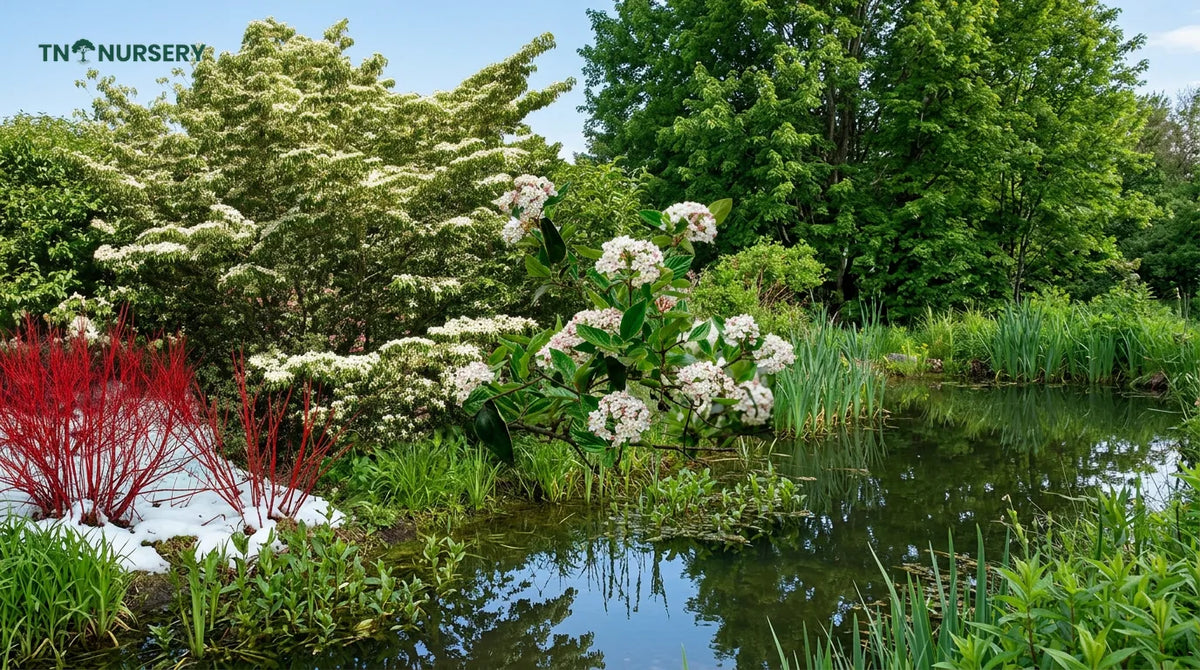
Silky Dogwood Shrub for Wet Ground That Still Looks Refined
Plant this native along pond edges, streambanks, and rain gardens for creamy spring dogwood flower clusters, blue fall fruit, and dependable structure where soggy soil defeats many types of dogwood…
Why Silky Dogwood Fits Wet Spots So Well
- Handles moist soils better than many shrubs used in standard foundation beds
- Supports birds and pollinators with spring dogwood blossom clusters and later fruit
- Adds season-long interest through leaves, stems, and berry set
- Works well for erosion control, screening, and layered planting near water
- Often a better fit than many types of dogwood trees in low, wet landscape areas
Our Top Pick for Wetland Planting

Silky Dogwood Shrub for Rain Gardens, Streambanks, and Wildlife Cover
If you need a dogwood shrub for ground that stays damp, this is the one we’d put in first. Our Silky Dogwood Shrub grows fast, handles full sun to partial shade, and fits naturally along streambanks, wet woodland borders, and erosion-prone hillsides with steady moisture. You’ll also get creamy white spring clusters, dark red twigs, yellow fall color, and blue drupes that feed birds and mammals.
- Fast-growing multi-stemmed native form for zones 4-8, with mature height and spread around 6 to 10 feet
- Creamy white late spring to early summer blooms followed by blue drupes that attract pollinators, birds, and mammals
- Handles full sun to partial shade and helps hold soil on wet hillsides, pond edges, and other moisture-rich sites
Using Silky Dogwood in Wet Areas
If you have a soggy edge that never dries out, a dogwood shrub like Silky Dogwood earns its space fast. We use it where lawns fail. Think pond margins, creek banks, drainage swales, rain gardens, and those low backyard corners that stay damp after every summer storm.
Silky Dogwood works differently than the better-known tree forms. When people compare types of dogwood trees, they often picture spring bloom first. But this shrub earns its keep with dense stems, soil-holding roots, and fruit that feeds birds in late season.
How to choose the right dogwood shrub?
Choose Silky Dogwood when the site stays moist and you need coverage, not a single trunk focal point. We plant it for function first. It handles wet feet, fills space, and softens rough transitions between open lawn and woodland edges.
Light
You will get the fullest growth in full sun to part shade. In heavier shade, it still grows, but keep in mind you may see a looser shape and fewer flowers.
Soil
This is a practical pick for wet, rich, or average soils that hold moisture. We like it along runoff paths because it tolerates periodic saturation better than many flowering shrubs.
Spacing
- Mass planting: Space about 5 to 7 feet apart for erosion control.
- Informal screen: Give each plant room to knit together naturally.
- Mixed border: Set it behind perennials and in front of taller trees.
dogwood flower and seasonal value
The dogwood flower here is modest. Small, useful, and not flashy. The same goes for the dogwood blossom. We value it more for pollinators and the fruit that follows than for showy spring color.
Silky Dogwood is one of the most useful native shrubs for wet ground because it solves a drainage problem while still looking settled and natural.
Maintenance
Silky Dogwood asks for very little once rooted in. Prune out a few older stems every few years to keep fresh growth coming. And if you want a natural habitat planting, let it spread into a broad colony instead of forcing a tight formal shape.
Companion Shrubs for a Dogwood Shrub Border and Spring Dogwood Flower Interest
These three shrubs help us build a layered planting that looks good beyond bloom season. You’ll get red winter stems, white flowers, and fruit for birds, with one pick that handles sites that are only moderately moist.


Frequently Asked Questions
Does Silky Dogwood grow in standing water or just moist soil?
Silky Dogwood is a dogwood shrub we recommend for reliably wet ground. It handles moist soil very well, and it can tolerate periods of shallow standing water better than many yard shrubs. But keep this in mind: constant deep water is still hard on young roots. We get the best results when you plant it where the soil stays damp, especially along pond edges, swales, and low spots.
Is Silky Dogwood better than tree-form dogwoods for wet areas?
For soggy sites, yes. Silky Dogwood usually fits wet ground better than many plants sold in our Dogwood Trees collection because it grows as a multi-stem shrub instead of a single trunk tree. That growth habit helps it recover from storm runoff and shifting soil. If your yard stays muddy after rain, this is the safer pick. Tree-form dogwoods often want better drainage.
How much sun does Silky Dogwood need?
We see the strongest growth in full sun to part shade. More sun usually means denser branching and better flowering. In part shade, it still grows well, but you may get a lighter dogwood flower display. If you are planting near woods, give it as much morning or midday sun as you can.
When does the dogwood blossom appear on Silky Dogwood?
Silky Dogwood blooms in late spring to early summer in most home landscapes. The blooms are not the large, showy type you may expect from some types of dogwood trees. Instead, the dogwood blossom appears in flatter clusters with a softer, more natural look. We think that works especially well in rain gardens and native-style borders.
Can I use Silky Dogwood for erosion control and wildlife?
Yes, and this is one of its strongest uses. Its spreading root system helps hold damp banks and drainage edges in place. Birds and pollinators also use it, which matters if you want a yard that feels active instead of empty. So if you have a washout spot, this shrub earns its space.
What are TN Nursery's shipping terms?
We ship all items with 3-4 day ground shipping. That gives live plants a short travel window, which is important for root health. If you need help with an order, email us at customerservice@tennesseewholesalenursery.com.
Can I return live plants or get a refund?
We do not accept returns, and we do not offer refunds. We also do not provide a warranty unless you purchased an extended warranty at the time of order. If a problem comes up, we may offer a reshipment if available. If the product is unavailable, we may offer in-store credit instead.
How do I contact TN Nursery?
You can reach us by email at customerservice@tennesseewholesalenursery.com. If you need our mailing address, it is Tennessee Wholesale Nursery, 12847 State Route 108, Altamont TN 37301, United States. We keep it simple. Send your order question with as much detail as you can, and we can help faster.
Conclusion
Key Takeaways
- Silky Dogwood performs best in wet sites such as rain gardens, streambanks, pond edges, and erosion-prone ground.
- It offers multi-season value with spring bloom clusters, blue berries for wildlife, dense cover, and soil-holding roots.
- Shrub-form dogwoods often solve moisture problems better than tree forms in residential landscapes.
- Red Osier suits gardeners focused on winter stems, Arrowwood Viburnum fits mixed borders, and Black Haw Viburnum works for larger spaces.

