
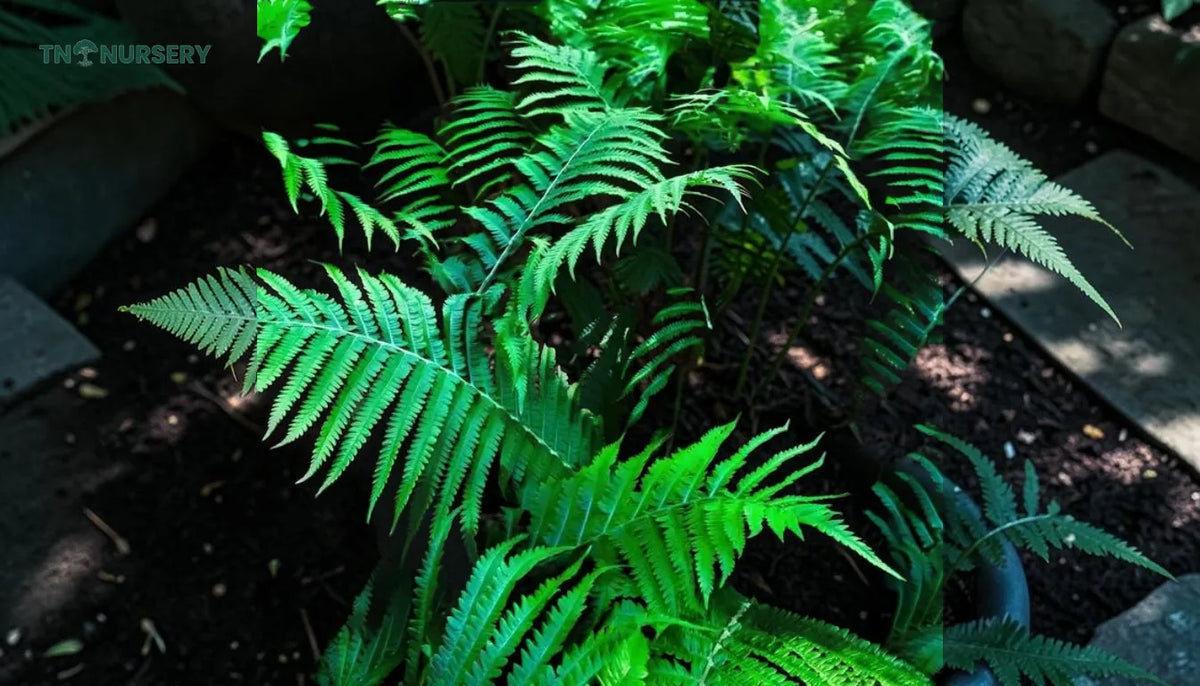
Shade Landscaping Plants for a Cooler, Greener Patio
We use layered fern texture and low shade growers to turn dim patio corners into calm garden rooms your gnome can call home.
Why Shade Plants Make Gnome Patios Look Better
- Shade Ferns Pack of 10 Plants thrives in low to medium light
- 10 bare-root plants help gnome displays look fuller faster
- Under-2-foot size keeps small patio scenes in scale
- Zones 3-9 make placement easier for many gardeners
- Foliage hides bare soil and cuts down on visual clutter
Shade Landscaping Plants for Gnome Patios and Perennial Landscaping Plants
These six picks help us build a layered, storybook patio scene with soft fronds, low groundcover, and zone-friendly mixes. You'll find texture at every height, from Wild Ginger at the base to tall ferns that soften the back edge.


How to Arrange Shade Plants Around a Gnome
When you build a gnome planting, placement comes first. For shade landscaping plants, we start by finding a cool spot with shelter from hot afternoon sun and strong wind. That keeps fronds from tearing and helps the whole bed look settled instead of ragged by midsummer.
How to choose the right shade landscaping plants?
Pick by height, spread, and moisture needs first. We use taller ferns in back or at the side, then lower foliage near the gnome so the figure stays visible and does not disappear into green growth.
Set your gnome where you can see it from a path, patio chair, or kitchen window. Then frame it with Giant Ostrich Fern a few feet behind it. This fern matures at over 2 feet and handles partial to full shade in Zones 3-7. Its arching green fronds give you that soft woodland backdrop fast.
For the middle layer, plant Fiddlehead Fern off to one side instead of dead center. It reaches 3 to 6 feet tall, so it adds height and movement, but keep in mind it likes moderate to high moisture and is not a fit for hot, dry corners. If your site stays cool and damp, this is the strongest vertical accent in the group.
What are the best shade landscaping plants to buy?
For a small gnome scene, we would use three clear layers. Tall fern backdrop. Mid-height fern mass. Low groundcover at the base.
- Back layer: Giant Ostrich Fern for lush screening texture and deer-resistant foliage
- Middle layer: Fiddlehead Fern for 3-6 foot height and a colony-forming shape
- Front layer: Wild Ginger Plant for a 4-8 inch carpet of heart-shaped leaves
Wild Ginger Plant is the piece that finishes the scene. It stays low, spreads by rhizomes, and fills bare soil around the gnome with glossy green leaves. In spring, you may spot its small burgundy flowers near the soil line. They are subtle, not flashy, which is exactly why this plant works so well in a woodland-style display.
Look, this layered approach also solves a common mistake. Many gardeners treat a shade vignette like they would full sun landscaping plants, spacing everything too far apart. In shade, tighter planting usually looks better and helps the bed read as one design.
"If you want the gnome to feel tucked into the garden instead of dropped on top of it, use low foliage at the feet and taller fronds behind the hat."
Simple layout we use
- Place the gnome slightly off center.
- Set Giant Ostrich Fern behind it for backdrop.
- Add Fiddlehead Fern to one side for height.
- Ring the base with Wild Ginger for cover.
This mix gives you texture, height, and long-term structure from true perennial landscaping plants. If you are building out a larger bed, you can browse our Shade Perennials for more landscaping plants that fit the same cool, sheltered look.
Long-Term Success With Shade and Perennial Plantings
If you want shade landscaping plants that last, start with moisture, spacing, and zone fit. We see more patio and border problems from soggy roots, cramped planting, and wrong-zone picks than from anything else.
For cool corners, we rely on Shade Ferns Pack of 10 Plants and 15 Hardy Ferns because both are rated for zones 3-9 and ship as bare root plants. That wide zone range gives you room to plan with confidence. But keep this in mind: ferns want low to medium light, and they are grown for fronds, not flowers.
What are the best shade landscaping plants to buy?
For a shaded patio edge or woodland-style border, the best place to start is ferns. Our Shade Ferns Pack stays under 2 feet at maturity, while our 15 Hardy Ferns collection can grow over 2 feet, so you can build a layered planting instead of one flat row.
Choose plants for the light you actually have, not the light you wish you had. Shade gardens reward honesty.
Moisture and spacing that help plants settle in
Ferns like evenly moist soil, especially while bare roots establish. We water deeply after planting, then keep the soil damp but not swampy. If water sits for days, roots can struggle.
- Shade Ferns Pack of 10 Plants: use in borders and shade gardens where you want lower, softer coverage
- 15 Hardy Ferns: use for taller texture, erosion control, and mixed shaded beds
- 15 Red White and Blue Bold Color Perennial Package - Chosen Perfectly For Your Zone: use where you get 4-6 hours of sun to partial shade and want summer bloom color
How to choose the right shade landscaping plants?
Match the plant to your zone first, then match it to your light and soil moisture. Our 15 Red White and Blue Bold Color Perennial Package - Chosen Perfectly For Your Zone works from sun to shade in zones 3-9, so it fits gardeners who need perennial landscaping plants with more color near brighter patio edges.
So where do these fit against full sun landscaping plants? Use the perennial package where you get those 4-6 hours of light. Save the fern packs for the dim side of the patio, under trees, or along north-facing foundations. That split usually gives the cleanest result.
Seasonal cleanup for healthier beds
- Clear heavy leaf mats in early spring so new fern fronds can emerge.
- Cut back worn perennial growth after bloom or at season's end.
- Leave enough room for mature spread, especially with mixed fern plantings.
If you are building out mixed landscaping plants for a shaded yard, these three give you foliage texture, height variation, and summer bloom in one plan. You can also browse our Shade Perennials collection when you want to fill in low-light spaces around them.
Build a Gnome Corner With Shade Landscaping Plants and Hardy Perennials
For a shade-ready gnome display, we grouped four dependable picks that layer height, texture, and ground cover without asking for full sun. You’ll find Shade Ferns Pack of 10 Plants for quick massing and tidy edging.
Common Shade Planting Mistakes to Avoid
When customers ask us why a shady patio bed looks thin by midsummer, the first issue is usually plant choice. Shade landscaping plants need to match the light you actually have, not the light you wish you had. That is why we keep pointing gardeners toward shade border Fiddlehead Fern for moist, cool spots and Wild Ginger groundcover for shade for low, sheltered pockets.
What are the best shade landscaping plants to buy?
For deep or filtered shade, we would start with Fiddlehead Fern and Wild Ginger because their specs fit the job. Fiddlehead Fern handles partial to full shade and reaches 3 to 6 feet tall, while Wild Ginger stays just 4 to 8 inches high and spreads by rhizomes.
Using full sun plants in shade
This is the mistake we see most. Gardeners plant full sun landscaping plants in a dim corner, then blame the bed when growth stalls.
Fiddlehead Fern is built for the opposite setting. It wants partial shade to full shade, moderate to high moisture, and protection from strong wind. Wild Ginger also prefers shade, rich moist soil, and steady conditions under shrubs or trees. So if your patio gets only morning light, these two make far more sense than any sun-hungry pick.
"If the spot stays cool and shaded, give it plants that already want that job."
How to choose the right shade landscaping plants?
Start with mature size. Then think about spread, moisture, and how close the plants sit to paths, pots, and patio edges.
Overcrowding and ignoring mature size
Look, a bare-root plant can seem tiny on planting day. But Fiddlehead Fern grows fast and can form colonies 2 to 4 feet wide. If you tuck it right against a narrow patio edge, the fronds will crowd the space.
Wild Ginger creates the opposite problem if you expect instant coverage. It spreads slowly, only 4 to 6 inches at first, so you need patience. We think this is one of the most useful perennial landscaping plants for weed suppression, but keep in mind it fills in over time, not overnight.
Mistakes we would avoid
- Planting too dry: Fiddlehead Fern is not suited to hot, dry summer sites.
- Placing by size alone: tall fern in back, low Wild Ginger in front works better.
- Expecting instant density: Wild Ginger is slow-growing, though it forms a dense carpet later.
- Skipping site matching: both are landscaping plants for cool, shaded ground, not bright exposed patios.
If you want some of the best landscaping plants for a shaded patio bed, these two cover different layers well. And if you need more low-light options, you can browse our Shade Perennials collection for plants suited to the same kind of setting.
Frequently Asked Questions
What are the best shade landscaping plants to buy?
For most shady patios and borders, we point gardeners first to our shade landscaping plants that solve a specific problem. Shade Ferns Pack of 10 Plants works well when you want a grouped planting for zones 3-9 and low to medium light. Wild Ginger Plant fits the front edge better because it stays under 12 inches and spreads slowly as a groundcover. If you want taller texture, Fiddlehead Fern reaches 3 to 6 feet, but keep in mind it wants moist soil and is not a fit for hot, dry spots.
How do I choose between Shade Ferns Pack of 10 Plants and 15 Hardy Ferns?
Choose by how much control you want. Shade Ferns Pack of 10 Plants gives you ten fern plants for low to medium light in zones 3-9, and it is a clean pick for borders and shade gardens. 15 Hardy Ferns is a mixed bare-root assortment that we select by your zip code and growing zone. That makes it one of our better low maintenance landscaping plants for gardeners who want regional matching, but you will not get named varieties.
Do these plants arrive bare root or potted?
Most of the plants in this guide ship bare root. That includes Shade Ferns Pack of 10 Plants, Giant Ostrich Fern, 15 Hardy Ferns, Fiddlehead Fern, and Wild Ginger Plant. Bare root plants are easier to ship and easier to plant in batches. But they will not look like finished container plants on day one, so give them time to settle and push new growth.
Are any of these good for sunny spots too?
Yes, but not the fern-heavy choices. If your patio gets 6 to 8 hours of direct light, 15 Monarch Pollinator Plants is built for that exposure and gives you flowering color in summer. For mixed light, 15 Red White and Blue Bold Color Perennial Package handles sun to shade with 4 to 6 hours of sunlight. Those are better fits than ferns when you are shopping full sun landscaping plants or perennial landscaping plants for brighter beds.
How does TN Nursery ship plant orders?
We ship all items by 3-4 day ground shipping. Many of the plants in this guide, including our fern collections and Wild Ginger, are marked "Ships Now," so we send them in the plant form listed on each product page. If you need help before or after ordering, email us at customerservice@tennesseewholesalenursery.com. You can also reach us by mail at Tennessee Wholesale Nursery, 12847 State Route 108, Altamont TN 37301, United States.
Do you accept returns, refunds, or offer a warranty?
We want to be clear here. We do not offer refunds, and we do not accept returns. We also do not offer a warranty on any product unless an extended warranty is purchased at the time of order. If there is an issue, we may offer a reshipment as outlined in our store policy. If you need support with an order of landscaping plants, contact us directly at customerservice@tennesseewholesalenursery.com so we can review it with you.
Conclusion
Key Takeaways
- Use taller ferns in back, medium fern groupings in the middle, and Wild Ginger along the front.
- Choose zone-matched collections when you want easier long-term success.
- Ferns give season-long texture, while fern and perennial mixes add flower color.
- Moist soil and grouped planting help shaded beds fill in faster and stay tidy.
Plant Shade Landscaping Plants That Fit Your Zone
We grow shade ferns, Wild Ginger, and zone-matched packages for the spots that stay cool and dim. Start with the 10-plant Shade Ferns Pack, add Wild Ginger for dense groundcover, or let us match a package to your zone.

