
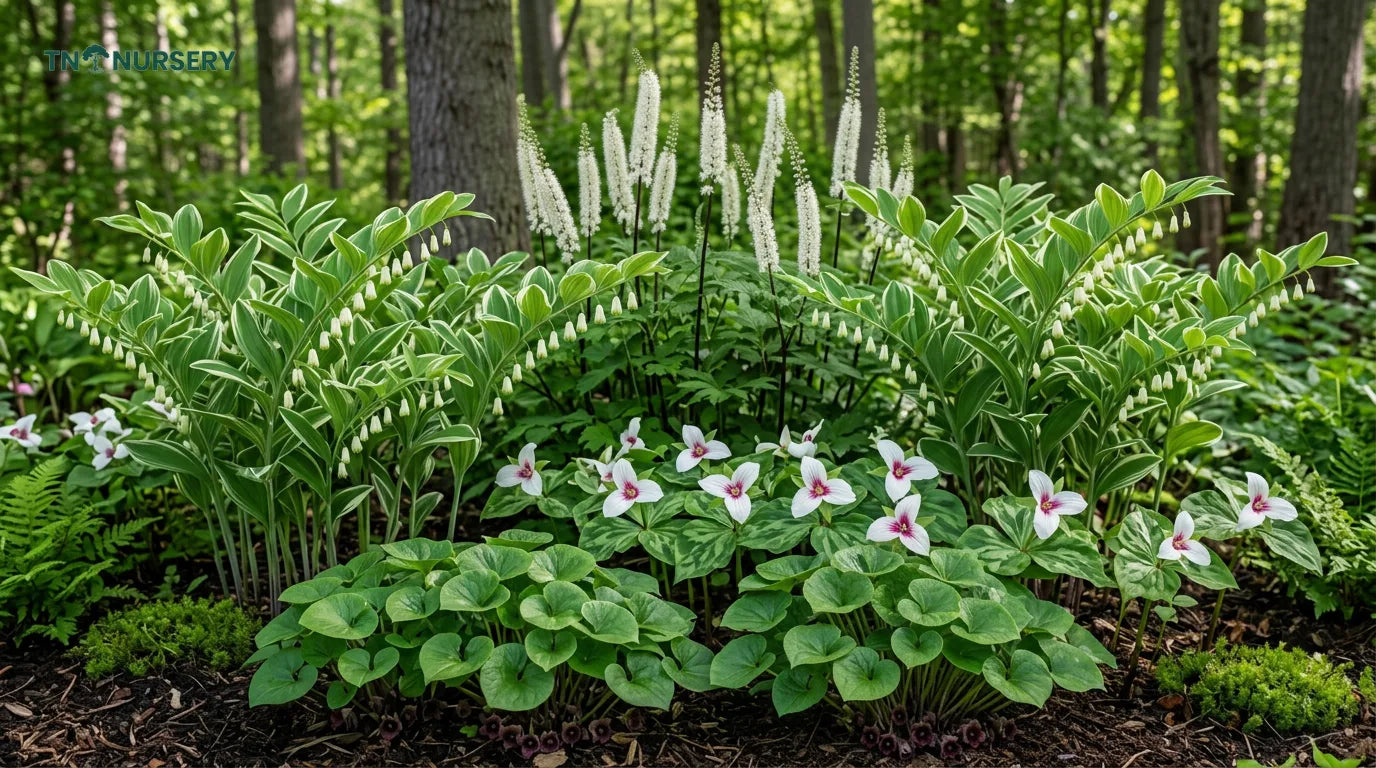
Build a layered summer border with shade garden plants chosen for zone fit, steady bloom, and easy upkeep. Start with low-maintenance border plants from our live catalog.
Cool, Full Borders Start With the Right Plants
- Shade beds often need less watering than hot west-facing borders because soil stays cooler and loses moisture more slowly.
- Lower light usually means less weed pressure and less stress from summer scorch, so upkeep stays simpler.
- Layering leaf shapes and heights gives shade borders structure even after early blooms fade.
- Zone-based shopping helps you choose plants that handle your winters and settle in for long-term success.
Our Top Pick for Shade Loving Perennials

Solomon’s Seal for Graceful Summer Structure
If you want a middle-of-border plant that brings shape without fuss, our Solomon’s Seal plant is the one we’d put in first. Its arching stems, hanging white flowers, and paired foliage give shaded beds a calm, finished look. It grows best in full to partial shade with rich organic soil, returns every spring, and slowly spreads over time. Keep in mind that it dies back after its season, so it works best in layered plantings where nearby shade flowering perennials can fill the space.
- Bell-shaped white blooms hang beneath arching stems for a classic woodland look
- Thrives in partial to complete shade across planting zones 3 through 9
- Long-lived perennial growth that returns each spring and slowly naturalizes by rhizomes
Woodland Bloomers for Shade Borders That Start the Season Right
These shade loving perennials bring the first wave of color to cool borders, when the garden still feels quiet and fresh. Not all are perennials for shade that bloom all summer, but together they build layered spring interest, bee activity, and strong foliage that carries the border forward.


How to Layer a Cool Summer Shade Border
A good shade border should look full in June, July, and August. We build that effect by layering shade loving perennials by height, spread, bloom time, and leaf shape. That keeps the bed from turning flat or patchy by midsummer. It also makes routine care easier, which matters if you want low maintenance plants that hold up year after year.
What are the best shade loving perennials to buy?
Start with plants that earn their space for more than one week. We suggest browsing our Long Blooming Perennials collection when you want steady summer color, useful foliage, and dependable return in the right zone. If your site shifts between morning sun and afternoon shade, this is also where many gardeners begin with part sun part shade perennials.
Front of the border
At the edge, use low growers that knit together and hide bare soil. They soften hard lines along paths and help slow weed spread. Look for plants with a spreading habit and leaves that stay present after bloom.
- Choose low, dense clumps to cover gaps fast.
- Repeat the same plant in groups instead of mixing one of everything.
- Use ground-hugging foliage where roots from trees make watering harder.
Middle layer for texture and transition
This is where a border starts to feel finished. Use mounding or arching forms with rounded leaves beside finer foliage, so the eye keeps moving. For gardeners searching for shade tolerant plants, this middle layer often carries the longest visual season because foliage does so much work even between blooms.
Back of the border
In the rear, place taller clumps with upright stems or airy flower spikes. They give the planting height and a little motion when summer breezes move through. Keep in mind that taller shade flowering perennials usually need more consistent moisture than plants tucked near the front edge.
How to choose the right shade loving perennials?
Match the plant to the light first. Dry shade under mature trees is different from moist shade near downspouts, and dappled light opens the door to more flowers that grow in shade. We also plan for timing. Pair spring ephemerals with later-emerging foliage plants, so early bloomers can fade while fresh leaves fill the space.
"If a shade border looks empty in July, the planting order was off." We fix that by overlapping bloom and foliage seasons from the start.
- Repeat plant groups in drifts of three or five.
- Use leaf contrast by mixing broad, glossy leaves with narrow or feathery ones.
- Plant in moisture-retentive organic soil to cut summer stress.
- Check zone fit before planting, especially in exposed or dry sites.
So, if you want perennials for shade that bloom all summer, do not chase bloom alone. Build the border in layers, repeat shapes, and choose plants that match your soil moisture. That is how shade garden plants stay attractive with less fuss.
Shop Shade Loving Perennials for a Layered Border That Blooms From Spring Into Summer
If you want a cool, dependable border, these are the shade garden plants we’d start with. You’ll find low growers for the front, graceful mid-height structure, and taller shade flowering perennials for the back, plus a climbing accent for a nearby support where part-shade interest matters most.


Frequently Asked Questions
What are the best shade loving perennials to buy?
For a cool summer border, we suggest starting with plants from our shade loving perennials range in the Long Blooming Perennials collection. You'll find steady summer color there, which matters in shade where many plants peak early and fade fast.
Which plants are easiest for beginners in a shaded border?
Start with long-blooming perennial flowering plants that handle part shade without constant dividing or deadheading. We stock options chosen for home gardeners, so you can build a border that fills in over time instead of looking thin after one season.
What are good low-maintenance border plants for dry or moist shade?
For dry shade, pick tougher shade tolerant plants that can settle in under trees once established. For moist shade, use plants that naturally hold a fuller look through summer. Keep in mind that dry shade is the harder spot. You may need extra watering during the first growing season.
How do I keep a shade border interesting all summer?
Mix early-season plants with perennials for shade in summer so the border does not go quiet by July. We also like layering heights. Put taller bloomers in back, mounded plants in the middle, and lower edging plants in front for a border that still looks intentional in August.
Can I mix groundcovers, perennials, and climber vines in one shaded landscape?
Yes, and that is often the best layout for a larger shaded yard. Use low-maintenance border plants along the front edge, flowering perennials through the middle, and climber vines where you need coverage on a fence or arbor. But give each plant room. Shade beds can stay damp, and crowded planting invites problems.
How do I choose plants by USDA zone?
Check your USDA zone before you order. Then match it to the plant listing so you get shade garden plants that fit your winters and summer heat. If you are between two options, choose the one that suits your colder condition first. That usually avoids the bigger loss.
How long does shipping take?
We ship all items by 3-4 day ground shipping. If you have a question before or after your order, email us at customerservice@tennesseewholesalenursery.com or write to Tennessee Wholesale Nursery, 12847 State Route 108, Altamont TN 37301, United States.
Do you offer returns, refunds, or a warranty?
We do not offer refunds, and we do not accept returns. We also do not offer a warranty unless you purchase an extended warranty at the time of order. If there is an issue and the product is available, we may offer a reshipment. If it is unavailable, we may offer an extended warranty on a plant or in-store credit.
Conclusion
Key Takeaways
- Use a four-part planting plan: structural plant, mid-layer perennial, flowering woodland plants, and groundcover.
- Match plants to actual site conditions, including light level, soil type, and moisture.
- Borders planted for the right zone and shade pattern need less upkeep and hold color longer.
