
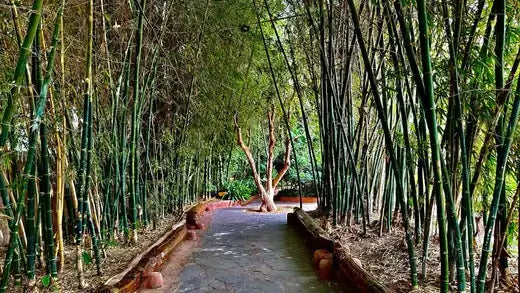
The Magnificent Giant: Exploring the Enigma of the River Reed, Earth's Largest Bamboo
Nature's beauty is replete with fascinating flora and fauna, each boasting unique characteristics that captivate the imagination. Among these wonders, the River Reed stands out as a remarkable specimen, renowned as the giant River Reed bamboo in the world.
This towering plant, scientifically known as Arundo donax, has intrigued botanists, ecologists, and nature enthusiasts due to its impressive stature, versatile uses, and ecological significance. In this exploration, we delve into the captivating realm of the River Reed, uncovering its distinct features, cultural ties, ecological contributions, and the challenges it poses.
Bamboo
Botanical Marvel: Characteristics and Growth
The River ReedRiver Reed, Arundo donax, is a perennial grass native to the Mediterranean region. Still, it has since spread to various parts of the world due to its adaptability and unique features. This extraordinary bamboo like plant can reach astonishing heights, often exceeding 20 feet (6 meters) in optimal conditions. Its hollow, segmented stems, known as culms, contribute to its remarkable growth, allowing them to rise tall and sturdy, resembling the more familiar bamboo species.
The culms of the River Reed have a remarkable ability to withstand fluctuating water levels and grow in diverse habitats, ranging from riverbanks and wetlands to drier areas. This adaptability has contributed to the River ReedRiver Reed's extensive distribution across regions with varying climates, from temperate to subtropical.
Versatile Uses: From Ancient Times to Modern Applications
The River Reed has been a valuable resource for human communities throughout history. Ancient civilizations utilized this plant for various purposes, including crafting tools, weaving baskets, and constructing shelters. Its flexibility, strength, and availability made it an essential component of daily life for many cultures.
In modern times, the River Reed continues to find application in various industries. Its sturdy culms are used for making musical instruments, such as woodwind instruments like clarinets and oboes. Moreover, the plant's growth rate and adaptability have rendered it useful for erosion control, mainly along riverbanks and waterways susceptible to erosion. Additionally, its biomass can be used for bioenergy production, contributing to sustainable energy sources.
Planting Bamboo
Human civilization has maintained a long-standing relationship with the Bamboo Plant for hundreds of years. Ancient records from both China and India reveal that the it has been around for thousands of years. Ancient documents describe it as an essential component in the creation of paper as well as building materials and weapons. Various cultures held it in high esteem because of its strength, which was paired with flexibility and quick regrowth, which symbolized both resilience and prosperity. The plant possessed spiritual meaning in Japan because people planted it near temples to protect against evil forces. People from indigenous tribes worldwide utilized its robust stalks in their everyday lives to create tools, baskets, and musical instruments.
From a sustainability perspective, various species are said to be capable of absorbing more carbon dioxide than other trees, and bamboo may play a useful role in reducing greenhouse gas emissions, helping reduce the effects of climate change by acting as a natural carbon sink to give cleaner air. Because its roots reach deep in the soil, it helps in prevention of soil erosion and builds fertility of the soil. Bamboo is fast-growing and can be harvested sustainably. It also provides a renewable source of timber, reducing the need for slower-growing hardwood trees. In built-up areas, bamboo is increasingly used for air pollution abatement and as a means of lowering urban heat and is being planted extensively for green city projects.
The Bamboo Plant has long held medicinal value beyond its aesthetic and structural attributes. Herbal remedies from Traditional Chinese medicine incorporated this natural element to treat fevers as well as respiratory and digestive problems. Traditional medical practices utilized its shoot extracts for their ability to cool the body while alleviating inflammation and detoxifying the system. Ayurvedic medicine utilizes the resin from its stalks for wound healing and infection treatment.
Bamboo Size and Growth Rate
Bamboo is the common name for various evergreen perennial flowering plants in the subfamily Bambusoideae, family Poaceae (the grass family). It is one of the most diverse and ecologically important groups of flowering plants, and is the most widely distributed. It is fast-growing: under optimal conditions of temperature and moisture content, bamboo can grow 35 inches (90 cm) in a single day. It not only is a natural wonder , but has been a part of the cultural traditions of many societies, supported economies for thousands of years, and has served as an influence on cultural traditions and strains of art. In addition, we will explore bamboo's cultural relevance, its role in the development of green architecture and technology, and its place in the building industry.
About Bamboo
A Historical Perspective The use of bamboo dates back thousands of years, with a rich history deeply intertwined with the cultures of Asia, particularly China, Japan, and India. It's estimated that people have been using bamboo for more than 7,000 years.
Archaeological data shows that its discovery happened before written records and it was first used by ancient societies that understood its abilities to provide both shelter and food. The Han Dynasty scripts (206 BCE - 220 CE) describe how writing on scrolls became common, which led to the creation of paper. Throughout history, Asian and South American societies have integrated this resource into their architecture and cuisine while making it a fundamental part of their cultural rituals. The expansion of exploration and trade enabled its reach to every continent where it became commonplace in tropical and subtropical zones.
Bamboo is becoming increasingly popular for use in construction because it is a sustainable resource that is lightweight and strong, with a higher tensile strength than most customary construction materials, and may be used in place of steel and steel-reinforced concrete in buildings. Due to its flexibility, bamboo is used as a building material in earthquake prone areas. In many parts of the world, the use of bamboo in architecture and construction has steadily gained acceptance in recent years. Bamboo has been used in customary and modern structures, from simple huts to large buildings and skyscrapers. It's regarded as a highly durable material with attractive qualities and is considered an attractive option for new, sustainable building materials, as bamboo can be cultivated and harvested in a few years, unlike customary hardwoods which may take decades.
Craft Beer and Bamboo Charcoal: In recent years, bamboo has entered the craft beer industry, with some breweries using bamboo vessels for fermentation.
Textiles: Bamboo fibers produce soft, breathable, and moisture-wicking materials. Bamboo fabric is eco-friendly for clothing, bed linens, towels, and more.
Cultural Significance and Artistic Inspirations
The River Reed has deep-rooted cultural significance in numerous societies. In ancient Greek mythology, the plant is associated with the god Pan, symbolizing rustic beauty. Its presence near water bodies inspired ancient poets and artists, who frequently depicted it in their works, imbuing the plant with a sense of serenity and connection to nature.
Furthermore, the River Reed's unique visual appeal has influenced contemporary artists and designers. Its towering presence and swaying culms have been incorporated into landscape architecture, creating serene and visually striking environments. The plant's incorporation into public spaces highlights its capacity to evoke a sense of calm and tranquility in urban landscapes.
Ecological Contributions and Challenges
Beyond its cultural and practical applications, the River Reed holds ecological significance. Its dense stands provide valuable habitats for various aquatic and avian species, offering shelter and nesting sites. Wetlands dominated by River Reed play crucial roles in water filtration, nutrient cycling, and flood mitigation, contributing to overall ecosystem health.
However, the plant's invasiveness is a double-edged sword. In regions where it is non-native, the River Reed can become an aggressive invader, out-competing native species and disrupting local ecosystems. Its rapid growth and ability to spread via rhizomes make it challenging to manage. Thus, the River Reed presents a complex ecological challenge, necessitating balanced management strategies to harness its benefits while minimizing its negative impacts.
Conservation Efforts and Future Prospects
Efforts to conserve and manage the River Reed involve a delicate balance between exploiting its practical applications and safeguarding the integrity of native ecosystems. In areas where it is invasive, rigorous monitoring and control measures are necessary to prevent further spread and maintain biodiversity.
Furthermore, ongoing research seeks to unlock the full potential of the River Reed in terms of sustainable resource utilization. Its rapid growth and biomass production make it a promising candidate for bioenergy and bioplastics, contributing to a greener future.
Conclusion
Marvel
The River Reed, the giant bamboo on Earth, embodies a fascinating blend of botanical wonder, cultural significance, and ecological complexity. Its towering culms, versatile uses, and contributions to ecosystems have captured the attention of scientists and artists alike. As we continue exploring its potential, we are reminded of the intricate interplay between nature and human society, where responsible management and innovation hold the key to harnessing its benefits for future generations.
Bamboo
