
Natchez Crepe Myrtle: The Complete Growing and Care Guide
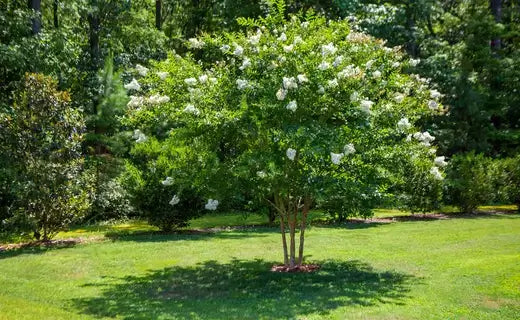
Natchez crepe myrtle (Lagerstroemia indica 'Natchez') is a flowering tree that grows to a height of 25-30 feet․ Its white flowers appear in clusters from June to September․ It is a fast-growing tree that grows in USDA zones 6 to 9‚ so it can be found throughout Tennessee and most of the Southeast․ It is valued for its near-zero susceptibility to powdery mildew‚ its peeling cinnamon-bark‚ and its rapid growth of 3 to 5 feet per year once the tree has become a strong young adult․
If you have ever seen a mature blooming Natchez in July‚ you understand why this is the most popular cultivar of crepe myrtle in the United States․ If you want to learn more about why this is such an excellent choice for your yard‚ read on․
The Flowers Are the Whole Point
Natchez produces large panicles of flowers that can be longer than 12 inches‚ or over two thirds of the tree's height․ Flowering lasts from 10 to 12 weeks in summer‚ far longer than most flowering trees bloom in a year․ Since flowering occurs on new growth‚ the amount of new growth between years‚ and where that growth occurs‚ basically determines how many blooms you will see the next year‚ and‚ consequently‚ how to prune․
Older crepe myrtle cultivars prior to the National Arboretum breeding program of the 1960s had high susceptibility to powdery mildew‚ a gray-white fungus which can destroy leaves and flower buds in humid conditions․ Natchez is one of the first cultivars bred to be resistant to powdery mildew by introducing powdery mildew resistance genes from a naturally resistant species‚ Lagerstroemia fauriei․ In Tennessee's summer humidity‚ the difference between healthy trees and trees needing fungicide for leaf spot could be several days to a week․
Bark That Keeps Working After the Flowers Fade
The flowers fall off in September and the rough‚ thin strips of the outer bark of the stem‚ as well as that of the branches‚ is shed‚ exposing the softer‚ cinnamon to terracotta colored bark beneath‚ which darkens with age․ Those over 25 have mottled bark on their trunks and on the lower branches․ The bark is almost shiny‚ and attractive even in winter when bare․ This is one reason the trees are planted along sidewalks and around patios․ Among flowering ornamentals‚ very few trees bloom all four seasons; Natchez is one such tree․
The foliage of the trees turns from shiny dark green to orange-red before dropping in October and early November; its peak tends to come in late October to early November in Middle Tennessee and earlier at higher elevations in East Tennessee․
Size‚ growth rate‚ and what to expect year by year
If planted as a 5-6 ft tall Natchez crepe myrtle bush in full sun and in good soils‚ Natchez will grow to a height of 12-15 ft after 5 years‚ 20-25 ft after 10 years and 25-30 ft after 15-20 years․ The growth rate of a mature tree‚ while slower‚ is still very fast for an ornamental flowering tree‚ making it a popular choice as a specimen tree to fill the void quickly in a landscape where shade or screening is desired․
The species forms multiple trunks in a vase shape‚ but it can be found with a single trunk for use in small or formal gardens․
Tennessee's Planting Requirements for Landscapes
Natchez requires full sun (over six hours a day)‚ as plants grown in shade will seldom bloom and will suffer from fungal diseases․ Good air flow and sun will help prevent dew from forming․ The soil should be well-drained‚ although the tree is fairly tolerant of the clay soil found in Tennessee as long as the low spots where water amasses after rains are avoided․
Plant in spring or fall‚ so roots become established before summer or winter․ The hole should be twice the width and depth of the root ball․ The single most common mistake I see is planting too deep․ Deep planting may result in trunk rot․ Trunk rot may not become clear for several years․ When crape myrtles are planted‚ backfill with native soil․ Planting crape myrtles in rich soil may result in poor growth‚ or in branching that is not hardy․
When planted in groups‚ it is suggested the trees be 15 to 20 feet apart for full canopy development․
Ongoing Care
Irrigation: Once or twice weekly deep watering in the nursery; annually in the first two years after planting‚ tapering off as the tree's root system becomes established․ Established Natchez trees are drought tolerant and do not require irrigation under the summer rainfall regime of Tennessee except in long term and extreme drought conditions․
Fertilizer: Generally‚ a light application of a general-purpose fertilizer in early spring is all that is needed․ High-nitrogen fertilizers should be avoided; they promote foliage size at the expense of flowers․
Pruning: This is where people go wrong most often․ Natchez does not need the aggressive "crepe murder" pruning (cutting the tree back to stubs each winter) that's become a regional habit․ Since flowers form on new wood‚ do not heavily prune as that delays flowering‚ leading to whippy growth from the tree․ Pruning suckers at the ground level‚ crossing branches‚ or dead wood in the late winter season when the tree is dormant is all that is required․
Aphids and Japanese beetles are pests on occasion‚ but typically do little long-term damage․ The biggest pest issue in recent years has been crepe myrtle bark scale․ As it is still a new pest to the Southeast‚ it appears as small white or gray felt patches on the bark․ If it is observed‚ it can normally be controlled by a late winter application of horticultural oil․
Geography: Where It Fits Into the Landscape
Natchez is a test tree species‚ a key focus․


