
Long Blooming Perennials That Keep Your Tennessee Garden Colorful for Months
Four perennials that bloom dependably from late spring until the first killing frost are Purple Coneflower‚ Butterfly Weed‚ Blanket Flower‚ and hardy Primrose․ In Tennessee perennial planting zones 6b-7b‚ they bloom respectably for four to six months after the spring season bloomers have finished their unfurling‚ and before the plants have thawed the ground to begin the next season's blooms․
The problem is that most perennials only bloom for two or three weeks‚ and then they're just green for the rest of the season․ That's fine if your plan is to have something in bloom at any time of the year․ But if you want plants that will bloom all season without needing to be replaced every couple months‚ you need plants bred for that․ These four perennials all bloom all season long‚ and all do well in Tennessee's hot and humid summer months on dirt that is sufficiently clay-ish․
Purple Coneflower (Echinacea purpurea)
Coneflower is probably the single best long-bloomer for Middle and East Tennessee gardens․ Echinacea starts blooming in late May or early June and‚ if you deadhead spent blooms every couple of weeks‚ will bloom into October․ That would give you four to five months of bloom from one plant․
The original variety has many purple-pink flowers radially positioned around the spiny orange-brown center cone․ White‚ yellow and very dark red varieties have been introduced since‚ and plants grow two to four feet high․ Once established‚ their stiff stems and deep roots withstand Tennessee thunderstorms and even drought conditions․
Coneflower can be grown in full sun (6 or more hours direct sun per day) and prefers poor‚ rocky soils: too much soil richness causes the plant to flop․ Despite preferring well-drained soils‚ it is extremely well adapted to the clayish soils of the Nashville basin‚ and the Cumberland Plateau‚ its native habitat‚ and out-competes other species in looser‚ mellower‚ and amended soils․ Fallen seed heads should not be cut in fall‚ as goldfinches will harvest the seeds and the dried cones provide ornamentation․
Butterfly Weed (Asclepias tuberosa)
Unlike coneflower‚ which opens a week or so earlier‚ flowering starts in early June and lasts until the end of September‚ or into early October if the weather is unseasonably warm․ The stems grow erect and reach 18 to 24 inches (46 to 61 cm) tall‚ topped by clusters of bright orange or yellow flowers․ It is one of the few nectar sources for monarch butterflies migrating through Tennessee in the fall․
This is a true native and it has adapted․ It tolerates drought in the summer and it can take heat․ A common mistake new growers make is to plant Butterfly Weed in rich‚ moist‚ tropical-like soil‚ not realizing that it prefers sandy‚ well-drained conditions․ It will rot in wet clay soil if drainage is not taken into consideration․ If your yard is a low spot where water collects after a rain‚ consider planting it on the slope or in a raised bed․ Be patient when it doesn't surface in late April or May; it can take a while for it to come up․ Once it is established with a deep tap root‚ it is difficult to transplant․
Blanket Flower (Gaillardia)
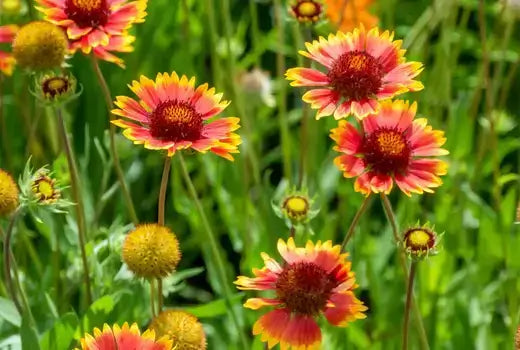
As its common name (Blanket Flower) suggests‚ it bears flowers from June until the first hard frost․ The pinwheel-shaped red‚ orange and yellow daisy-like flowers are very distinctive and easy to identify․
They are hardy plants that will thrive in poor soil‚ require very little care or water‚ and will bloom longer if they're left alone by the gardener․ At 12 to 18 inches (30 to 46 cm) in height‚ they are well-formed and can be used in the front of a border or alongside a path․
All this said‚ though‚ it should be noted that Blanket flower is not as long lived as coneflower or butterfly weed‚ and may not last more than 3 or 4 years before dying out․ If you let a few spent flowers go to seed each year for the next couple of years‚ though‚ the little Gaillardia planting you got should quickly become a much larger planting‚ at no added cost․
Primrose
The only one of the three that does not flower in summer or autumn‚ this is the reason it should be in the summer season part of the border list․ While coneflower and Gaillardia are the anchor plants for July and August in border scenery‚ Primrose fills in during the beginning and‚ in the case of Japanese Primrose‚ the end of the growing season in the early spring and early autumn respectively․
These conditions are the opposite of those preferred by coneflower and Butterfly Weed․ Primrose grows best in dappled shade and moist soil‚ and requires protection from the hottest afternoon sun․ In Tennessee‚ it can colonize the only shady‚ wet areas that are unsuitable for the other two‚ where nothing else would grow anyway‚ such as the shaded foundation on the north side of a house‚ or the shaded side of a tree․ It is best planted in groups of several plants‚ as the flowers are so low growing and the clustered blooms work much better as a drift of color․
Building a Garden That Blooms Nearly Year Round
While not one perennial flowers all season long‚ you can have overlapping‚ continuous blooms from early spring to late summer (or early fall) by intermixing early spring‚ mid-summer‚ and late summer/early fall blooming plants․ Primrose blooms in the early spring; coneflower and Butterfly Weed in mid-summer; and Gaillardia in late summer/early fall․ That's almost every month of the year except the dead of winter․
TN Nursery sells all four and more as deep rooted‚ field grown perennials․ Then they are of the sufficient size to weather the hot Tennessee soil and get a head start on the young nursery starts because it takes a full season before they grow roots before they grow up․ Plant in spring or early fall‚ water deeply in the first couple weeks while they get roots established‚ and then leave them alone․


