
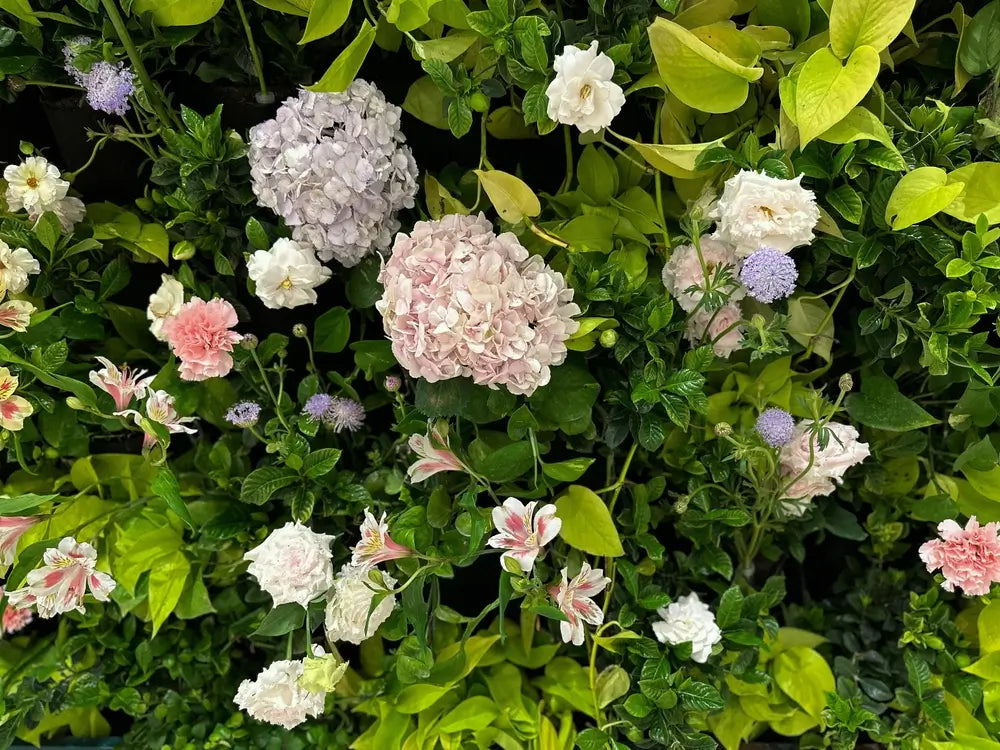
There are many types to choose from depending on your personal taste and needs. The bigleaf varieties which bear huge heads of blooms in bright colors are the most popular of hydrangeas. Alternatively, if you are looking for an elegant yet modern touch to your contemporary garden, consider the smaller panicle hydrangeas. The different types of hydrangeas each have different growing requirements and different blooms, allowing the gardener some creativity and flexibility in how their flower garden looks. The rounder, snowball like flower clusters of the 'Annabelle' hydrangea provide a big statement while the conical blooms of 'Limelight' come in shades of lime green to creamy white. With so many choices, you can create a year-round garden with combinations of color palettes, heights and bloom times that could be endless.
In conclusion, the study of hydrangeas, with their changing colors according to soil and species and seasons, combines nature's work with man's. Their adaptability represents, in many ways, the new way of modern gardening. The hydrangeas can be transformed so many different ways. They allow gardeners to push the limits and experiment with what they can do to get the fullest colors possible. The colors of the hydrangeas allow gardeners to be creative in their gardens to express themselves. However, each individual will be creating their own gardens and exposing their personality to others. Cultivating hydrangeas is not merely a gardening hobby, but an art, where the symbiotic and reciprocal relationship between nature and human beings continuously flourishes and develops into a rich dialogue between the two entities.

Hydrangeas in a woodland garden take on a different role. The stark white (or pink or blue) against the dramatically tall trees and ferns provide an effect that changes with the light. Hydrangeas are constant in this, but in a woodland garden they light up the shadows with their bright white (or pink or blue). This allows these species to thrive and be an important addition to the forest ecosystem, contributing to the environment. The flowers' muted colors are in harmony with other subdued shades of the forest, resulting in a tranquil and peaceful atmosphere teeming with life. The relationship between hydrangeas and woodland also ties into the general importance of choosing plants that are harmonious with their surrounding environments, as part of local ecology.
Other varieties of hydrangeas also offer different color ranges for the gardener, with the most common being Hydrangea macrophylla (also known as mophead hydrangea) and Hydrangea paniculata (panicle hydrangea). The mophead varieties produce larger flowerheads, while the panicle varieties produce cone-shaped flower clusters that fade to cream and soft pink. Other species such as Hydrangea arborescens can produce whites and lighter greens. Each species has its own range of colors, size, growth habit, and specific maintenance needs. Familiarity with the differences between various varieties of hydrangea can help the person who gardens choose the appropriate species of hydrangea for the conditions present, and the desired seasonal appearance of the garden, and obtain the best possible fit with the desired garden appearances.
There are countless varieties of hydrangeas with different flowers and preferences for growing conditions. Among the more common are the Endless Summer hydrangea that blooms throughout the growing season. Another common hydrangea is the Annabelle, which produces strong white flowers that turn green as autumn approaches. Oakleaf hydrangeas provide colorful fall foliage on top of their white flowers. The range of flower colors within each variety is quite wide due to the different colors possible for a given variety based on soil pH, so there is a lot of room for creativity. Understanding the differences between species helps in selecting the best plants for a particular landscape and knowing how to care for them to allow each to achieve its best.
PeeGee Hydrangea provides essential support to diverse pollinators and uncommon wildlife species despite its visual appeal. The blooms produce copious amounts of nectar which attracts bees and butterflies along with other helpful insects thereby helping to maintain local ecosystems. Specific moth species use particular floral structures to feed and shelter within their flowers. Migrating hummingbirds often stop to feed from their panicles as they prepare for their extensive migrations. During autumn finches and other seed-eating birds gather around the spent flower heads which infuse life and movement into the landscape. This plant helps garden biodiversity thrive through its provision of essential food and protective shelter.
The Nikko Blue hydrangea grows from 3 - 6 feet and is just as wide when fully mature. The plant boasts abundant 6- 9 inch round mounds of spectacular blossoms. It grows in part shade to full sun. If grown in full sun, it prefers good, moist soil to thrive well. Acidic soils will encourage blue blooms, while an alkaline soil type encourages pink blooms. These hydrangeas make beautiful cut flower bouquets. These flowers will fade to many shades of blue, purple, pink, and, eventually, green colors as summer turns to fall.
If you have a yard full of green and are looking for something with color that will stand out against your home and all the green, then the Nikko Blue Hydrangea is the right plant for you. The blue hydrangea grows approximately 4-6 feet tall and 4-6 feet wide and will bloom all summer within two years. The hydrangea comes in many colors, such as pink and blue, but blue is the most popular. It grows best in zones 6-9 and needs full to partial sun.
The bloom season for hydrangeas varies from spring to summer, with some warmer climates getting one more burst of blooms during early fall. Depending upon the variety, hydrangeas grow well in most planting zones. The Nikko Blue variety grows well in zones 5-9, while the PeeGee, Limelight, and Annabelle varieties grow in the 4-9 zones. Peegee and Limelight are known to grow well even in the zone 3 range with winter protection. These plants are proven to grow in many hardy zones.
Hydrangea can complement a wide variety of gardens and is also a great match for some of the smaller gardens due to the sheer rugged beauty of its multi-layered bark and strong tree trunk. It grows to a height of about 10 feet. When in bloom, cotton-ball flowers in white, pink, or purple, depending on the variety, erupt and cover the plant, along with a backdrop of shining green foliage. Most importantly, the plant adds vividness to gardens every spring.
Hydrangeas are susceptible to a wide variety of bugs and diseases. It would be best if you took care to observe foliage for any signs of problems. It can be a good idea to bring a sample to the nursery expert for advice. Treatments can be chemically-based or organic, depending on user preference. As always, such products should be used with discretion if some small children or pets have access to the garden.
