
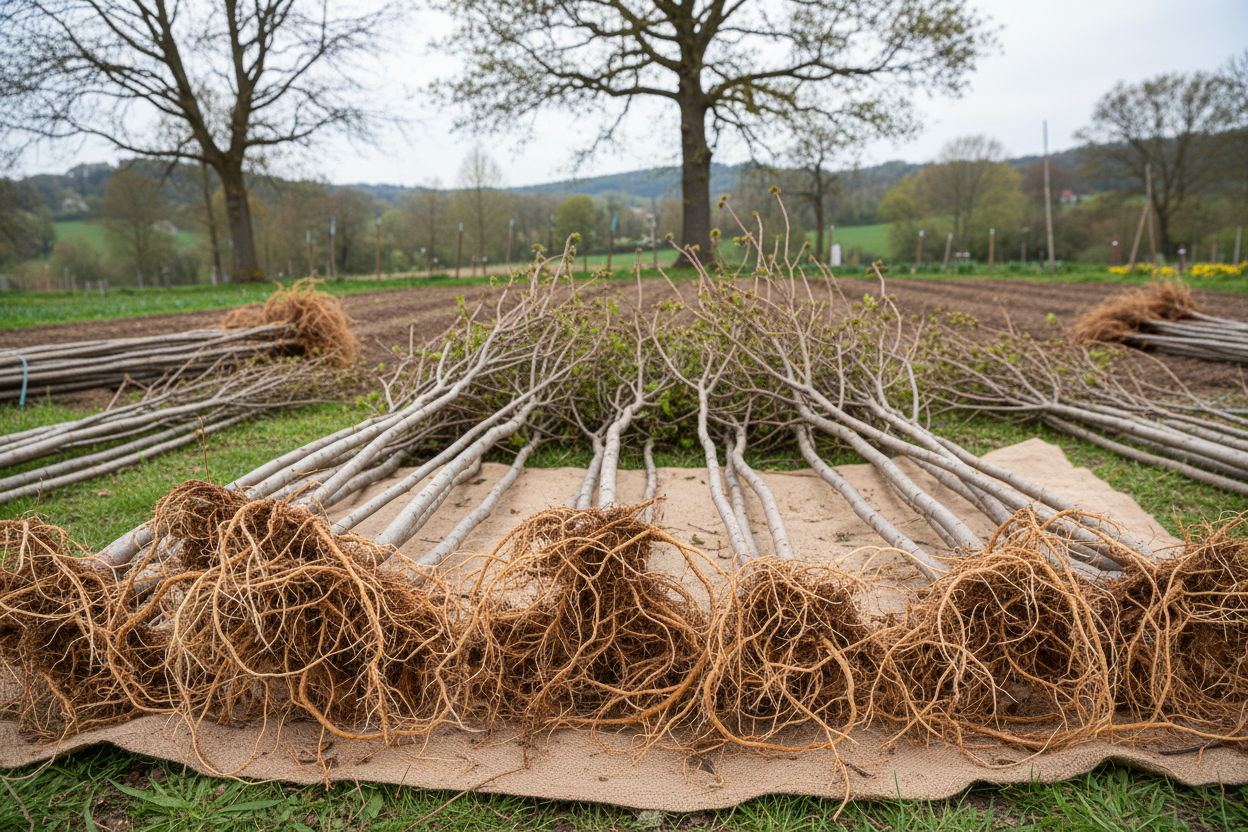
Bare-root trees provide gardeners with a cost-effective and efficient method of planting landscapes that grow intensively at a very young age. Bare-root trees, unlike container-grown specimens, come in as dormant and with their roots exposed, and thus, they can adapt fast to the conditions of the native soil and develop strong root systems. Planting bare-root trees properly during their dormancy would ensure a healthy establishment, increase their growth rates, and ensure their healthy growth in the long term.
TN Nursery has been able to assist thousands of gardeners in all climates and soil conditions in successfully planting bare-root trees. We are the most knowledgeable in supplying high-grade dormant inventory and full-time planting advice so that your trees are growing in no time and within generations. Knowledge of the basics of how to plant bare-root trees turns what appears to be an uphill task into a simple process that promises to bring about remarkable outcomes.
What Are Bare Root Trees and Why Do They Grow Faster?
Bare-root trees are trees that have been cut down without soil around their roots and are generally sold at the end of the fall or winter when the trees are no longer growing. This mode of shipping is cheaper and has weight-cutting benefits that have major benefits for tree establishment.
Growing bare-root trees will be quicker since the exposed roots will be used to the native soil of your area without the transition shock that container-planted trees will face. Container trees have circling roots, which usually have to penetrate potting media, and te untamed roots naturally expand after day one into the surrounding soil.
The inactive condition enables the trees to concentrate on root growth instead of sustaining active leaves. Once the spring comes, root systems are already built to accelerate the top growth, which burdens the containerized competitors.
Bare root native trees include the White Oak Tree and the Box Elder Tree. These species developed locally and defined fast when interred in the dormancy season. The TN Nursery Seasonal Plant Box contains bare root plants with specially timed plant boxes that are to be planted at the best time of year.
Benefits of Planting Bare Root Trees
There are many benefits associated with planting bare-root trees that make them the most popular tree among experienced gardeners and landscaping specialists:
-
Cost-effectiveness: Bare-root trees are generally thirty to fifty percent cheaper than comparable container-grown trees.
-
Better root growth: In the absence of container restrictions, free-growing bare-root trees will proliferate in all directions, producing equalized root systems.
-
Less difficult to inspect: Before you plant, you can check the health of the roots because the roots can be examined as they are exposed, and you can note the damaged parts.
-
Greater choice: Nurseries have the ability to store and ship more kinds of bare-root trees than potted ones.
-
Minimized transplant shock: Growing bare-root trees minimizes stress since the roots are never exposed to a container.
- Environmental advantage: Bare-root shipping will get rid of plastic pots and will decrease the amount of fuel used in transportation.
Trees have strong root systems, which nourish advantageous soil organisms and microbial diversity. The USDA Natural Resources Conservation Service believes that bare-root planting is the best practice in the reforestation project, as it has the highest probability of survival with minimum costs.
How Deep and Wide Should I Plant a Bare Root Tree?
Root development and survival of trees greatly depend on the proper depth of planting and hole size. The bare root tree care is done by setting proper conditions for planting.
Depth specifications:
Plant potted trees at the same depth as in the nursery, which is determined by a change in color of the trunk. The root flare, or the wideness of the trunk into roots, must be at or a little more than the level of the soil. Excessive planting of soil kills roots and promotes rot.
Hole width:
Hole width is two to three times larger than the spread of the root, but not more than as deep as the length of the root system. Large holes enable penetration of roots in the surrounding soil without much difficulty, and the correct depth prevents the settling.
Soil preparation:
Prepare a small pile at the center of the hole, on which the root crown should be resting, and then spread the roots downwards and outwards at their natural level. Native soil with compost and organic matter to enhance structure as backfill.
Root positioning:
Dispersing roots in every direction and not bunching up or circling. Clean, sharp cuts should be made on any damaged, broken, or overly long roots to promote healthy new growth.
The Tulip Trees being sold at TN Nursery are well-cultivated in their root systems and can be properly positioned. They are characterized by their rapid growth rate, which is rewarding in terms of vertical growth in the initial season, if they are planted to the right depth.
Step-by-Step Guide to Planting Bare Root Trees Correctly
Using established techniques for planting bare-root trees will guarantee the successful planting and growth. These are necessary steps informed by the experience of TN Nursery:
1. Time:
One should plant bare-root trees when they are in their dormant phase, which is normally late winter to early spring, before buds break.
2. Pre-planting preparation:
- To rehydrate tissues, soak roots in water for three to six hours, then plant.
- Check and remove broken roots.
- Store roots in the shade and moist conditions.
- Dig holes that are bigger than the root spread.
3. Soil amendment:
Prepare the soil by adding compost to the soil in a three parts native soil to one part compost ratio.
4. Positioning of trees:
This is done by forming a central mound in a hole and placing the tree in a position where roots naturally spread downwards. Check to make sure that the root flare is at grade or a little higher than grade with a straight board over the hole.
5. Backfilling:
- Fill half the hole with incised soil so that it is lightly packed to remove air bubbles.
- Fill up fully, then water thoroughly.
- Do not compact heavily, which inhibits the penetration of roots.
6. Watering basin:
Construct a three- to four-inch berm of soil around the area to be planted to form a basin that collects water and soaks the developing roots.
7. First watering:
Deep watering should be given upon planting, and ten to fifteen gallons are applied very gradually so as to give adequate saturation of the soil and free contact with the roots.
The Sprout Starter Subscription Box by TN Nursery will feature specific tools and amendments that will make the process of planting bare roots easier and will help to maintain the good health of the roots and their establishment.
After-Planting Care Tips to Encourage Fast Growth
Bare root tree care after planting determines the rates of growth, and prolonged vitality depends on the treatment of the root after planting. Regular care in the initial growing season determines patterns of decades of healthy growth.
- Watering time: Deep watering once a week in the first season, depending on the precipitation. Use appropriate water during the sessions, but stimulate deep root development as opposed to superficial surface roots.
- Mulching: Mulch the tree with three to four inches of organic material in a broad circle around the tree, and keep the mulch several inches away from the trunk. Mulch preserves moisture, regulates the soil temperature, and nourishes the soil organisms.
- Fertilization: Do not fertilize within the first year. Growing bare-root trees is good when the roots are directed to the formation and not to the overdeveloped top.
- Pruning: Only broken or damaged branches should be pruned in the first year. Provide natural growth of trees, and concentrate on the formation of the root.
- Monitoring: Check regularly to find evidence of stress, damage by pests, or disease. Bare-root native trees such as White Oak and Box Elder generally demonstrate a high degree of strength when well-planted.
Conclusion
Proper planting of bare-root trees forms strong roots to mature fast, able to grow extensively in a few decades, and a landscape worth hundreds of dollars. The gardeners are able to realize better results by adhering to established methods on how to plant bare root trees and do regular bare root tree care.
Some of the species that exhibit outstanding establishment success are the Box Elder Tree, White Oak Tree, and Tulip Trees when planted in the form of bare root during dormancy. The experience of TN Nursery in acquiring high-quality bare-root trees will have your investment blooming on the first day with instant growth and long-term aesthetic appeal to your landscape.
FAQs
What are bare-root trees?
Dormant trees were sold without soil at the roots and were usually harvested and delivered in winter and planted in the spring.
How to grow bare-root trees?
Prior to planting, in wide holes, at the correct depth, the root should be soaked, and then amended soil should be applied on top of the root, deep water should be applied, and moisture should be maintained consistently as the root develops.
When to plant bare-root trees?
During dormancy, from late winter to early spring, before the buds break and active growth commences.
How long can bare-root trees be stored?
Store roots in a cool and wet environment for no more than two weeks; plant immediately to obtain maximum results.
How often should I water newly planted bare-root trees?
Water thoroughly once a week during the first growing season, and moderate the amount of rainfall, keeping the soil constantly moist.
Where can I buy bare-root trees online?
TN Nursery is an avenue that specializes in the selection of bare root trees, and they have shipped them at the ideal planting times with comprehensive instructions on their care.


