
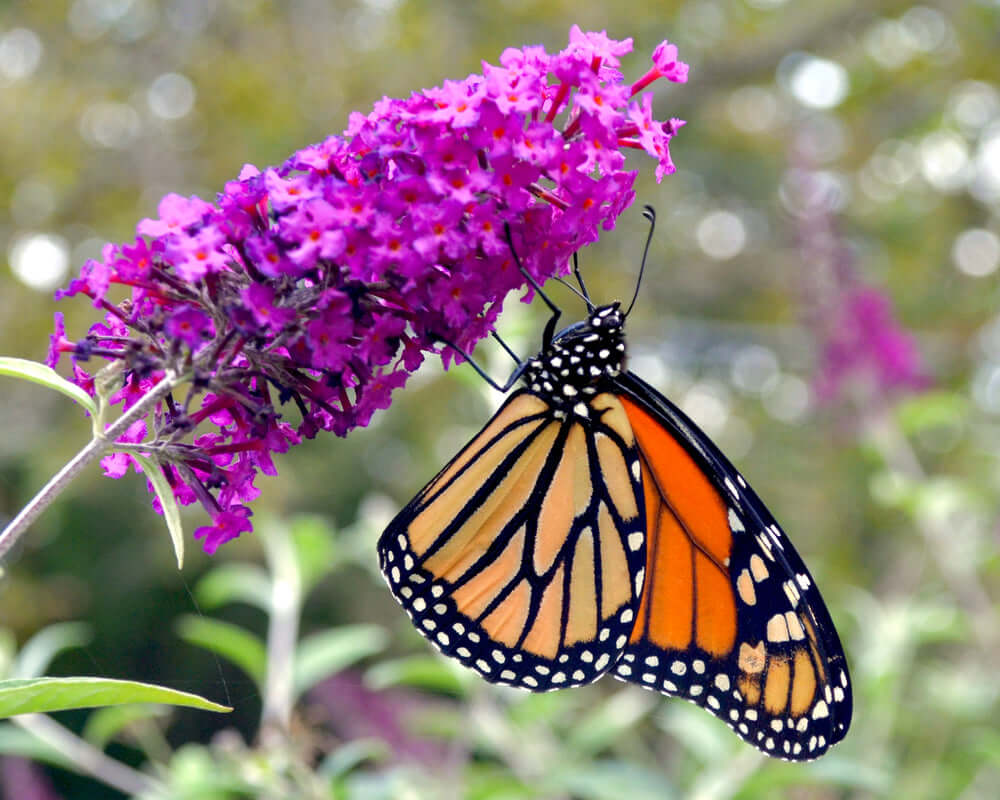
Good butterfly bush care will provide gardeners with beautiful pollinator gardens during summer and fall. Growing butterfly bushes is straightforward, as these tough bushes are planted in the full sun, can withstand drought, and have impressive bloom spikes that attract insects and other helpful insects all year long. Our experience with the supply of pollinator-friendly plants at TN Nursery has demonstrated which practices yield the best and healthiest outcomes, season after season, and the most floriferous plants.
Why Is Butterfly Bush a Favorite for Pollinator Gardens?
Growing butterfly bush gardens can be used in any sunny garden as an immediate pollinator. They have long, curving spikes of flowers that yield plenty of nectar that attracts butterflies, bees, and hummingbirds during the period between the beginning of summer and the first frost.
Butterfly bush varieties include miniature dwarfs under 2-3 feet to giant spreading bushes with a height of 8-10 feet. This expansive size opens up their ability to be applied to borders, foundation planting, and mixed pollinator beds of all sizes.
Butterfly bush care has the least care requirement when compared to most flowering shrubs. They can endure droughts and are quick to bounce back after drought pressure, and are dependable in blossoming even when the conditions are harsh. TN nursery also gives the butterfly bush a consistent recommendation to gardeners who want to achieve the greatest pollinator effects at minimum maintenance costs. Wikipedia has a great article about Butterfly bush, which provides valuable botanical history of the plant, explaining why the butterfly bush is a good pollinator.
Choosing the Perfect Spot and Soil for Healthy Growth
To ensure the success of butterfly bush planting, the location must be selected. They are full-sun plants, which require no less than 6-8 hours of direct sunlight each day and do not do well in shady or semi-shady environments.
Preparation of soil is also essential in regard to how to grow butterfly bush gardens successfully. Organic compost combined with well-drained soil provides the roots with the structure and nutrients they require to grow rapidly. It should not be used in heavy clay soils that hold on to moisture around root systems—waterlogged soils result in root rot for roots and slow down the establishment rate.
The important site criteria for butterfly bush planting are:
- Sun: This needs full sun and at least 6-8 hours of sunlight per day to produce the best blooms.
- Drainage: Well-drained soil—light to heavy clay—should be improved with compost and organic matter and then planted.
- Spacing: Butterfly bush varieties should be spaced 5-10 feet apart based on the size in which they grow in order to allow sufficient air flow.
- pH: Soil is neutral with a borderline alkaline pH (6.0 to 7.0), which favors optimum root health and bloom formation.
Companion Plants That Enhance Butterfly Bush Gardens
Companion planting with growing butterfly bushes and the right companion plant will produce more biodiversity in the pollinator gardens. TN Nursery has wonderful companion options, giving the butterfly bush the perfect match in all seasons.
Larkspur Delphinium
This is a flowering perennial (Delphinium elatum) that grows tall and forms spectacular spikes of blue-purple flowers that perfectly match the butterfly bush color palettes. Larkspur Delphinium is 3-6 feet in height and pollinates at the beginning of the summer, and butterfly bush varieties that are in full bloom.
Goldenseal
This shade-tolerant native perennial (Hydrastis canadensis) has white spring flowers and good foliage all through the summer. The Goldenseal is 12-18 inches tall and occupies shaded border edges of growing butterfly bush plantations with a natural woodland appearance.
Foam Flower
This is a native perennial (Tiarella cordifolia) that grows in lush, shaded gardens as feathery spikes of white flowers. The Foam Flower is 6-12 inches in height and offers low ground coverage interest as well as taller butterfly bush varieties in the mixed pollinator borders.
Echinacea Plant
It is a large, bold, native perennial (Echinacea purpurea) that grows into large flowers in the form of pink-purple daisies that attract butterflies and bees in midsummer. The Echinacea Plant is 2-4 feet tall and expands pollinator activity in gardens, whereby butterfly bush care is already yielding good seasonal outcomes.
Mayapple
Unique indigenous perennial woodland (Podophyllum peltatum) with enormous umbrella shapes and white spring flowers in shady garden beds. The Mayapple is 12-18 inches tall and contributes to the natural structure and organic matter of garden beds in the vicinity of growing butterfly bush plantations in partially shaded areas.
Simple Care and Pruning Tips for Long-Lasting Blooms
Regular butterfly bush care throughout the growing season makes the plants healthy, active, and blooming until late in the fall. Such simple practices have a long-lasting impact.
- Deadheading: Deadhead spent flower spikes frequently to stimulate the production of new flower buds. It is the only way to grow the flowering season of butterfly bush tips, which is the most effective care.
- Watering: Water heavily once a week in dry seasons in the first growing season. Plants that have been planted are drought-resistant, and they do not often require water supplementation after the first year.
- Fertilizing: In early spring, a balanced slow-release fertilizer should be applied to promote active new growth. Do not heavily feed in summer; too much nitrogen will decrease the bloom and increase the foliage.
- Pruning: Clip the varieties of butterfly bushes to 1218 inches in early spring before new growth appears. The most significant practice in how to grow butterfly bushes is hard annual pruning, which ensures a compact floriferous form that is used season after season.
- Mulching: Use Organic mulch 2-3 inches around the base to help keep soil moist, keep the soil temperature even, and help support the soil organisms as it decays. When properly mulched at planting and replaced every spring, care for butterfly bushes is greatly facilitated.
As the most effective practices to produce maximum seasonal performance on a consistent basis, TN Nursery suggests regular deadheading along with hard spring pruning for butterfly bush care.
Conclusion
The beauty of the butterfly bush is that it is easy to manage, gratifying, and yields excellent pollinator garden outcomes with little effort. Growing butterfly bushes and good companion plants will result in interesting, colorful, and biodiverse landscapes. The companion plants available at TN Nursery are dependable, such as Larkspur, Delphinium, Goldenseal, Foam Flower, Echinacea Plant, and Mayapple, which have been proven to beautify Tennessee gardens and make them butterfly-friendly.
FAQs
How do I take care of a butterfly bush?
Bloom often, prune severely in early spring, and water heavily in dry seasons; these were the main principles of butterfly gardening that Deadhead followed.
Do butterfly bushes need full sun?
Yes - Butterfly bushes need no less than 6-8 hours of direct sunshine per day to produce flowers at full force.
How hard is it to grow a butterfly bush?
Very simple, it is only well-drained soil, full sun, and once-a-year hard pruning to ensure that a butterfly bush is growing successfully.
What is the best fertilizer for butterfly bushes?
Dead-religion fertilizer in the early spring provides good planting of butterfly bushes and healthy growth throughout the season.
Where is the best place to plant a butterfly bush?
To be beneficial to both butterfly bush planting and long-term performance, a sunny and well-drained border with good air flow is preferred.
How fast will a butterfly bush grow?
The rate of growth of most types of butterfly bushes is 1-2 feet a year, with full maturity being achieved in 2-3 seasons, given good conditions.
How to make a butterfly bush bloom?
Pruned and pruned every spring-- these two deadheading habits of butterfly bushes give the greatest, unremitting blooming show.


