
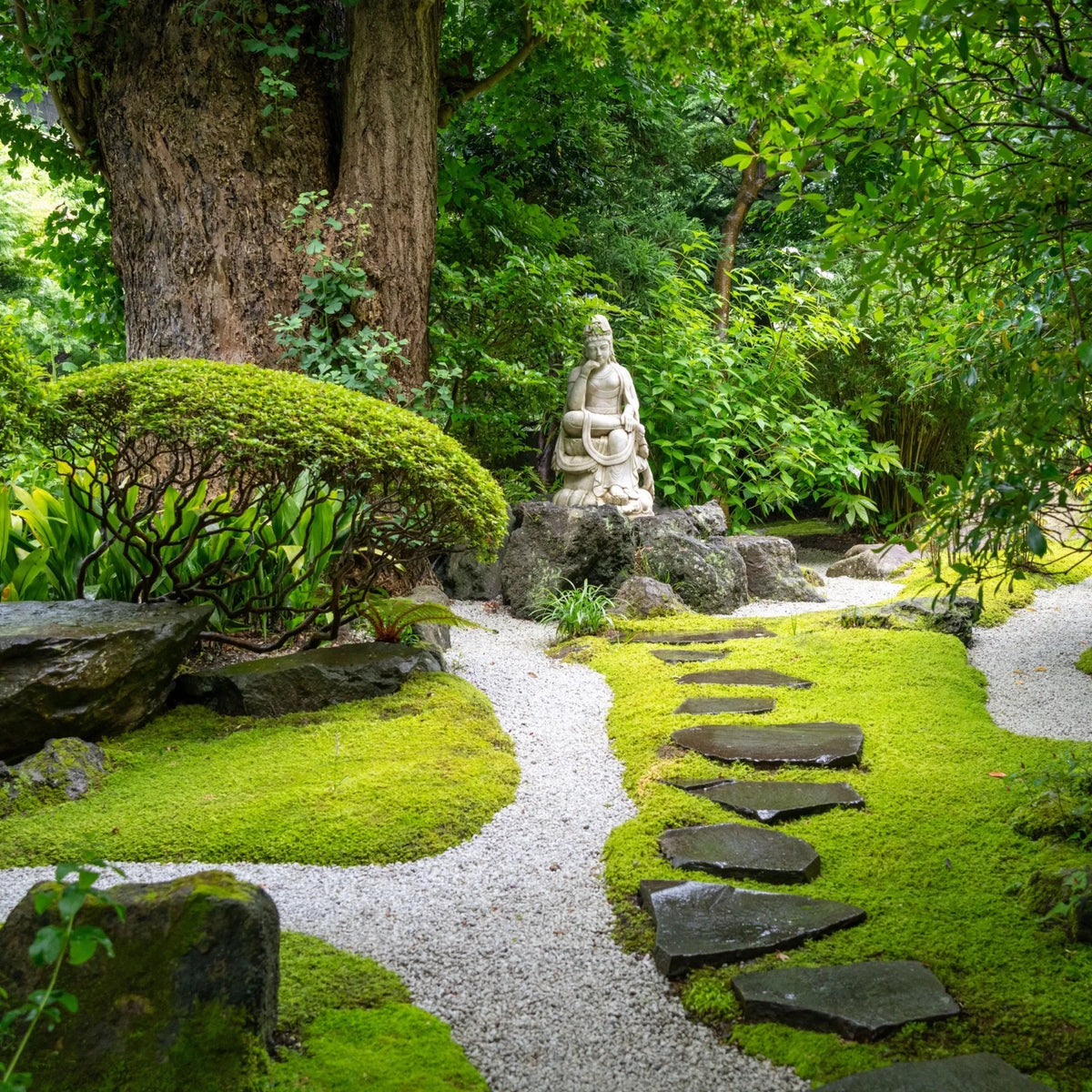
Moss garden design is slowly gaining popularity as one of the most sought-after landscaping designs in Tennessee. Moss for landscaping is used in shaded and wet areas where grass and conventional groundcover find it difficult to survive. It requires less watering, enhances biodiversity, and also forms a natural and tranquil look with less work. At TN Nursery, we have found out what species will change Tennessee gardens in the best way, with the greatest degree of certainty and beauty.
Why Is Moss Becoming a Popular Plant in Tennessee Gardens?
The humid climate of Tennessee, numerous shades, and naturally acidic soils are some of the favorable conditions that make Tennessee one of the most friendly to mosses in the country. Moss for landscaping ground makes full use of such conditions and thrives where other vegetation has completely failed.
Once established, moss garden plantings do not need any mowing, no fertilizing, and very little additional watering. They also keep off weeds naturally through continuous mats of thick masses that do not allow sunlight to reach the soil surface below.
Moss is also good at maintaining the health of the soil in a manner that is not given much attention by gardeners. The breakdown of moss provides organic matter, supports the development of diversity in the microbes, and helps soil organisms that aid in beneficial growth without the use of chemicals. TN Nursery is the provider of moss that is always suggested to people in Tennessee who want to use the moss for the experience of the true nature of sustainable landscapes with minimal effort.
Moss Types That Grow Organically in Local Environments
Knowing different types of moss is useful in order to select the appropriate species to fit your location's conditions. TN Nursery has reliable varieties that have been adapted to the varying landscape environment of Tennessee.
Cushion Moss
This is a thick, cushioning moss (Leucobryum glaucum) that gives piles of soft cushions over the dark and wet floors of gardens. Cushion Moss is a 2-4 inch height moss that can endure dry seasons, unlike other available types of moss that are suitable in Tennessee landscapes. This makes it one of the best to use in the moss garden plantings that do not need much constant maintenance.
Carpet Moss
This is a low-spreading moss (Hypnum cupressiforme) that forms fine, dense carpets on the surface of the soil in shady areas and along the pavements of a garden. The Carpet Moss grows fast and spreads dependably, hence making it one of the most suitable options to use in order to create seamless moss for landscaping purposes in a large area that is shaded.
Sheet Moss
The sheet moss is a smooth, even, turning emerald-green moss (Hypnum curvifolium) that grows on soil, rocks, and in woodland gardens. According to Tennessee landscapes, the Sheet Moss makes a refined and smooth carpet appearance and is one of the different types of moss used in moss garden design.
Lawn Moss
A fine-textured, low-growing moss (Rhytidiadelphus squarrosus) that creates thick, uniform green coverings that would be used to replace traditional turf in shady spots. The Lawn Moss can withstand the light foot traffic and grows fast on the compressed, acidic soils. It is the most feasible option for the homeowner who wants to use moss for landscaping as an alternative to grass.
Broom Forkmoss
A unique erect moss (Dicranum scoparium) that forms textured, sweeping fronds, bringing verticality to the shaded garden environments. The Broom Forkmoss is 2-4 inches high, and it grows in humid soil that is rich in organic matter with ample indirect sunlight. It is a superb choice to bring depth of design and textural contrast to Tennessee landscapes in the moss garden design.
Creative Ways to Use Moss in Garden Design
Moss garden design provides the Tennessee homeowners with a lot of creative opportunities. Moss, used carefully, can make shaded areas, unintentionally problematic places, into purposeful, beautiful elements in the landscape.
Replace lawns in very shady regions where the grass always fails. Moss for landscaping under heavy tree cover will provide an unbroken, smooth surface that does not need much maintenance and cannot be done by grass in shady areas.
Plant moss in between stepping stones and the pathways of the garden as a way of making the edges look more natural, like a woodland. Both Sheet Moss and Carpet Moss are beautiful to grow in these low-traffic environments that are relatively narrow.
Add different types of moss on the rock elements, stone walls, and raised planters to provide age, texture, and organic nature to landscape structures. Knowing how to grow moss on walls is simple—lay spongy moss and pound it on the wall, but maintain it constantly moist during the first few weeks of growth.
To achieve a year-round interest, combine moss garden plantings with native ferns, woodland wildflowers, and shade-tolerant perennials.
Simple Care Tips to Keep Moss Healthy and Vibrant
Moss for landscaping is extremely self-sufficient. These bare routines make the moss garden plantings fresh and vibrant in all seasons.
- Moisture: It is important to keep the new moss constantly moist within the initial 4-6 weeks of planting. After it is established, most varieties will grow in normal Tennessee seasons without watering.
- Soil pH: The majority of different types of moss like acidic soil that has a pH of 5.0-6.0. Pre-test the soil and add organic compost to correct the range as necessary.
- Debris clearing: Clear debris and fallen leaves every few months of the year—a thick cover of leaves prevents light from reaching a moss planting, which may be smothered with time.
- Foot traffic: Feet should not be repeatedly trampled on mossy grounds by delimiting clear routes through moss gardens. The majority of the varieties are slow to recover when subjected to constant foot traffic.
The secret of how to grow moss successfully is reduced to two factors: the proper moisture content and the proper pH. TN Nursery suggests not being overly invasive with periodic interaction after these two conditions have been achieved, since moss grows best in its natural state.
Conclusion
Moss garden design changes Tennessee scenery into serene, green, and low-maintenance scenery with great effortlessness. Moss for landscaping suppresses the growth of weeds, enhances the health of the soil, and gives rise to a permanent natural beauty that does not require constant care. TN Nursery sells its reliable types of quality, such as Cushion Moss, Carpet Moss, Sheet Moss, Lawn Moss, and Broom Fork Moss, which have all been shown to produce attractive and sustainable Tennessee landscapes.
FAQs
Are there mosses in Tennessee?
Yes, the humid climate and acid soils in Tennessee favor a great variety of moss, which grow naturally in shady sceneries.
Is moss good or bad for your garden?
Landscape moss is very useful; it keeps out weeds, it conserves moisture, it aids soil life, and it does not really need any care after it is attached.
How to encourage moss to grow naturally?
Keep soil consistently moist, maintain an acidic pH between 5.0 and 6.0, and reduce foot traffic—these are the key steps in how to grow moss successfully.
Where does moss like to grow?
Most moss garden varieties thrive in shaded, moist, acidic conditions with indirect light and consistent humidity throughout the growing season.
Is moss better than grass?
In the case of shaded low-traffic zones, moss is much more efficient than grass in that it does not need mowing, fertilizing, or replanting and is thus one of the most suitable mosses in the landscaping options.
Why is moss so expensive?
The moss varieties are more expensive to grow than the traditional groundcover plants due to slow natural growth rates and cautious harvesting.
