
The short answer
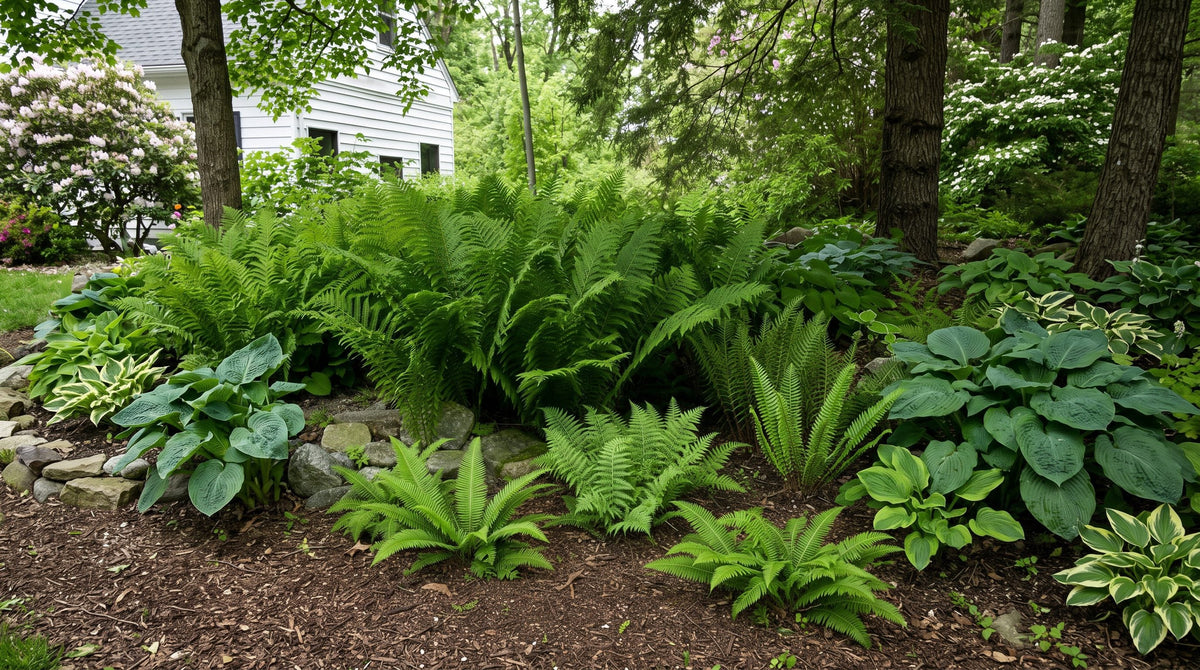
The best hosta companion plants are shade lovers with a different leaf shape or bloom time. Native ferns such as lady fern and Christmas fern add fine texture. Foamflower and Virginia bluebells bring spring flowers, and wild ginger fills the ground between clumps. Most of these grow in USDA zones 3 to 8.
Hostas bring broad, bold leaves to shade. The plants that look best beside them do something different. Fine, lacy fronds set off a wide hosta leaf. Low ground covers hide bare soil between clumps. Early spring flowers fill the weeks before hostas leaf out. When you choose partners this way, a shade bed looks full from April to frost. Hostas and their partners share the same needs. They thrive in part to full shade, such as the dappled light under deciduous trees or the north side of a house. They love rich, moist soil that drains well, like the leafy floor of a forest. The native shade plants below grow wild in that same kind of spot across eastern North America. Each one is matched here by USDA zone, so you can pick partners that will come back year after year where you live. The last step is a sample bed you can copy, with spacing for every plant.
Hosta companion plants by layer


1. Add native ferns for fine texture
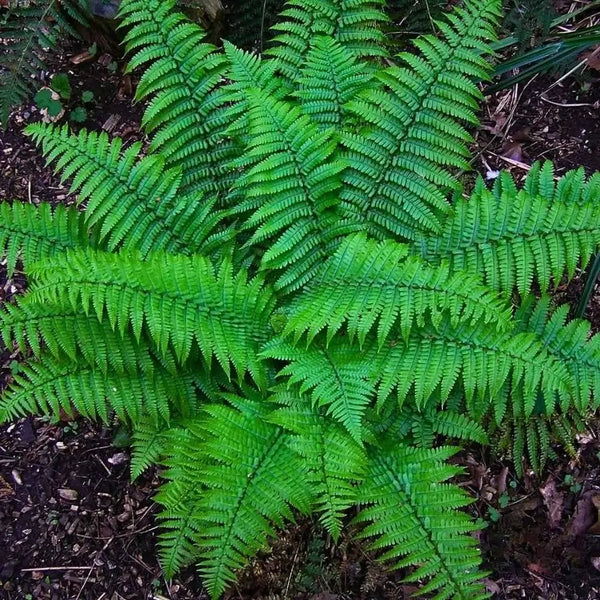
Ferns are the classic partner for hostas. Their lacy fronds contrast with broad hosta leaves. Lady fern grows 1 to 3 feet tall in zones 4 to 8 and turns soft gold in fall. Christmas fern stays 1 to 2 feet tall, grows in zones 3 to 9 and keeps its green all winter. Our 10 Shade Fern Plants Starter Pack mixes shade ferns chosen for your zone.
Tip: Plant lady fern at the back of the bed and Christmas fern at the front corners for winter green.
2. Plant foamflower for spring blooms
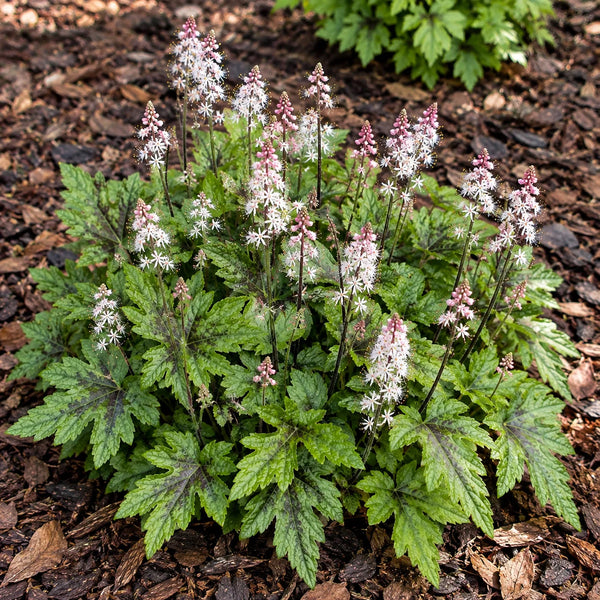
Foamflower is a low native wildflower for shade. It forms mounds 6 to 12 inches tall with heart- to maple-shaped leaves. Frothy white to pale pink spikes open from April to June. It is hardy in zones 3 to 8 and spreads by runners into a soft carpet. The flowers feed small native bees in spring. Plant it along the front edge of the bed.
Tip: Its leaves often turn bronze-red in fall, a warm contrast as hosta leaves fade.
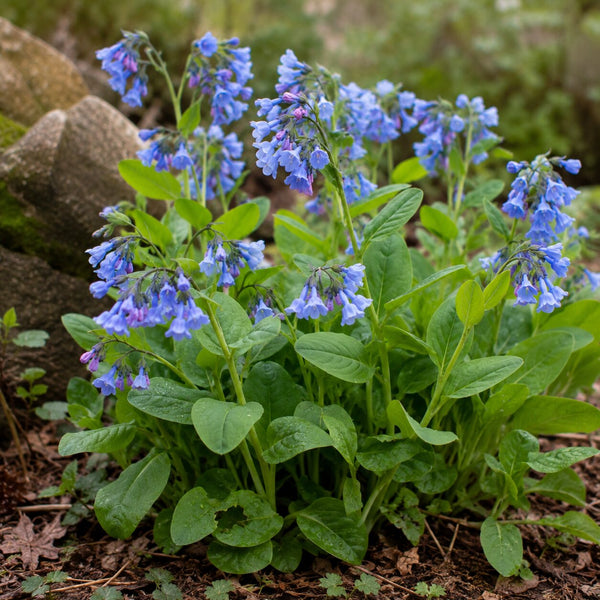
3. Add Virginia bluebells for early spring
Virginia bluebells bloom in spring, often before hostas are fully up. The nodding flowers open pink, turn purple, then settle into sky blue. Blooms last up to six weeks. Bluebells are spring ephemerals, which means the plants go dormant after they bloom. That is the beauty of the pairing: hosta leaves spread out and cover the gap the bluebells leave behind.
Tip: Plant bluebells between hosta clumps, not in front, so the hostas hide the space later.
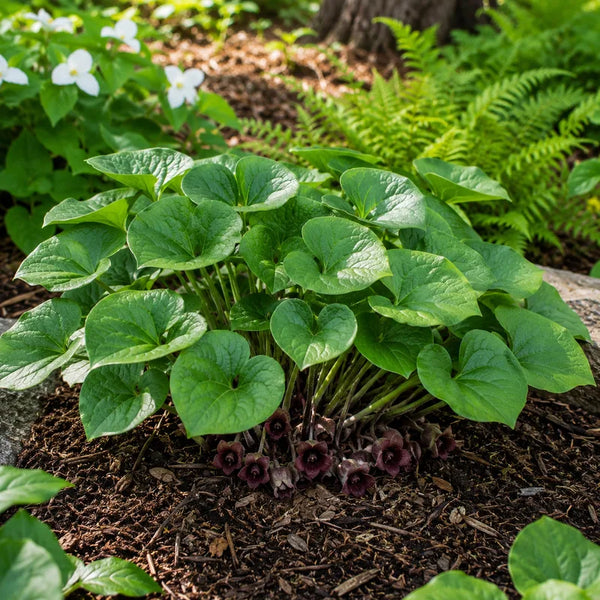
4. Fill bare ground with wild ginger
Wild ginger is a simple way to fill the space around hostas. Its velvety, heart-shaped leaves overlap into a low mat 6 to 10 inches tall. It grows in zones 3 to 8 and spreads slowly by rhizomes, which are creeping underground stems. Small reddish-brown flowers hide under the leaves in early spring. It is also a host plant for the pipevine swallowtail butterfly.
Tip: Space wild ginger 8 to 12 inches apart for a mat that fills in within a couple of seasons.
5. Copy this sample hosta and fern bed
For a bed about 6 by 4 feet, run three lady ferns along the back, 18 to 24 inches apart. Set two medium hostas in the middle, giving each the width on its label. Tuck two or three bluebells between them. Put a Christmas fern at each front corner. Fill the front edge with wild ginger 8 to 12 inches apart, with foamflower between. Bluebells and wild ginger flower in early spring, then foamflower from April to June.
Tip: Christmas fern stays green all winter, so the bed never looks empty.
Match hosta partners to your zone
Zone is the first filter for any shade partner. Your USDA zone tells you how cold your winters get. A plant rated for your zone can come back each spring. In the coldest beds, zone 3, choose Christmas fern, foamflower and wild ginger, which are all rated down to zone 3. Lady fern joins them from zone 4. In the warmest part of this range, Christmas fern is the one partner here rated for zone 9, so make it the backbone of the bed. Zones 4 through 8 can grow every fern and ground cover in this guide together. Lady fern and foamflower also handle gentle morning sun when the soil stays moist. Our 10 Shade Fern Plants Starter Pack is chosen for your zone at the time it ships, across zones 3 to 9. If you want three shade perennials in one order, the Shade Garden Trio is a simple way to start a bed under trees.
Care and keeping
Water new plantings deeply once or twice a week through the first summer, since tree roots compete for moisture. In fall, leave fallen leaves on the bed as mulch. Shredded leaves keep the soil cool and moist and feed it as they break down, just like a forest floor. Add compost each spring.
Frequently asked questions
What plants go well with hostas?
Shade plants with a different leaf shape or bloom time go well with hostas. Native lady fern and Christmas fern add fine texture. Foamflower and Virginia bluebells add spring flowers. Wild ginger makes a low carpet in front. All of them love the same part to full shade and rich, moist soil.
What plants can fill space around hostas?
Low ground covers fill the space around hostas best. Wild ginger spreads slowly into a velvety mat 6 to 10 inches tall. Foamflower spreads by runners and widens to 12 to 24 inches over a few seasons. Both grow in zones 3 to 8 and thrive in part to full shade.
What to plant with ferns and hostas?
Add a low flowering layer and an early spring layer. Foamflower blooms white to pale pink from April to June along the front of the bed. Virginia bluebells flower in spring and then go dormant, and the hosta leaves cover the gap. Wild ginger can edge the bed as a ground cover.