
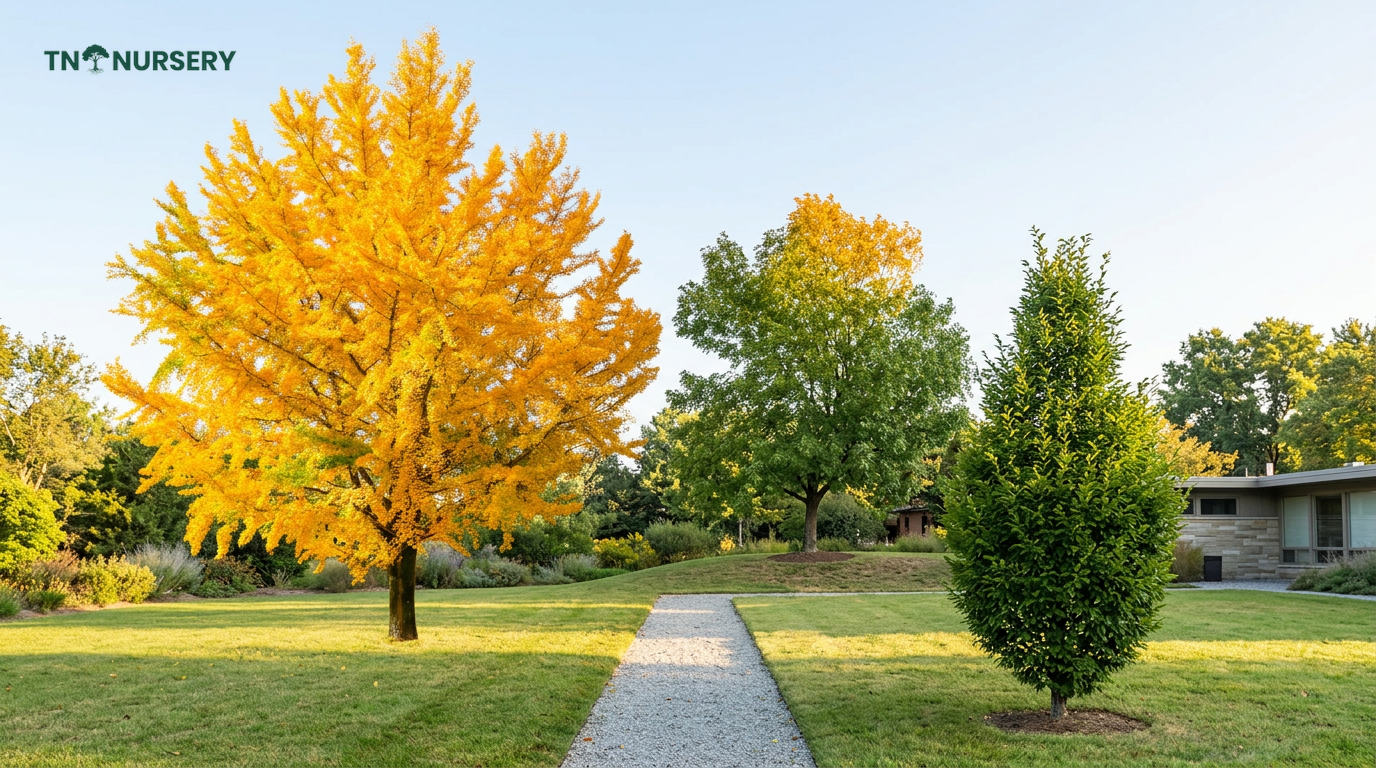
Ginkgo Tree Guide for Easy Yards in 2026
We compare ginkgo, tupelo, elm, and hornbeam for spring and summer landscapes, with zone-aware help for homeowners searching a nursery near me.
Easy yards start with the right tree
- Prioritize USDA zone match, full-size spread, and drainage before looks
- Expect lower pest pressure and dependable shade from a well-sited ginkgo
- Use perennial beds, groundcover, and shade fern plantings to finish the space
- Keep enough distance from paths, patios, and foundations to reduce future pruning
Our Top Pick for Easy, Long-Lived Yards

Ginkgo Tree for Full-Sun Yards and Lasting Structure
If you want one tree to anchor the yard for decades, this ginkgo tree earns the space. We recommend it for homeowners who want bright yellow fall color, fan-shaped leaves, and a tree that handles dry spells, city stress, and a wide range of soils once established. Keep in mind that it grows slowly, but that steady pace is part of why it becomes such a durable landmark.
- Fan-shaped leaves that turn bright yellow in fall for strong seasonal color
- Grows in planting zones 3-9 with full sun or partial shade flexibility
- Very low-maintenance growth in well-drained soil, with tolerance for dry conditions and difficult urban sites
How to Match a Native Tree to Your Yard
A ginkgo tree earns its place when you have room to think long term. We tell customers to picture the tree in 15 years, not just this spring. That means checking overhead wires, driveway edges, and the distance from your house before you plant.
How to choose the right ginkgo tree?
Start with space, sun, and drainage. A ginkgo handles urban conditions well, but it still needs open sky, decent soil, and patience while it settles in.
Choose a statement tree for long-term visual impact
If your front yard feels flat, this is where a bold tree shape helps most. Ginkgo brings a clean outline and bright fall color, so it works best where you can see it from the street or front walk. We like it for medium to large lots because it needs breathing room.
Keep in mind, ginkgo is not the fast answer. Early growth can be steady rather than quick. But if you want a tree that ages with the property, that tradeoff makes sense.
Choose a shade tree for comfort and canopy
For patios, west-facing lawns, and play areas, canopy matters more than novelty. You want enough sun for establishment, then enough spread to cool the yard later. If your lot runs tight between homes, measure twice. Roots, branches, and future pruning space all count.
Choose a wetter-site tree for drainage-prone areas
Low spots need a different plan. If water stands after rain, do not force a dry-site tree into that space. We would rather help you place the right Native Tree in the right ground than watch you replace one in two summers.
What are the best ginkgo tree to buy?
The best pick is the one that matches your lot size and your patience. For a broad yard with full sun and strong sight lines, ginkgo is a solid anchor. For edible interest elsewhere on the property, persimmon can fill a different role.
- Small lot: Leave generous clearance from foundations and walkways.
- Sunny exposure: Plan for stronger establishment in the first growing season.
- Wet soil: Match the site first, then choose the tree.
- Lower maintenance tolerance: Pick a tree that fits the space without constant pruning.
And here is something shoppers miss when they search for a nursery near me or plant nursery near me. A yard rarely works with one layer alone. Around a tree, we often see better results when homeowners add low fillers like violets or browse our Moss collection for soft ground coverage in the right spot.
“Plant for the mature size, water deeply through the first summer, and your yard will look more settled every year after.”
So if you are planning spring planting in 2026, now is the time to map sun patterns and drainage. Then, through summer establishment care, stay consistent with water, especially in heat. You can browse our Native Trees or Shop All collection when you are ready to build around the main tree.
Compare Easy-Yard Trees From Our Nursery Near Me Picks
If you want one practical place to compare an easy-yard ginkgo tree, Tupelo, Elm, and Hornbeam, this set keeps it simple. We chose these four for clear reasons: bright fall color, wet-spot performance, adaptable shade, and upright structure, so you'll find a fit for open lawns, tricky drainage, or…


Frequently Asked Questions
Which tree is best for a low-maintenance yard?
For most easy-care home landscapes, we point customers to a ginkgo tree. Once it settles in, it handles typical yard conditions with less fuss than many flowering choices. It also gives you a strong upright shape, so you get structure without constant pruning. Keep in mind that every tree still needs watering while it establishes, especially through late-summer heat.
Is a ginkgo tree a good fit for a small or average-size yard?
Yes, in many cases it is. We usually suggest it for average-size home landscapes where you want one clear focal tree instead of a wide-spreading canopy. Look at your overhead space first. If you have power lines or a very tight planting strip, measure before you buy. That quick step saves trouble later.
Which tree works best in wet ground?
If your soil stays soggy after rain, tell us that before you order. A site with wet ground needs a tree matched to that condition, not just a tree you like in a photo. We help customers sort that out by growing zone and planting conditions. And if you have mixed conditions in the yard, send us the details so we can narrow it down.
How do I know which tree fits my USDA zone?
Start with your USDA zone, then compare it with the plant listing before ordering. If you have searched for a plant nursery near me because local stock feels hit or miss, we can help you check zone fit before you plant. We also carry a Zone 7b collection, which helps if that matches your area. Zone fit matters more than impulse buying. It is the difference between a tree that settles in and one that struggles.
Do you sell only trees, or can I add other plants around them?
We sell more than trees. You will also find perennials, seedlings, climber vines and groundcover, moss, and shade ferns. That makes it easier to build around one anchor tree. For example, some homeowners pair a tree planting with irish sea moss in a quiet corner or add violets where light shade softens the yard. If crows visit your property, that usually says more about food and shelter nearby than the tree itself.
How does TN Nursery ship live trees and plants?
We ship all items by 3-4 day ground shipping. That applies across our live plant orders, including trees, seedlings, and groundcover. So if you are ordering before back to school season and want planting done while weather is still workable, plan around that shipping window.
Does TN Nursery accept returns or offer refunds?
No. We do not offer refunds, and we do not accept returns. If a product is available, we can offer a reshipment. We do not offer a warranty on any product unless you purchase an extended warranty at the time of order. If the product is out, we can offer in-store credit.
How can I contact TN Nursery, and what do you do with my information?
You can reach us at customerservice@tennesseewholesalenursery.com or visit us at Tennessee Wholesale Nursery, 12847 State Route 108, Altamont TN 37301, United States. We value your privacy and only request information we genuinely need. That is how we keep ordering and customer support straightforward.
Conclusion
Key Takeaways
- Choose ginkgo for long life and low maintenance
- Pick tupelo for wetter ground and vivid seasonal color
- Use elm when you need broad shade and wildlife value
- Plant hornbeam in narrower spaces or formal layouts
- Build a fuller yard with companion layers like shade ferns, perennials, and groundcovers
