
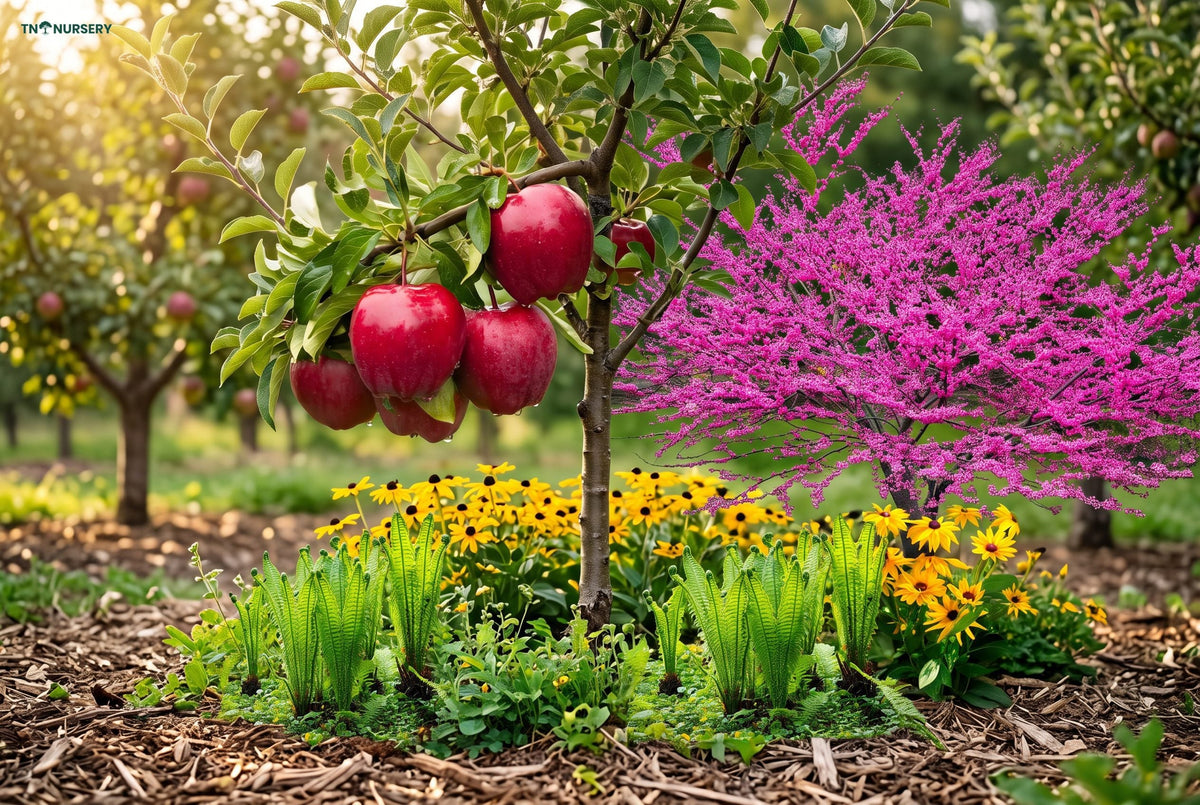
Your Orchard Can Be a Living Ecosystem, Not Just a Row of Trees
We'll show you how native companion plants for fruit trees bring in pollinators, crowd out weeds, and feed your soil. Eight plants. One thriving guild.
What Is a Fruit Tree Guild?
- Anchor tree: an apple, peach, or mulberry sets the center of the guild
- Pollinator plants: long-blooming natives like Black Eyed Susan feed bees through summer
- Understory: small trees and flowering bushes, like redbud, that handle partial shade
- Groundcover: low perennials that cover bare soil around the drip line
- Shade edge: ferns and woodland natives for the cooler, shadier side of the tree
Start Your Guild With the Apple Tree, Then Add Native Companion Plants for Fruit Trees

The Apple Tree: Your Orchard's Canopy and Harvest Anchor
Every guild needs a center, and for a first home orchard, our bare-root Apple Tree for home orchards fills that role. Give it full sun, at least 6 to 8 hours a day. It also wants moist, well-drained soil and room to reach close to 20 feet. Keep the zone around the trunk open, and spread compost without piling it against the bark. White spring blooms pull in bees. So why stop there? Flowering companions keep color going before and after apple bloom.
- Hardy in zones 3-8 and matures under 25 feet in full sun
- White spring blooms that attract bees to your orchard
- Grafted onto vigorous rootstock, bearing fruit in about 4-5 years
Four Layers for Planting Around Your Apple Tree
Good native companion plants for fruit trees work with the tree, not against it. The trick is placement. So we design in four simple layers, each with its own job and its own distance from the trunk.
Start With a Clear Mulch Ring
Before you plant anything, find the trunk flare. That's the spot where the trunk widens into the roots. Keep it visible. Never pile mulch against it or crowd it with dense plantings.
Spread a mulch ring around the tree, but pull the mulch a few inches back from the bark. Then begin your companions beyond that ring. Why? Mulch piled against bark holds moisture and invites rot.
The Four Layers
- Canopy: The Apple Tree is your main harvest and structure plant. Everything else follows its lead.
- Small-tree or edge layer: A Redbud Tree belongs outside the apple's mature spread, never under it.
- Flowering perennial layer: Black Eyed Susan Plant and Indian Pink Plant bring color and bee traffic.
- Groundcover and woodland-edge layer: Fiddlehead Fern suits the cooler, shadier pockets on the north side.
How to Attract Pollinators to Fruit Trees
Plant flowering natives in the ring just past your mulch. Redbud blooms in early spring, and Black Eyed Susan carries color into late summer. That spread of bloom time keeps bees visiting your yard all season.
Keep in mind: these native perennials for orchards need room too. Leave space between clumps so air moves freely around the tree.
What About Vegetables and Herbs?
Companion planting vegetables can work in a sunny home garden. So can strawberry companion plants and thyme companion plants. But each needs its own moisture, spacing, and maintenance plan. This guide sticks with durable native and woodland-style perennials. You'll find all of them in our full plant collection.
Native Perennials for Orchards, Matched to Sun and Shade
These native companion plants for fruit trees each suit a different spot, from sunny borders to the damp woodland edge. Pick by your zone, soil moisture, mature size, and light rather than packing plants tight around the trunk.


Planting Your Guild: A Spring and Early Summer Plan
Spring is the best time to install native companion plants for fruit trees. The soil is workable, and new roots have months to settle in before winter. But first, watch how the light moves.
Read the Light Before You Dig
Your yard looks different in May than it does in March. Once your fruit trees leaf out, the south and west sides usually stay bright. The ground under the canopy and to the north shifts into filtered shade.
So map two zones:
- Sunny edge (south and west): Flowering perennials like Black-eyed Susan. Give each plant room so air moves freely between the leaves.
- Filtered shade (under and north): Woodland plants like Fiddlehead Fern and hepatica. They want soil that stays rich in organic matter and evenly moist.
What to Plant Under Apple Trees
Plant shade-tolerant natives like ferns and hepatica beneath and north of the canopy. Put sun lovers like Black-eyed Susan along the brighter outer edge. Keep every companion plant outside the immediate trunk area.
Planting Day Checklist
- Leave open ground around the trunk. Nothing should crowd the base.
- Water new plants deeply while they establish, not in light daily sprinkles.
- Add a modest layer of organic mulch. Pull it back so it never touches the bark.
Keep in mind: a mature fruit tree needs its share of water and nutrients. Don't overpack the guild, and don't let aggressive spreaders smother a young tree.
Which native perennials for orchards will thrive in your yard? Honestly, your site will tell you. Watch it through one full season. Then expand in stages, adding plants where the light and moisture actually suit them.
Ready to start? Browse our full selection of trees and native perennials.
Pick Your Orchard Anchor Before Adding Native Perennials for Orchards
Every guild starts with one tree, so choose based on your space, sun, and harvest goals. The full-sun Peach Tree gives you fragrant pink spring blossoms and self-pollinating fruit at 12 to 20 feet. Keep in mind it needs real commitment.


Fruit Tree Guild FAQs
How close can I plant native companion plants for fruit trees?
Keep the trunk flare fully clear. Then maintain a mulch ring around the base. Set your native companion plants for fruit trees just beyond that ring, and space each one by its mature spread. A Black Eyed Susan Plant needs less room than a young Redbud Tree, so plan for full size rather than pot size.
Do companion plants replace regular fruit tree care?
No. Your Apple Tree or Peach Tree still needs full sun, steady watering, pruning, good soil fertility, and regular pest checks. Companions support that work. They don't do it for you.
How do I attract pollinators to fruit trees?
Plan blooms in sequence so something flowers before, during, and after your fruit trees bloom. Never spray open flowers. And mix plant heights and types. Pairing a Redbud Tree with Indian Pink and Black Eyed Susan gives bees and other pollinators food and shelter across the season.
What should I plant under apple trees? Can I grow vegetables there?
Only where sunlight, moisture, and root competition allow. Vegetables usually need more sun than a mature canopy lets through. For shady spots, shade-tolerant natives like Fiddlehead Fern fit better. Keep in mind that a young tree's establishment comes first.
When will my TN Nursery order arrive?
We ship all items by 3–4 day ground shipping. Keep in mind that we can't cancel an order once the plants are dug.
What if my plants arrive damaged?
Inspect your order right away. Report any concerns within 24 hours of carrier-marked delivery. Email customerservice@tennesseewholesalenursery.com with photos and your order number under our live-arrival guarantee. We don't accept returns or offer refunds, but we will review your photos and may offer a reshipment.
Plant One Tree. Build a Guild Around It.
Start small this fall. Choose one fruit tree, then add three or four native companion plants for fruit trees around its drip line.
