
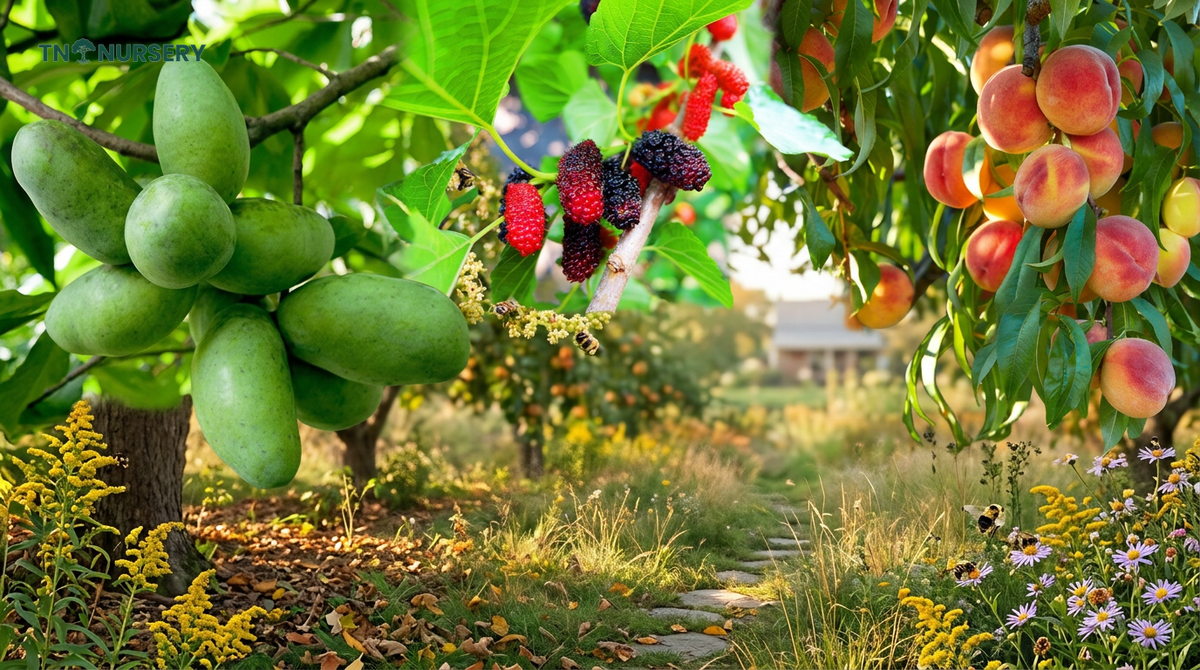
Build a pollinator-friendly yard with native trees, shade layers, and reliable companion plants. Explore flowering trees and plants for pollinator gardens by sun, shade, and landscape purpose.
What are the best best trees for bees in fall to buy?
- Spring-blooming trees feed emerging bees when food sources are still thin.
- Native fruit trees support pollinators first, then birds and other wildlife later.
- Layered plantings with perennials extend nectar from spring into late-season bloom.
- Site-matched selections usually outperform fussy picks and need less replacement.
How Trees Fit Into a Fall Pollinator Plan
When people search for the best trees for bees in fall, we think it helps to clear up one big point first. Many trees that matter most to bees do not bloom in autumn. They bloom in spring, sometimes for only a short window, but they feed pollinators when colonies are building strength. That early support carries into late summer and fall. So if you want lasting results, we would plant trees as the backbone and then layer in later bloom around them.
How to choose the right best trees for bees in fall?
Start by separating direct fall nectar from indirect pollinator value. A tree can help bees even if it is not flowering in September. It may offer spring nectar, summer shade, fall fruit for wildlife, or shelter that steadies the whole garden.
We use a simple checklist. Look at bloom timing first. Then check native status, how much shade the canopy will cast, and whether the root zone leaves room for understory planting. And yes, maintenance matters. Some flowering trees ask for more cleanup, while others settle in with less fuss.
What are the best best trees for bees in fall to buy?
The best picks are usually the ones that support the full season, not just one month. We would focus on reliable ornamental trees and regionally appropriate natives that feed bees early, create structure, and pair well with later-blooming companions below.
Think of trees as the long-term frame of your pollinator space. Fall flowers finish the picture, but the canopy sets up the whole season.
What we would evaluate before planting
- Bloom window: Early blooms help bees when food can still be scarce.
- Native fit: Local species often support more insects and adapt better over time.
- Fruit and shelter: Branch density and fall fruit add wildlife value beyond nectar.
- Understory match: Leave room for pollinator friendly plants under and around the tree.
- Shade pattern: Dappled shade can open space for woodland perennials later.
- Care level: Keep in mind that faster growth can mean more pruning or cleanup.
A practical planting framework
- Start with one or two reliable trees that match your zone and soil.
- Add plants for pollinator gardens, including native flowers for bees and monarch host plants.
- Fill new shade pockets with resilient woodland perennials as the canopy matures.
- Prioritize zone compatibility over trends. Survival beats impulse buying every time.
We see this a lot with regional searches like Illinois native plants. People want choices that actually live through winter, handle local soils, and return value year after year. That is the right instinct. Look, a cheaper plant that fails in one season costs more than a mid-range tree that anchors the yard for a decade. And if space is tight, start smaller. One well-placed tree and a strong understory can do more than a crowded planting plan.
Plant These Flowering Trees to Anchor a Pollinator Garden Across the Seasons
These are not all fall bloomers. But they are some of the best trees for bees in fall because they build the habitat and spring nectar base that keeps pollinator spaces working year after year.


A Native Pick for the Best Trees for Bees in Fall

Pawpaw Tree for Woodland Edges, Spring Pollinators, and Edible Fruit
If you want a native tree that does more than fill space, our Pawpaw Tree earns the spot. It is native to the Eastern United States, grows well in partial sun or shade, and fits layered planting plans where flowering trees, pollinator friendly plants, and shade-tolerant companions work together. You also get the bonus of tropical-tasting fruit, which makes this one of the most distinctive ornamental trees for gardeners who care about habitat.
- Eastern native variety with disease-resistant growth for long-term planting success
- Handles partial sun to shade and stays under 25 feet at maturity for woodland-edge and shade garden use
- Produces edible fruit and attracts many pollinators, adding wildlife value beyond spring bloom
Build a Layered Pollinator Garden Beyond Flowering Trees
The best trees for bees in fall do more work when we pair them with seasonal partners. Here you'll find native wildflowers, monarch host plants, shade plants, and a vigorous vine that help fill bloom gaps, support beneficial insects, and add structure from canopy to ground layer.


Frequently Asked Questions
What are the best trees for bees in fall if most trees bloom in spring?
For best trees for bees in fall, we tell customers to think beyond bloom time alone. Trees set the structure of your pollinator garden, but late-season bee support usually comes from pairing flowering trees with perennials and garden plants that carry nectar into late summer and early fall. So yes, plant trees first. Then fill around them with pollinator friendly plants to keep bees working your garden when spring bloom has passed.
Should I choose native trees or ornamental trees for a pollinator garden?
We usually lean native when your goal is wildlife support. Native trees fit local soils and weather better, and they pair naturally with illinois native plants, native flowers for bees, and native wildflowers. But ornamental trees still have a place if you want a more formal yard. Keep in mind, some ornamentals offer less food value than native species, so we suggest using them as accents, not the whole plan.
What companion plants help extend pollinator support into late summer and fall?
Use a mix of perennials and garden plants under and around your trees. We like building layers, with taller plants near the back and lower bloomers near paths and borders. That gives bees a longer feeding window and makes your space feel full instead of patchy. If you also want habitat variety, add monarch host plants where you have sun and room. And if deer pressure is a problem, mix in deer resistant flowers so your planting plan holds up better.
Can I mix fruit trees with native wildflowers and shade plants?
Yes, and that mix works well in home landscapes. Fruit trees give you structure and seasonal interest, while native wildflowers help feed pollinators around the root zone and open edges. Just watch light levels. Shade plants belong where the tree canopy will actually block sun, while wildflowers usually need brighter spots to bloom well.
How do I choose plants for my USDA zone?
Start with your USDA zone, then match plants to your sun, soil moisture, and planting space. We always suggest checking mature size before you buy pollinator-friendly trees online, because a tree that fits a large rural lot may crowd a smaller yard. Look, zone is the first filter. But drainage, summer heat, and winter exposure matter just as much for long-term survival.
How does TN Nursery ship live plants?
We ship all items 3-4 day ground shipping. That applies to our live trees, perennials, and garden plants. We pack plants for transit, but you should open the box soon after arrival and get roots or soil checked right away.
What is your return, refund, and contact policy?
TN Nursery does not offer refunds or accept returns, but may offer a reshipment if available, an extended warranty on a plant, or in-store credit if the product is out. If you need help with an order, email us at customerservice@tennesseewholesalenursery.com. Our physical address is Tennessee Wholesale Nursery, 12847 State Route 108, Altamont TN 37301, United States.
Conclusion
Key Takeaways
- Start with one anchor tree such as pawpaw, redbud, peach, or mulberry
- Layer trees with butterfly weed and other native companion plants for fuller habitat
- Choose plants by zone compatibility, bloom sequence, and upkeep needs
- Skip short-lived trends and build a landscape that supports pollinators over multiple seasons

