
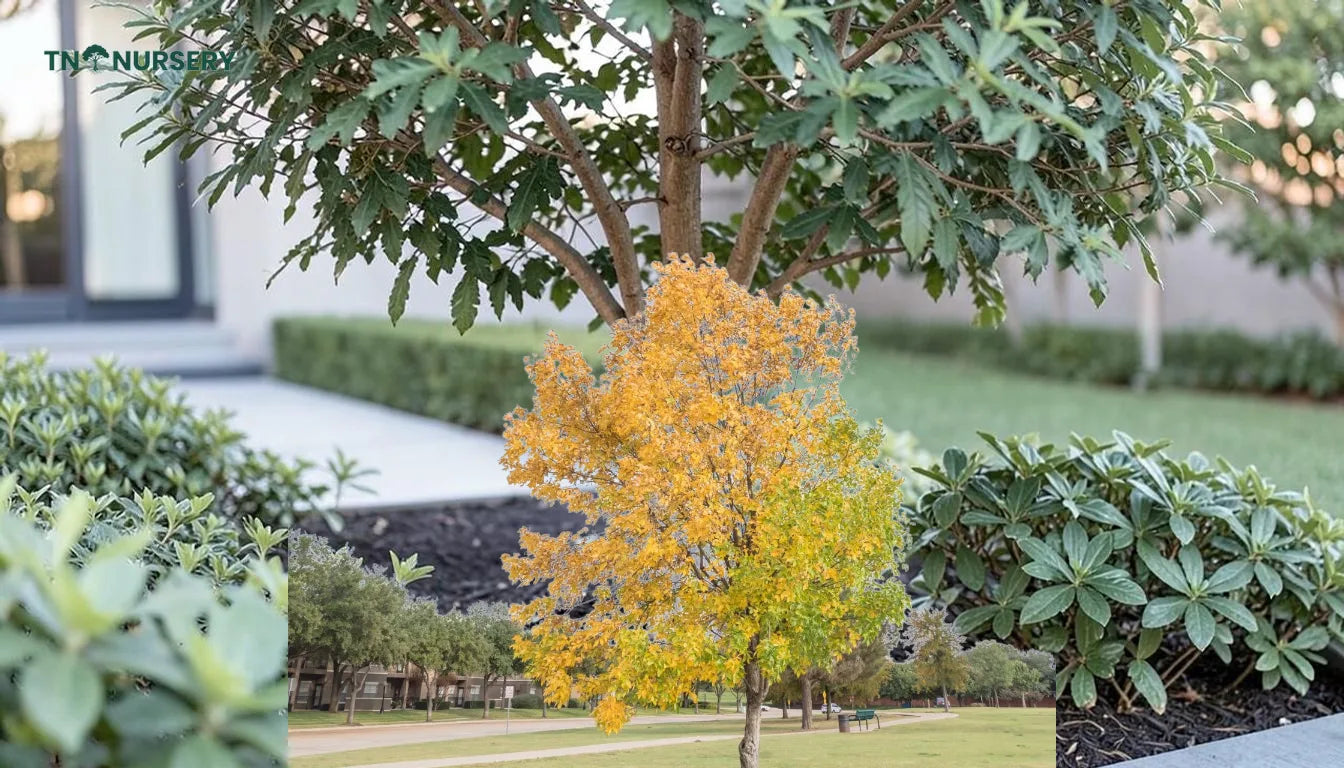
Elm Tree Ideas for Small Yards
See how an elm tree adds filtered shade, cooler seating space, and structure to a compact backyard. We’ll help you plan around mature size and make every planting foot count.
Small-Yard Shade Starts With the Right Tree
- Why an Elm Tree works in many small yards when you plan for mature height and canopy spread
- How full sun to partial shade affects placement near patios, walks, and front beds
- What to plant underneath for a layered, lower-light landscape
- Key zone guidance for gardeners planting in zones 4 through 9
Our Top Pick for a Space-Saving Shade Tree

Elm Tree for Small Yards That Need Real Shade
If you want an elm tree that does more than fill a corner, this is the one we’d plant for lasting shade and structure. It grows in Zones 4-9, handles full sun to partial shade, and ships bare-root for easier planting. Keep in mind that it matures over 25 feet, so it fits best where you want one of the more substantial small trees for landscaping rather than a tight patio specimen.
- Exposure : Elm Trees thrive in full sun to partial shade. They favor bright, indirect sunli
- Height At Maturity : Over 25 Feet
- Planting Zones : 4-9
Slope-Stabilizing Supplies for Small Trees for Landscaping
When you’re planting near a bank, drainage swale, or tight yard edge, these TN Nursery picks help you support the site from the ground up. We grouped Brush Layer Bundles, Fascine Bundles, Miracle G...


Place an Elm for Shade Where You Need It Most
An elm tree can cool a patio, soften heat off a driveway, and make a sitting area usable in July. But placement decides all of that. We suggest planning for the tree’s mature spread first, because even a young bare-root planting like our elm tree for shade and landscaping will grow into a broad canopy over time.
How to choose the right elm tree?
Start with the full footprint, not the trunk. Our Elm Tree grows in Zones 4-9, handles full sun to partial shade, and matures at over 25 feet tall, so you need open sky and real side clearance. If you are shopping for small trees for landscaping, keep in mind that elm works best when you give it room to spread instead of squeezing it into a tight bed.
Measure mature spread before you dig
Stand where you want shade at 3 to 6 p.m. Then picture the canopy at full size, not at planting size. We tell customers to mark a wide circle with a hose or rope and check how that future crown lines up with the patio edge, driveway, windows, and walkways.
- Patios: Place the trunk far enough away that the future canopy reaches seating, not just the border.
- Driveways: Aim shade at the west or southwest side where pavement stores the most heat.
- Front yards: Leave sightlines open from the street and front walk.
An elm can be a good tree to have in your yard when the mature canopy lands where you actually need cooling instead of crowding the house. In a small yard, that usually means planning around the future shade pattern first and the planting hole second.
If you are comparing the best elm trees for shade, focus on whether your lot can handle broad cover over time. A tree that gives real afternoon shade is useful, but only if the canopy still clears rooflines, walks, and property edges as it matures.
What are the best elm tree to buy?
For this guide, the best choice is our Elm Tree when you want broad shade, wildlife value, and a long-term landscape tree. It ships bare-root and is listed for shade and landscaping use, which makes it a practical fit for a small trees for front yard plan only if your yard still has enough width for the mature canopy.
Plan root room, not just branch room
Roots need open soil. So avoid planting right against foundations, narrow strips between pavement, or packed corners beside heavy traffic. Look, an elm can handle a lot once established, but root space still matters if you want steady growth and less stress in summer.
"If you want cooler outdoor living space, shade the hard surfaces first. The air feels better when the tree blocks heat from concrete and stone."
After the elm is placed, you can finish the bed with shade loving plants or other shade garden plants under the outer canopy as it matures. That gives you a cooler, layered yard instead of one tree floating in mulch.
Are elms good trees for compact landscapes? They can be, if the site gives the roots enough uninterrupted soil. When roots are boxed in by pavement and foundations, even a strong shade tree becomes a poor fit for the space.
Once you know the root zone has room, you can finish the planting with lower layers such as Shrubs or ground-level accents from Shade Moss. That kind of layering helps a small yard look settled instead of crowded.
Frequently Asked Questions
Will an elm tree work in a small yard?
It can, but you need to plan for mature size. Our Elm Tree grows over 25 feet tall, so it is better for a small yard that needs a long-term shade canopy than for very tight patio spaces. If you want room for shade loving plants or flowering shrubs for shade beneath it later, give the roots and crown enough open space from the start.
What planting zones does your Elm Tree grow in?
We list our Elm Tree for planting zones 4 through 9. That wide range gives many customers flexibility, especially if you want one tree for a front yard planting that handles cold winters and warm summers. Before you order, match your local zone to the product listing. That step matters more than guessing from nearby landscapes.
How much sun does the Elm Tree need?
Our Elm Tree grows in full sun to partial shade. In most yards, we prefer a spot with several hours of bright light so the tree can establish a strong canopy. But partial shade can still work, which helps if you are fitting it near bushes for front yard borders or other established plantings.
What does bare-root mean when you ship the tree?
We ship our Elm Tree as bare-root. That means you receive the dormant tree without a heavy soil ball around the roots. It is lighter to handle, easier to plant, and a practical choice if you are adding small trees for landscaping without wrestling with a bulky container. Keep in mind that bare-root plants can look plain on arrival. That is normal.
What should I expect after my order arrives?
First, unpack the tree and check the roots right away. Bare-root stock often looks smaller than people expect, but that does not tell you how it will perform once planted. We ship all items by 3-4 day ground shipping, and our Elm Tree is marked Ships Now. Plant it promptly, water it in well, and give it time to wake up and leaf out.
Do you accept returns or offer refunds on plants?
No. We do not offer refunds, and we do not accept returns. We also do not offer a warranty unless an extended warranty is purchased at the time of order. If you need help with an order issue, contact us at customerservice@tennesseewholesalenursery.com. We want you to reach us early so we can review the situation clearly.
Can I use an Elm Tree with shade garden plants or evergreen bushes for landscaping?
Yes, that is one of the main reasons people plant one. As the canopy matures, an Elm Tree can help create conditions for shade garden plants underneath, along with layered beds that include evergreen bushes for landscaping. So if you are building a softer front yard look, this tree can anchor the whole plan. Just remember that the shade increases as the tree grows.
Plant Your Elm Tree This Summer
Ready to make a small yard feel cooler and more usable? Our elm tree ships now as a bare-root tree for zones 4-9, and it handles full sun to partial shade. Keep mature size in mind, then start with...
Frequently asked questions
Are elm trees good to have in your yard?
Yes, elm trees can be good to have in your yard if you want long-term shade and have enough room for their mature height and spread. They are a better fit for small yards with open sky and real side clearance than for very tight planting strips.
What makes an elm one of the best trees for shade?
An elm can be one of the best trees for shade because it develops a broad canopy that cools patios, driveways, and seating areas over time. The key is placing it where the mature canopy will shade the area you use most without crowding structures.
How much room does an elm tree need in a small yard?
Start by planning for the full canopy and root zone, not just the young trunk. In a small yard, an elm needs enough open soil and side clearance to mature without pressing into foundations, pavement, or rooflines.
What should you plant under an elm tree later on?
As the canopy matures, you can layer in shade-tolerant plantings beneath the outer edge. Shrubs and shade-loving ground covers usually work better than trying to crowd the trunk area with too many plants right away.
