
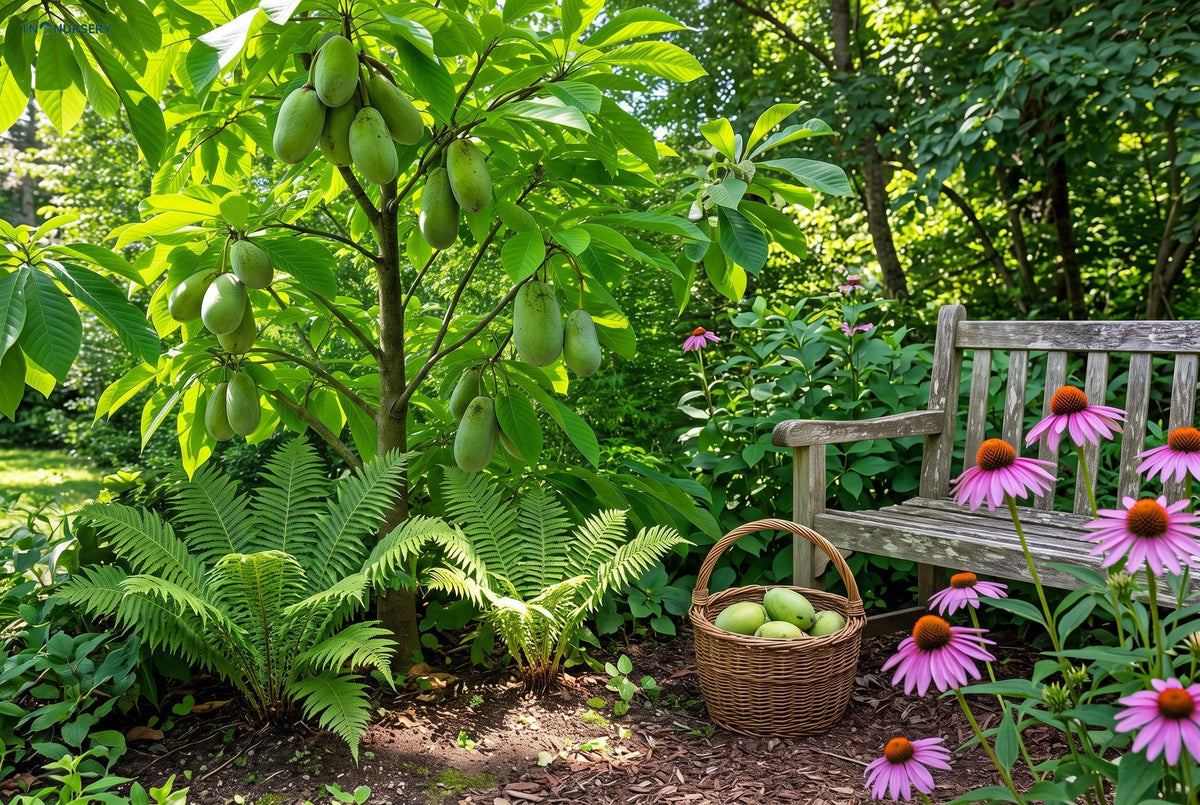
Grow a Backyard That Feeds You, the Birds, and the Bees
We'll help you pick edible native plants for home garden spaces: fruit trees to anchor the yard, perennials to color the borders, and blooms that feed pollinators.
Why Grow a Yard That Feeds You Back
- Seasonal food: Pawpaw and Peach trees give you fresh fruit from your own yard in summer and fall
- Better pollinator habitat: Milkweed, Butterfly Weed, and Coneflower draw the bees and butterflies your fruit trees depend on
- Layered visual interest: canopy trees, sunny perennials, shade ferns, and a climbing Trumpet Vine fill every level of the yard
- A more sustainable yard: native plants suited to your light, soil, and moisture need less watering and fussing once they're established
Start With One Anchor Tree: The Native Pawpaw

Pawpaw Tree: The Custard Fruit Jefferson Grew at Monticello
Every good backyard harvest plan needs one tree that anchors the space, and our pick is the pawpaw. It's native to the Eastern U.S., grows under 25 feet, and handles partial shade along a woodland edge. Among edible native plants for home garden beds, this one is special because you won't find its custard-like fruit in stores. Our trees ship bare-root and come pre-pollinated. We guarantee fruit once they mature, as long as you give them proper care.
- Pre-pollinated trees with a fruiting guarantee once mature and properly cared for
- Disease-resistant native variety that attracts all types of pollinators
- Thrives in partial sun or shade and stays under 25 feet tall
One of the Best Fruit Trees for Backyard Growers Who Like a Project

Peach Tree: Pink Spring Blooms, Sun-Warmed Summer Fruit
Our self-pollinating peach tree covers itself in pink spring flowers that pull in bees, and you only need one tree to get a harvest. Plan for a mature size of 12 to 20 feet tall and 15 to 20 feet wide. Want bigger peaches? Thin the young fruit so the tree puts its energy into fewer, better ones. Then prune in late winter or early spring, usually February or early March, to keep the canopy open and easy to reach. Keep in mind this tree isn't disease or pest resistant.
- Self-pollinating, so a single tree can still give you a harvest
- Pink spring blossoms that attract bees to your garden
- Ships bare-root for planting zones 5 through 9
Design Your Edible Garden in Layers
Here's how we plan edible native plants for home garden spaces. Work in layers, just like a woodland does. Start high, then fill in below. Each layer gets its own light, space, and job.
Layer 1: The Best Fruit Trees for Backyard Sun
Put your trees in the sunniest open spot first. A Peach Tree needs full sun to ripen sweet fruit. A Pawpaw Tree tolerates some shade when young, but it fruits best with more light. Keep in mind that pawpaws usually need a second tree nearby for good pollination.
Layer 2: Pollinator Plants for Fruit Trees
Next, ring your trees with flowering perennials. Milkweed and Purple Coneflower draw bees and butterflies close to your blossoms. And you get summer color after the fruit trees finish blooming.
Layer 3: Shade and Vertical Space
Use the dappled shade under mature trees for woodland plants like Giant Ostrich Fern and Virginia Bluebell. Save fences and arbors for Trumpet Vine. Look, it grows fast and spreads hard. Give it sturdy support away from your house.
Are redbud flowers edible?
Yes. Redbud flowers are edible and taste mildly tart, a bit like fresh peas. You can toss them into spring salads or pickle the buds.
Your Planning Checklist
- Sunlight: Fruit trees need 6+ hours of direct sun.
- Mature spread: Space plants for their full adult width, not their pot size.
- Soil drainage: Avoid spots where water pools after rain.
- Harvest access: Leave a clear path to every tree.
- Maintenance room: Plan space for pruning and mulching.
A vegetable chart or herb companion planting guide helps with annual beds. But perennial plantings need something else: smart spacing and blooms that follow one another from spring to fall.
Gardening in a cooler region? Start with our Plants for Zone 6 collection.
Pollinator Plants for Fruit Trees: Native Color From June to Frost
These five natives draw bees, butterflies, and hummingbirds toward the best fruit trees for backyard growing, and their bloom times overlap to cover the whole season. Keep in mind that fruit set still depends on variety, weather, and site.


Beyond the Best Fruit Trees for Backyard Plots: Native Fixes for Shade and Fences
Your fruit trees get the sunny spots. But what about the soggy, shady corner or that bare fence? These three natives fill the gaps, and each one pairs well with edible native plants for home garden beds. The Giant Ostrich Fern for damp shade grows over 2 feet tall in zones 3-7.


Frequently Asked Questions
How many fruit trees should I start with?
Start with one. Pick a single tree that fits your sun, soil, and space, like the Pawpaw or Peach Tree featured above. Learning one tree's needs for a full season teaches you a lot. That makes the next planting easier, and it's a sensible first step with edible native plants for home garden plans.
Do pollinator flowers guarantee more fruit?
No. Milkweed, Butterfly Weed, Purple Coneflower, and Black Eyed Susan support bees and butterflies near your trees. That's why they rank among the most useful pollinator plants for fruit trees. But weather, tree health, and variety still shape the crop. So think of them as support, not a promise.
When will a fruit tree produce?
It depends. The tree's age at planting, your care, your climate, and each season's conditions all play a part. A young tree often needs time to settle its roots before it sets much fruit. Patience pays off here.
Are redbud flowers edible?
Look, we won't give you a simple yes. Before you eat any landscape plant, confirm the exact species. Then check trusted food-safety sources. Treat your yard like a garden first and a pantry second.
Can I grow a Fuyu persimmon tree in my yard?
Maybe. First, confirm the tree's hardiness range matches your zone. Then make sure you have room for its mature size and a spot with enough sun. Gardening in a cooler area? Browse our plants for Zone 6 to see what handles your winters.
How to grow fiddlehead ferns?
Plant the Giant Ostrich Fern in shade or part shade with moist, rich soil. Keep it watered during dry spells, especially in its first year. The tightly coiled spring fronds are the fiddleheads. Confirm the species before eating any.
What should I do if my plant arrives with a concern?
TN Nursery offers a 24-hour live arrival guarantee. Report any concern within 24 hours of carrier-marked delivery. Send photos and your order number to customerservice@tennesseewholesalenursery.com. Keep in mind that we don't accept returns or offer refunds, but we will offer a reshipment. All orders ship by 3-4 day ground shipping.
Conclusion
Key Takeaways
- Build in stages: tree first, pollinators second, shade and vertical spaces last
- Pawpaw and Peach Trees make strong backyard focal points
- Milkweed, Butterfly Weed, Coneflower, and Black Eyed Susan bring pollinators to your fruit
- Ostrich Fern, Virginia Bluebell, and Trumpet Vine fill shady spots and fences
