
Crape Myrtle Tree Color That Carries Your Yard Through Summer
When other blooms slow down, we count on long-lasting flower color, sun tolerance, and easy placement. Use this guide to compare size, color, and the right spot.
How to choose the right crape myrtle tree?
- Bloom season expectations and how long summer color usually lasts
- How much sun crepe myrtles need for strong flowering
- How to choose between tree forms and shrub forms for your space
- What to know about watering, pruning, and heat-season upkeep
Growing Basics for Bigger Summer Blooms
A crape myrtle tree earns its place by flowering when many spring trees are already finished. You'll usually see the first color build in midsummer, then continue through late summer if the plant gets enough sun and heat. That long bloom window is exactly why we use them to keep open yards, driveways, and front beds from looking flat in July and August.
How to choose the right crape myrtle tree?
Start with the site, not the flower color. We plant these where they can get full sun for most of the day, because stronger light drives heavier bloom, sturdier branching, and better leaf drying after rain. Keep in mind, too much shade often means fewer flower clusters and a thinner, stretchier shape.
What the planting spot needs
- Full sun: Aim for 6 or more hours of direct light.
- Heat exposure: Warm reflected heat near lawns and driveways can help summer blooming.
- Airflow: Give branches room so leaves dry faster and stay cleaner.
- Clearance: Leave enough space from walls and eaves to keep the natural form intact.
Look, these trees are at their best in open settings. We often place them in broad lawns, foundation beds with real breathing room, or mixed shrub borders where the canopy can develop evenly. Tight corners usually cause problems later.
What crape myrtle tree are trending in Crepe Myrtle Trees?
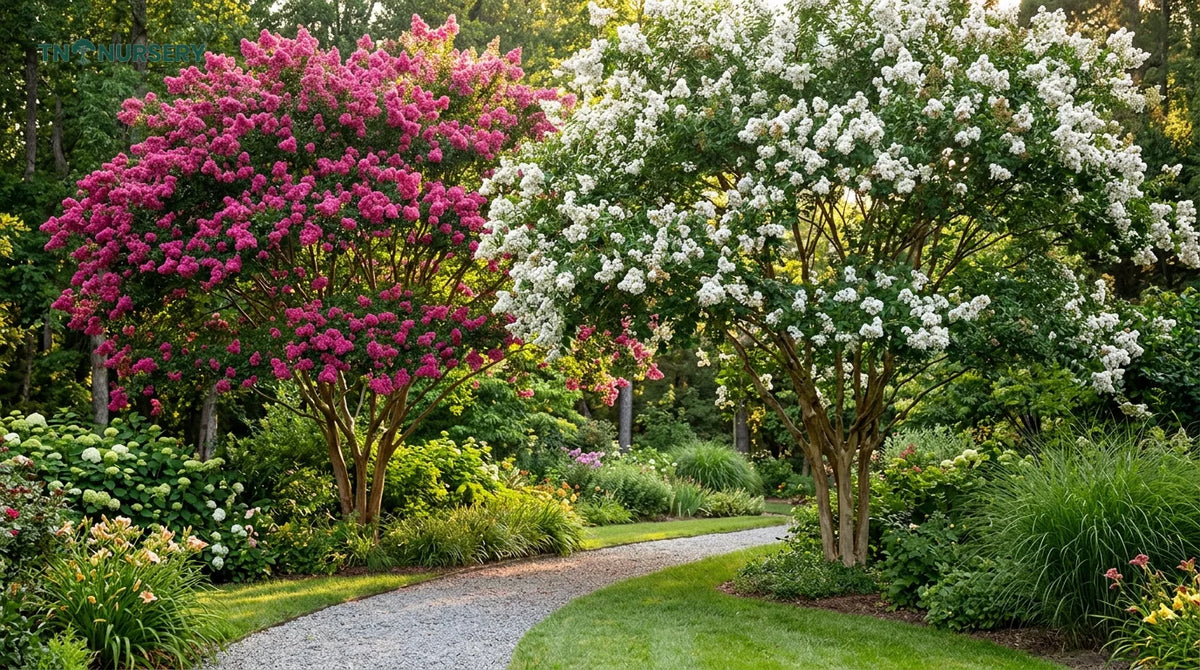
Homeowners still ask for color with contrast. Tuscarora crape myrtle gets attention for its vivid pink bloom, while black diamond crape myrtle is chosen for dark foliage that makes summer flowers look sharper. And white crape myrtle remains a clean, bright pick near brick homes, dark mulch, and formal entries.
"If you want more flowers, give crepe myrtles more sun and more open sky."
So where should you avoid planting? Skip dense tree shade and cramped beds between large shrubs. You'll get more stems than bloom there, and the shape can turn sparse fast. If you give them light, heat, and airflow, they'll carry summer color when the rest of the landscape starts to fade.
Our Top Pick for Late-Summer Bloom

The Foundational Crape Myrtle Tree for Sunny Home Landscapes
When you want dependable color after many summer bloomers fade, we recommend our crape myrtle tree as the starting point. It blooms in late summer, handles full sun, and stays under 25 feet at maturity, which gives you room to use it as a focal planting, in grouped rows, or along a driveway. You’ll also find the broad ornamental range homeowners want, from bright white crepe myrtle forms like Natchez with smooth light bark to stronger pink color associated with tuscarora crape myrtle.
- Late-summer flowering helps keep color going when many yards start to slow down
- Full-sun, drought-tolerant growth suits open beds, driveway edges, and other hot spots
- Matures under 25 feet and does not reseed itself, which keeps placement and upkeep more manageable
Choose Your Form: Crape Myrtle Tree vs. Miami Pink for Tuscarora Crape Myrtle Style
These two picks help you compare tree-like structure against shrub-like fullness before you plant. We grouped them here so you can match bloom color, screening needs, and pruning goals to your yard without guessing.
The Summer Bloom Classic
This core crepe myrtle listing anchors the guide with the signature late-season color shoppers expect from the tree.

The Miami Pink Moment
This pink crepe myrtle option fits the topic perfectly for readers seeking long-lasting summer flowers and ornamental bark.
Planting and Pruning for Strong Summer Bloom
If you want a crape myrtle tree that blooms hard in summer and stays easy to manage, start with placement. We plant these in full sun, with at least six hours of direct light, and in soil that drains well after rain. Wet feet slow growth fast. Drying out between waterings is much safer.
How to choose the right crape myrtle tree?
Match the mature size to the spot you have, not the size in the pot today. A tuscarora crape myrtle needs room to spread, while a black diamond crape myrtle often fits tighter foundation beds better. And if you want a bright contrast near brick or darker siding, a white crape myrtle gives you that clean color pop.
Keep in mind, over-pruning later is usually a fix for poor planning now. We would rather help you space trees by their mature width from the start than see you cut back healthy branches every year.
Watering that helps roots settle in
The first establishment period matters most. Water deeply after planting, then keep the root zone evenly moist while the tree settles. After that, switch to deep watering during long dry stretches, not frequent shallow watering that only wets the top few inches.
- At planting: Soak the root area well.
- Early establishment: Check soil moisture before adding more water.
- Dry weather: Water slowly and deeply, then let the soil breathe.
Mulch and pruning basics
Add a 2- to 3-inch mulch layer to help hold moisture and cut weed competition. But keep mulch pulled back from the trunk. That small gap helps prevent rot.
For pruning, wait until late winter. Remove damaged, crossing, or crowded branches first. Skip severe topping. It creates weak shoots and extra stress. Good pruning builds a stronger shape and cleaner flowering, which is exactly what most homeowners want from a low-maintenance yard.
Smart placement at planting saves years of heavy pruning, uneven growth, and avoidable summer stress.
Frequently Asked Questions
When do crape myrtles bloom?
A crape myrtle tree usually starts blooming in summer and can keep color going well into late summer, sometimes longer in warm areas. Bloom timing shifts a bit with sun, heat, and your zone. You'll often see the earliest flowers on plants growing in full sun with steady moisture during establishment.
How much sun does a crape myrtle need?
Give it full sun. We mean at least 6 hours of direct light each day. Less sun usually means fewer flowers and looser growth. If you're planting a white crape myrtle, bright sun also helps keep the bloom show full instead of sparse.
Can I plant a crepe myrtle near a driveway or patio?
Yes, in many yards that works well. Just give it room for mature spread and airflow, and don't crowd it against concrete or a wall. Tree form works better when you want clearance for walking or seating. Shrub form fills space faster, but keep in mind it can block sightlines near narrow drives.
What is the difference between a tree form and shrub form crape myrtle?
Tree form has a more open trunk structure and a lifted canopy. It fits entryways, patios, and spots where you want shade under the branches. Shrub form stays fuller from the base and works better for screening or a wider planting bed. If you want a cleaner outline, tree form is the better pick.
How often should I water a newly planted crape myrtle?
Water deeply after planting, then keep the root zone evenly moist while it settles in. That usually means checking the soil often instead of watering on autopilot. If the top few inches dry out, water again. But don't keep it soggy. Wet soil can slow root growth just as much as dry soil.
Are Tuscarora and Black Diamond types used the same way in the landscape?
Not always. Tuscarora crape myrtle is often chosen when homeowners want strong summer color and a classic flowering tree look. Black diamond crape myrtle is usually picked for the contrast between dark foliage and blooms. The tradeoff is simple: darker foliage can make a bold statement, but it also looks more dramatic and less soft in traditional cottage-style yards.
How does TN Nursery ship live plants?
We ship all items 3-4 day ground shipping. That applies to our live plants as well, so you can plan for a quick delivery window once your order is on the way.
What if there is a problem with my order?
We do not offer refunds. We do not accept returns. We do not offer a warranty on any product unless an extended warranty is purchased at the time of order. If there is a problem, we can offer a reshipment when applicable, an extended warranty if you purchased it, or in-store credit when applicable. If you need help, email us at customerservice@tennesseewholesalenursery.com or write to Tennessee Wholesale Nursery, 12847 State Route 108, Altamont TN 37301, United States.
Conclusion
Key Takeaways
- Match your planting choice to full sun exposure, mature size, bloom color, and landscape use.
- For a traditional look, prioritize dependable late-summer flowers and attractive branching.
- Miami Pink works well when you want a stronger pink focal point in the landscape.
- Color comparisons matter, but zone compatibility and correct placement matter more over time.
