
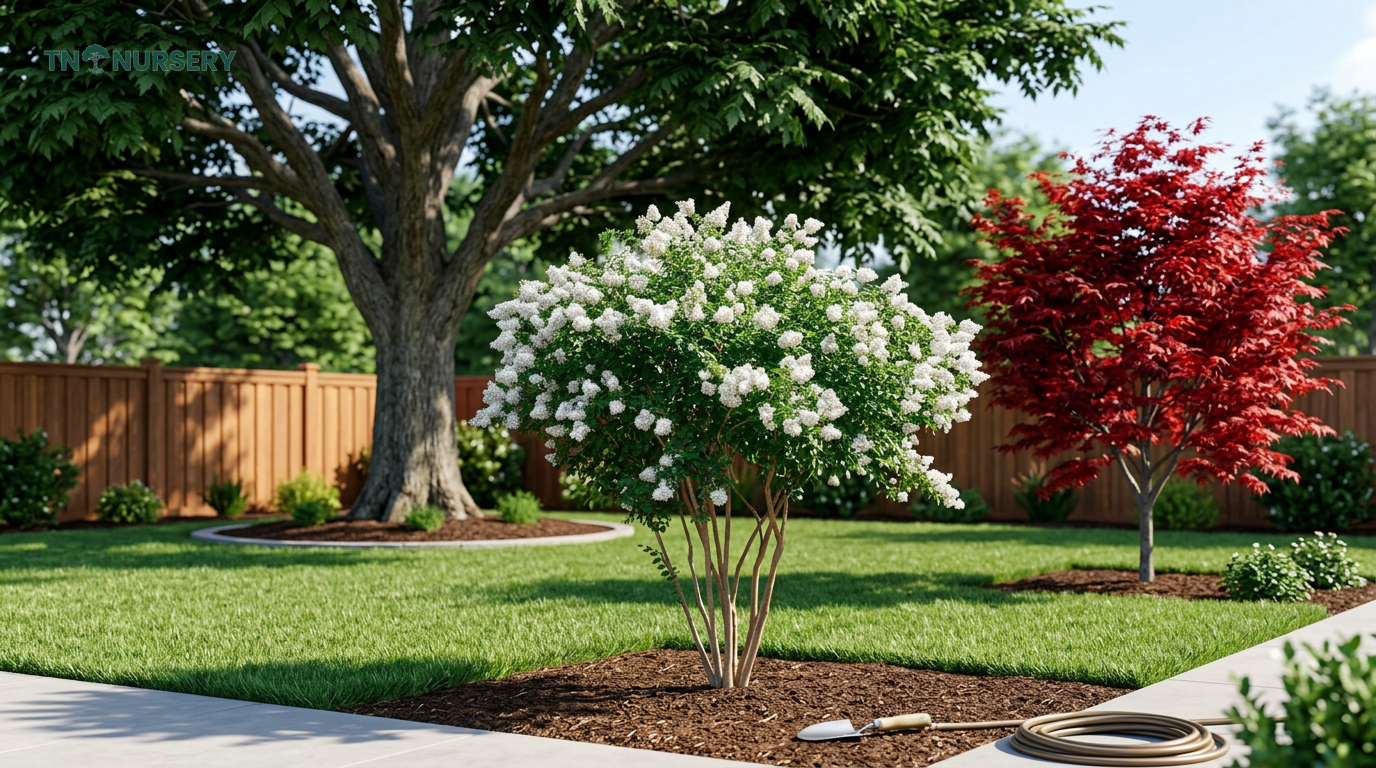
Companion Planting Chart for Sunny Trees
Plan a low-maintenance yard with practical pairings for the red mulberry tree, kwanzan cherry blossom tree, fuyu persimmon tree, and privet tree.
Sun-Loving Tree Pairings That Make Planning Easier
- How we pair sun-loving trees for shade, bloom, fruit, and privacy in one yard
- How to avoid overcrowding by comparing mature size and root space early
- How to narrow choices by USDA zone instead of guessing from appearance
- How to match tree upkeep to real conditions like narrow side yards, open lawns, and patios
How to Pair Full-Sun Trees for Easy-Care Yards
A good companion planting chart starts with light, not color. Full-sun trees need at least six hours of direct sun each day, and the plants around them need to handle that same bright exposure. If one plant wants open sun and the other fades by noon, the pairing usually fails fast.
How to choose the right companion planting chart?
Start by matching sun, water, and future size. Then check mature height, spread, and canopy thickness before you plant anything near a lawn edge, border, or bed.
Plan for mature size, not the nursery pot
We always tell customers to picture the tree ten years from now. A broad canopy changes grass growth, dries out shallow-rooted garden plants, and can crowd a walkway if you plant too close. That matters whether you are considering a kwanzan cherry blossom tree for spring color or a heavier-framing shade tree for the back yard.
Root competition matters too. Some trees pull hard on summer moisture, so we pair them with plants that can handle the same watering pattern. And leave room for airflow. Tight spacing traps humidity, slows drying after rain, and makes a low-maintenance plan harder than it needs to be.
What affects lawns, borders, and nearby plantings?
- Dense canopies reduce turf vigor as shade increases over time.
- Wide spreads can overhang borders and squeeze foundation plantings.
- Strong roots compete with thirsty perennials in the top soil layer.
- Matched water needs cut down on rescue watering in July and August.
Think in tree roles, not short-term trends
Look, a young tree can fool you. A small fuyu persimmon tree may seem easy to tuck into a tight bed now, but future shade and branch spread need open space. The same goes for a red mulberry tree or a privet tree in a sunny screen. Fast early growth can create crowding if you plant by current size.
“We shop by zone first because survival beats impulse planting every time.”
That is how we build better yards at TN Nursery. We help you shop by growing zone, compare a broad range of trees, and choose plants for long-term success instead of one-season looks. Up next, we sort sunny-yard trees by four practical directions: flowering color, fast shade, native structure, and long-term canopy value.
Sunny Yard Tree Comparison Chart: Shade, Structure, and Bloom Near a Kwanzan Cherry Blossom Tree
Use this practical companion planting chart to match your yard size and goals with the right sun-friendly tree. We’ve grouped these four picks so you can compare summer bloom, faster shade, long-range canopy, and native restoration value at a glance.


Our Top Pick for a Sunny Companion Planting Chart

White Summer Color for Small and Medium Yards
If you want a flowering focal point that keeps yard work reasonable, our Natchez Crepe Myrtle Tree earns the spot. You get pure white late-summer blooms, attractive bark, and full-sun performance in Zones 6-9, all on a tree that stays manageable for open lawns, borders, and birding areas. Keep in mind that it ships bare-root, so planting in the right season and giving it steady early care matters.
- Pure white late-summer blooms for bright color when many yards start to fade
- Attractive bark with disease-resistant, low-maintenance growth for polished landscapes
- Thrives in full sun and fits smaller spaces with mature height under 25 feet
How to Choose Sun-Loving Tree Pairings That Fit Your Yard
If you're using a companion planting chart to plan an easy yard, start with the job you need the tree to do. We guide customers that way every day because sunlight alone does not settle the choice. You also need to weigh mature size, cleanup, and how much pruning you will tolerate after year five.
How to choose the right companion planting chart?
Start with sun exposure first. Then check mature size, maintenance tolerance, and the purpose of the planting. That simple order keeps a sunny yard from turning into a crowded one.
Fast Shade
Choose Red Maple Tree when your main goal is quicker canopy growth and strong fall color. It gives a broad, useful shade pattern sooner than slower legacy trees, so it fits newer homes that need relief over patios, drive edges, or open front lawns.
But keep this in mind. Faster growth usually means you need to think harder about spacing now, not later. Give it room from foundations and overhead lines, and it will reward you with a fuller crown instead of a tree you have to keep cutting back.
Ornamental Interest
Natchez Crepe Myrtle Tree is the best pick when you want summer color near the house. It works well in smaller yards and foundation-adjacent spaces where you see it every day from the porch, driveway, or front windows.
It needs full sun and decent airflow. So if that spot stays damp and tight, skip the impulse buy. In a bright, open bed, though, it brings a long season of bloom and a lighter visual weight than a larger canopy tree.
Long-Term Structure
For larger properties, Ulmus Americana Seedlings and Quercus Montana Seedlings make more sense. We place these with homeowners who are planting for future shade, wildlife cover, and the kind of structure that shapes a property for decades.
- Ulmus Americana Seedlings: good for restoration-style layouts and long rows
- Quercus Montana Seedlings: a strong fit for legacy planting and wildlife-minded spaces
- Best use: larger lots where mature spread is an asset, not a problem
What are the best companion planting chart to buy?
The best framework is simple. Use the same process whether you started by searching red mulberry tree, kwanzan cherry blossom tree, fuyu persimmon tree, or privet tree. Look, sun comes first. Then match the plant's mature size, maintenance needs, and your real landscape goal.
Pick for the site you have now and the yard you want ten years from now. That pairing holds up better than any trend.
So which pairing works best? The one that matches your actual light, your available space, and how much upkeep you will honestly do each season. That's how we help homeowners avoid crowded plantings and choose trees that still make sense years later.
Frequently Asked Questions
How far apart should I plant sun-loving trees?
Use your companion planting chart as a starting point, then leave enough room for the mature canopy, not the size at planting. We suggest giving broad shade trees the most space, while a red mulberry tree and a kwanzan cherry blossom tree should never be crowded close enough for branches to rub later.
How much sun do these trees need?
These pairings do best in full sun. That means at least 6 hours of direct light most days. A fuyu persimmon tree will fruit better with strong sun, and a privet tree keeps a fuller, denser screen when it is not shaded out.
Which tree is best for a smaller yard?
For tighter spaces, we usually point homeowners to the kwanzan cherry blossom tree first. It gives you spring color without the heavier spread you should expect from larger shade growers. Keep in mind it is chosen more for bloom and shape than for deep summer shade.
Which option is best for long-term shade?
If shade is your main goal, the red mulberry tree is the stronger pick. It develops a broader canopy over time than flowering ornamentals. But plan ahead. You will want enough open space so the tree can mature without crowding your yard or nearby plantings.
How does TN Nursery ship live plants?
We ship all items by 3-4 day ground shipping. That keeps delivery straightforward and gives you a clear idea of the transit method before you order.
Does TN Nursery accept returns or offer refunds?
We do not offer refunds, and we do not accept returns. If a product is available, we may offer a reshipment. We also do not offer a warranty unless an extended warranty was purchased at the time of order. Depending on the situation, extended warranty coverage or in-store credit may apply.
How can I contact TN Nursery, and how is my privacy handled?
You can reach us at customerservice@tennesseewholesalenursery.com or write to Tennessee Wholesale Nursery, 12847 State Route 108, Altamont TN 37301, United States. And for privacy, we state a simple rule: we only ask for personal information when we genuinely need it.
Conclusion
Key Takeaways
- Check full sun exposure before you choose any tree
- Match mature height and spread to the space you actually have
- Compare pruning, cleanup, and long-term maintenance needs
- Choose by yard role: flowering impact, shade, native canopy, or structure
- Use practical comparisons before deciding on appearance alone
