
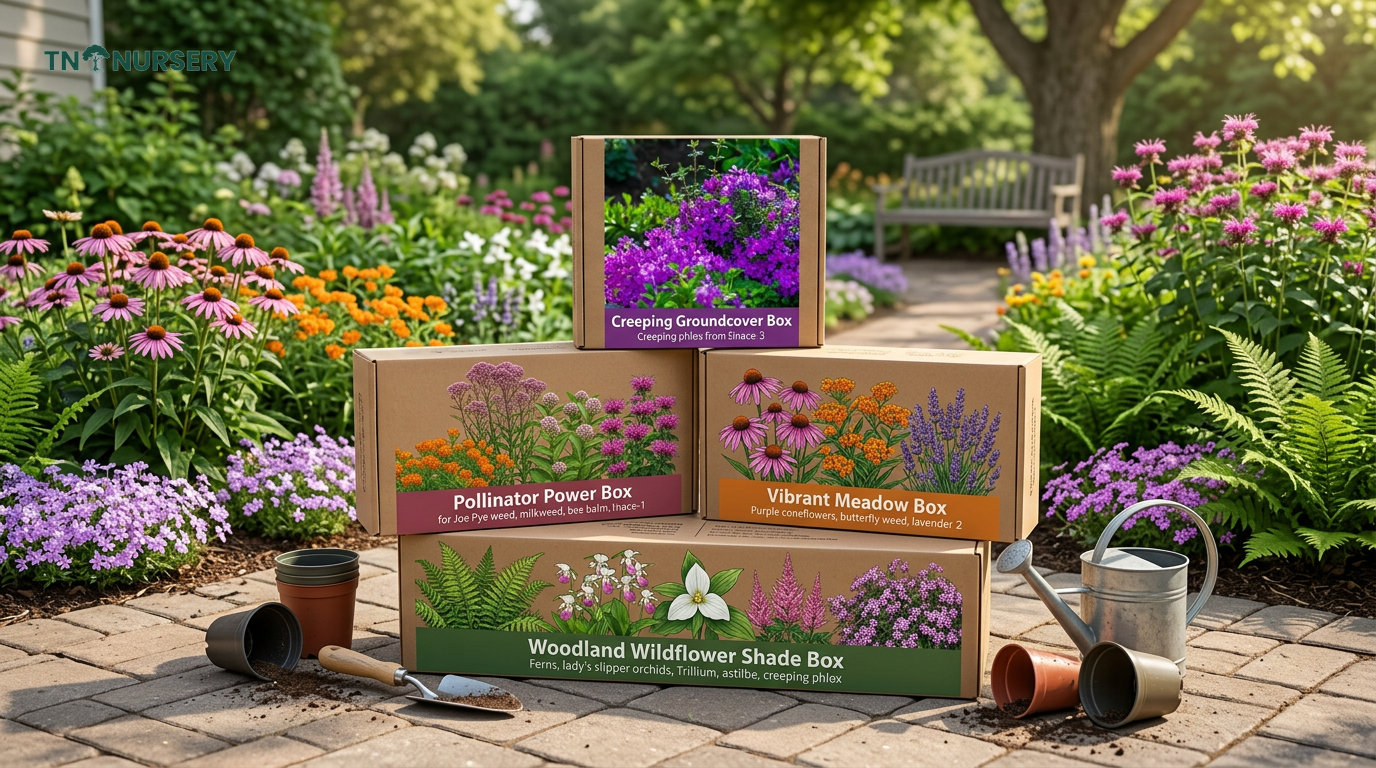
Build Better Perennial Gardens With a Zone-Matched Mixed Box
See layered blooms, foliage contrast, and ground cover perennials in one plan. We’ll help you choose for your zone, planting season, and pollinator goals.
How to choose the right perennial gardens?
- Choose compact starter sets for small beds, path edges, and first-time planting projects.
- Use larger mixed packages when you need faster coverage across foundation beds or wide backyard borders.
- Match sun, shade, and soil moisture before you buy so plants establish faster and need fewer replacements.
- Start with deer-resistant mixes in high-browse areas, then layer in pollinator support and color goals.
- Zone-based selection reduces guesswork and helps mixed boxes support layered design and longer bloom windows.
Our Top Pick for Layered Perennial Gardens

25 Zone-Chosen Blooming Plants for Full, Easy Beds
If you want one simple way to start perennial gardens, this Blooming Plant Box - 25 Mixed gives you a 25-plant mix of perennials and climber groundcover vines chosen for your zone. We like it for new borders, mailbox beds, foundation plantings, and backyard patches that need bloom, texture, and ground-level coverage in one order.
- 25 mixed blooming plants with colorful selections for layered beds and flexible garden use
- Zone 3-9 selection matched to your climate for easier planting and better long-term survival
- Pollinator-focused mix with summer blooms and garden favorites that may draw bees, butterflies, and hummingbirds
How to Choose the Right Mixed Perennial Box
If you are building perennial gardens, box size changes the whole job. A small pack lets you test sun, soil, and watering habits before you fill a larger bed.
We usually tell homeowners to match the box to the space first, then the color plan. Pretty blooms matter, of course. But plant survival depends more on light, drainage, and your zone.
How to choose the right perennial gardens?
Choose a smaller mix when you are trying a new bed or watching your budget. Choose a larger mix when you want faster coverage, repeated color, and fewer empty gaps in the first season.
Choose a starter trio if you are testing a bed
A starter trio works well near a mailbox, front walk, or one narrow border. You can check how the bed drains after rain, how long the sun stays, and whether deer pass through.
Keep spacing simple. Set taller plants toward the back, then repeat one color at least twice so the bed looks planned, not random. If you want purple perennials, echo that shade in two spots and break it up with green foliage.
Choose a themed pack for a problem area
Some beds need a job done. That is where themed mixes help most. For dry, sunny edges, browse our Long Blooming Perennials. For busy bee and butterfly areas, start with our plants for pollinator gardens.
And if weeds keep coming back, use ground cover perennials to shade the soil. Keep in mind, they still need room at planting time. Cramming them too close often causes weak air flow and extra dividing later.
Choose a large mixed box for faster impact
A large box makes more sense for broad foundation beds or long fence lines. You can repeat bloom color every 4 to 6 feet, which gives the eye a steady rhythm across the yard.
So think in layers:
- Early bloomers for spring color
- Midseason flowers to carry summer
- Late bloomers so the bed does not fade too soon
Companion planting guide basics
A simple companion planting guide starts with shape, height, and root spread. Place clumping flowers beside lower fillers, then tuck perennial herbs near a path where brushing the leaves releases scent.
"The best-looking bed is usually the one that repeats a few colors and gives each plant enough elbow room."
Look, the best package is the one that fits your site. A shaded side yard, a hot curb strip, and a moist back border all ask for different plants. We can help you narrow the right collection by zone, bloom season, and bed size.
Shop by Site Problem: Ground Cover Perennials, Wet Spots, and Deer Pressure
Start with the condition you need to solve, not a plant name. We grouped these picks for perennial gardens that face dry sun, soggy soil, pond edges, browsing deer, or bare ground that needs fast coverage.


Choose the Right Mix for Perennial Gardens and Plants for Pollinator Gardens
Start with the Best Seller Trio if you want a simple first planting and less decision fatigue. For a fuller cottage look, the 15 Old Fashioned Perennial Favorites brings classic spring color in zones 3-9, while the Seasonal Monthly Plant Box lets you build slowly with three in-season plants each…


Frequently Asked Questions
How do I choose the right perennial box for my USDA zone?
Start with your planting zone. For colder areas, use our Plantable Now - Zone 3a or Plantable Now - Zone 3b collections to narrow your choices fast. That helps you build perennial gardens with plants suited to your climate, not just your color plan. If you want long flower color, our Long Blooming Perennials collection is a strong fit. If pollinators matter most, go straight to our Pollinator Plants collection.
Which package is best for a small beginner bed?
For a first bed, we suggest keeping your mix simple. A small grouping from Long Blooming Perennials is easier to space, water, and watch through the first season. If deer browse in your yard, start with Deer Resistant Perennials instead. Keep in mind, mixed beds fill in over time, so leave room between plants now.
What should I choose for wet or dry conditions?
Match the box to the site first. If your bed stays busy with bees and gets regular moisture, our Pollinator Plants collection works well for many plants for pollinator gardens. If your area runs lean and dry, Deer Resistant Perennials are often a better place to start because many handle tougher spots. Look, the soil still matters, so avoid planting a moisture-loving mix in a hot, fast-draining bank.
Are these good plants for pollinator gardens?
Yes, especially selections from our Pollinator Plants collection. We use that collection for shoppers who want nectar and bloom coverage across the season, not just one short flush of color. It also fits well into a companion planting guide when you want flowers near vegetable beds or fruiting trees.
Can I use ground cover perennials to reduce weeds?
Yes, but give them time to spread. Dense plantings from our groundcover and perennial collections can help shade bare soil, which cuts down on weed germination. That makes ground cover perennials useful along bed edges, slopes, and under taller plantings. But you will still need to weed early on until the plants fill in.
How are plants shipped?
We ship all items by 3-4 day ground shipping. That schedule helps us move live plants quickly so they spend less time boxed up in transit.
What is TN Nursery's return policy?
We do not offer refunds, and we do not accept returns. If there is a problem and the product is available, we may offer a reshipment. If the product is unavailable, we may offer in-store credit. We do not include a warranty unless you purchased an extended warranty on the plant at the time of order.
How can I contact TN Nursery?
You can reach us at customerservice@tennesseewholesalenursery.com. If you need to mail us, our address is Tennessee Wholesale Nursery, 12847 State Route 108, Altamont TN 37301, United States.
Conclusion
Key Takeaways
- Match your box to sun, moisture, wildlife pressure, and planting goals
- Use a trio for small spaces, simple color plans, or focused bed updates
- Choose a themed pack for specific needs like deer resistance or pollinator support
- Pick a larger mixed collection for broader beds and layered seasonal interest
- Zone-based shopping helps improve plant survival and long-term landscape success
