
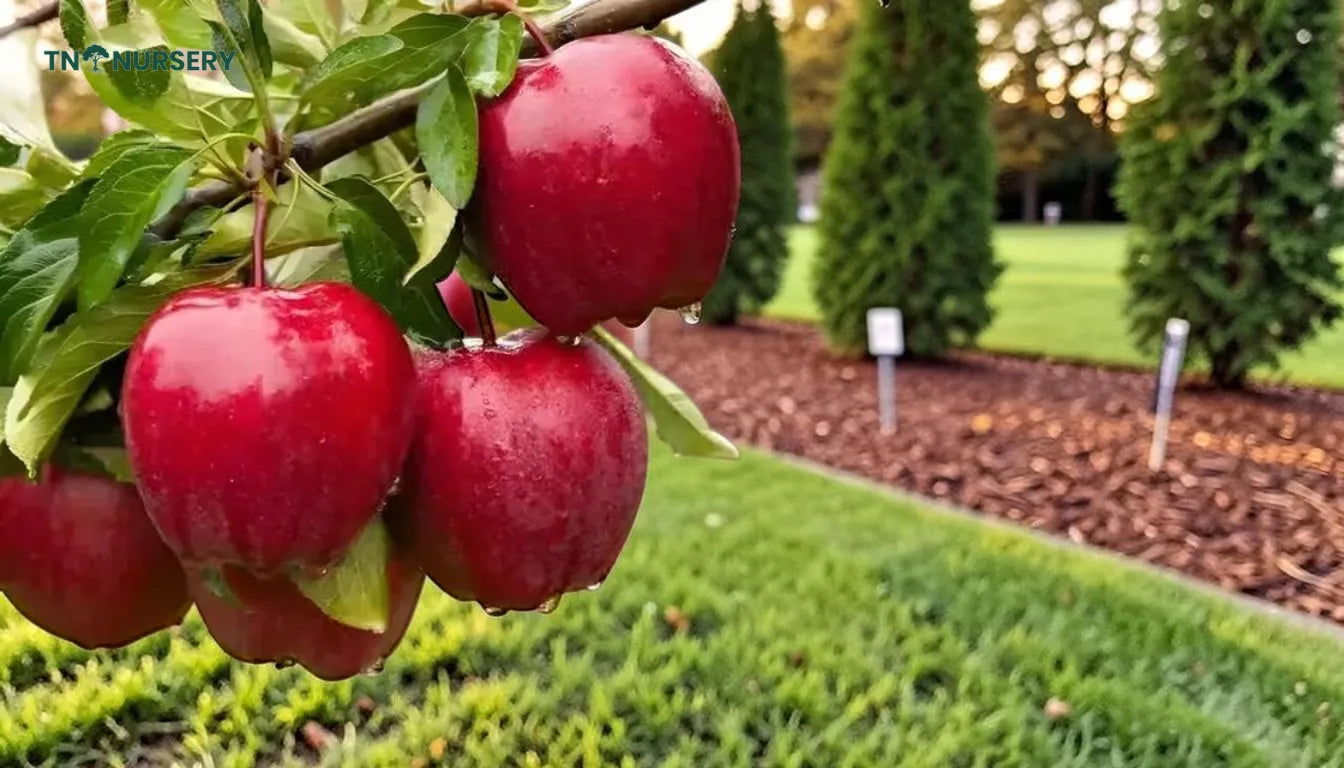
Choose Small Trees for Front Yard Success
We help you match sun, soil, and mature size before you buy trees, so your yard gets shade, privacy, or color that actually fits.
How to choose the right small trees for front yard?
- Spot common mistakes like ignoring mature size, sun exposure, and soil moisture
- See why American Arborvitae works for screening but not every narrow front bed
- Compare evergreen structure, flowering interest, and yard space needs
- Use a simple seven-step checklist before you buy trees
Our Top Pick for Privacy and Structure

American Arborvitae for Small Trees for Front Yard Planning
If you want a tree that adds height fast, this is one we’d put near the top of the list. Our American Arborvitae Tree grows in an upright, pyramidal form with deep green foliage, small brown cones, and red-tinted bark that peels in narrow strips. It works well for privacy screening, winter structure, and focal planting. Keep in mind, it grows best in full sun, though it can handle partial shade, so it is not the strongest pick among true shade tolerant trees.
- Height At Maturity: Over 25 Feet
- Usage: Evergreen
- Usage 2: Fast Growing
Buy Trees and Erosion Helpers for Tough Yard Spots
If you're planning small trees for front yard spaces or fixing wet, sloped ground, this mix gives you practical tools in one place. We paired a long-lived oak with live stabilization bundles, plus native plants that help hold soil in place.


Check Sun, Soil, Size, and Zone Before You Buy
Before you buy small trees for front yard spaces, measure the site first. We always tell customers to check four things: sun, drainage, mature size, and hardiness zone. That quick review helps you avoid planting a tree that outgrows the bed, sulks in wet soil, or struggles through winter.
How to choose the right small trees for front yard?
Start with the spot, not the photo. Count how many hours of direct sun the area gets, watch where water sits after rain, and picture the tree at full height and spread.
“A tree that fits your yard on day one should still fit it ten years from now.”
Check sun exposure first
Read the light requirement like a rule, not a suggestion. Apple Trees for full sun yards need at least 6 to 8 hours of direct sun, while American Arborvitae for privacy screening handles full sun to partial shade. If your planting area gets only filtered light, focus on shade tolerant trees with proven tolerance, such as Slippery Elm, which is listed as shade hardy.
Test drainage before planting
Dig a small hole and fill it with water. If it stays full the next day, skip trees that demand steady drainage and look at site-matched choices instead. American Arborvitae prefers moist, well-draining soil, while Overcup Oak handles wetter ground and even very clay-heavy sites.
Match mature size to the space
- Apple Tree: under 25 feet in listed maturity, often a better fit near entries and walks
- American Arborvitae: 20 to 40 feet tall with a 10 to 15 foot spread
- Loblolly Pine: 60 to 90 feet tall, so keep it for large properties
Look, this step saves the most trouble later. A Loblolly Pine can work as one of our deer resistant trees, but it is far too large for a tight front foundation bed.
Use your USDA zone as a hard limit
We recommend checking your local map before you buy trees. American Arborvitae fits zones 3 to 8, Apple Tree fits 3 to 8, Loblolly Pine fits 6 to 9, and Overcup Oak fits 5 to 9. If you are searching for a zone 10a planting guide, keep in mind these specific trees are not listed for zone 10a, so zone match should stop the purchase right there.
And one honest tradeoff: fast growers can fill space sooner, but they still need enough room and the right soil. If you want to browse by climate first, you can shop our Trees collection or narrow by region with Zone 8a Plants.
Frequently Asked Questions
How do we choose the best small trees for front yard spaces?
Start with mature size, not the size at delivery. Our Apple Tree stays under 25 feet at maturity, so it fits many front yards better than larger shade trees. It also needs full sun and moist soil, so check your light before you buy. If your space is narrow and you want vertical structure instead, our American Arborvitae grows upright and pyramidal, but keep in mind it matures over 25 feet tall and works better as a screen or accent than a tiny foundation planting.
Which trees work best for privacy screening?
For evergreen trees for privacy screening, our American Arborvitae is the clearest fit. It has deep green flat needles, a narrow pyramidal habit, and a mature height of 20 to 40 feet. We ship it bare-root, and it grows fastest in full sun, though it can handle partial shade. If you are searching for a thuja green giant tree, keep in mind this listing is for American Arborvitae, not Green Giant. The look is still useful for screening, but the exact variety matters.
Do you carry any deer resistant trees?
Yes. Our Loblolly Pine Tree is described as deer-resistant, and it also stays evergreen for year-round cover. It grows in zones 6 to 9 and needs full sun, so it suits larger open yards better than tight planting beds. Look, it gets big. Mature height runs 60 to 90 feet, so this is not the tree for a small corner near your porch.
What should we plant if we need a fast growing shade tree or more shade tolerance?
If you want a fast growing shade tree, our Slippery Elm Tree is a strong pick. It is marked fast growing, reaches over 25 feet, and is also shade hardy, which helps if your yard does not get full sun all day. For another adaptable choice, Overcup Oak Seedlings handle full sun to partial shade and wet or clay-heavy ground well. But they are seedlings, and their growth is slower and steadier than a quick screen tree.
Which zones do these trees cover, and do you have options for warm areas like zone 9a, 9b, or 10a?
We list planting zones on each product page because zone fit matters more than looks. For warmer areas, Loblolly Pine grows in zones 6 to 9, Slippery Elm grows in zones 4 to 9, and Overcup Oak Seedlings grow in zones 5 to 9. American Arborvitae and Apple Tree both stop at zone 8. So, if you need a zone 9a planting guide or zone 9b planting guide, start with the products rated through zone 9. We do not have a featured tree here rated for a zone 10a planting guide.
How are TN Nursery trees shipped, and what should we expect when the order arrives?
Many of our trees ship bare-root, including American Arborvitae, Apple Tree, and Loblolly Pine Tree. That means you should expect dormant roots and little to no soil around them, not a potted plant. We ship all items by 3-4 day ground shipping. Some products also have seasonal ship timing listed on the page, such as American Arborvitae shipping in February and Slippery Elm shipping in November 2026, so check the product details before ordering.
What is your return, refund, and warranty policy?
We do not offer refunds, and we do not accept returns. We also do not offer a warranty on any product unless an extended warranty is purchased at the time of order. If you need help with an order, contact us at customerservice@tennesseewholesalenursery.com or write to Tennessee Wholesale Nursery, 12847 State Route 108, Altamont TN 37301, United States. And if you are using this as your tree buying guide for sun soil and space, reach out before planting if you need help matching the right tree to your yard.
Shop Small Trees for Front Yard Success
Ready to buy trees with fewer summer losses? We match your yard to the right fit, from American Arborvitae for privacy to Apple Tree picks for smaller spaces. Keep in mind, fast growers need room. slower growers can be a better long-term choice.
