
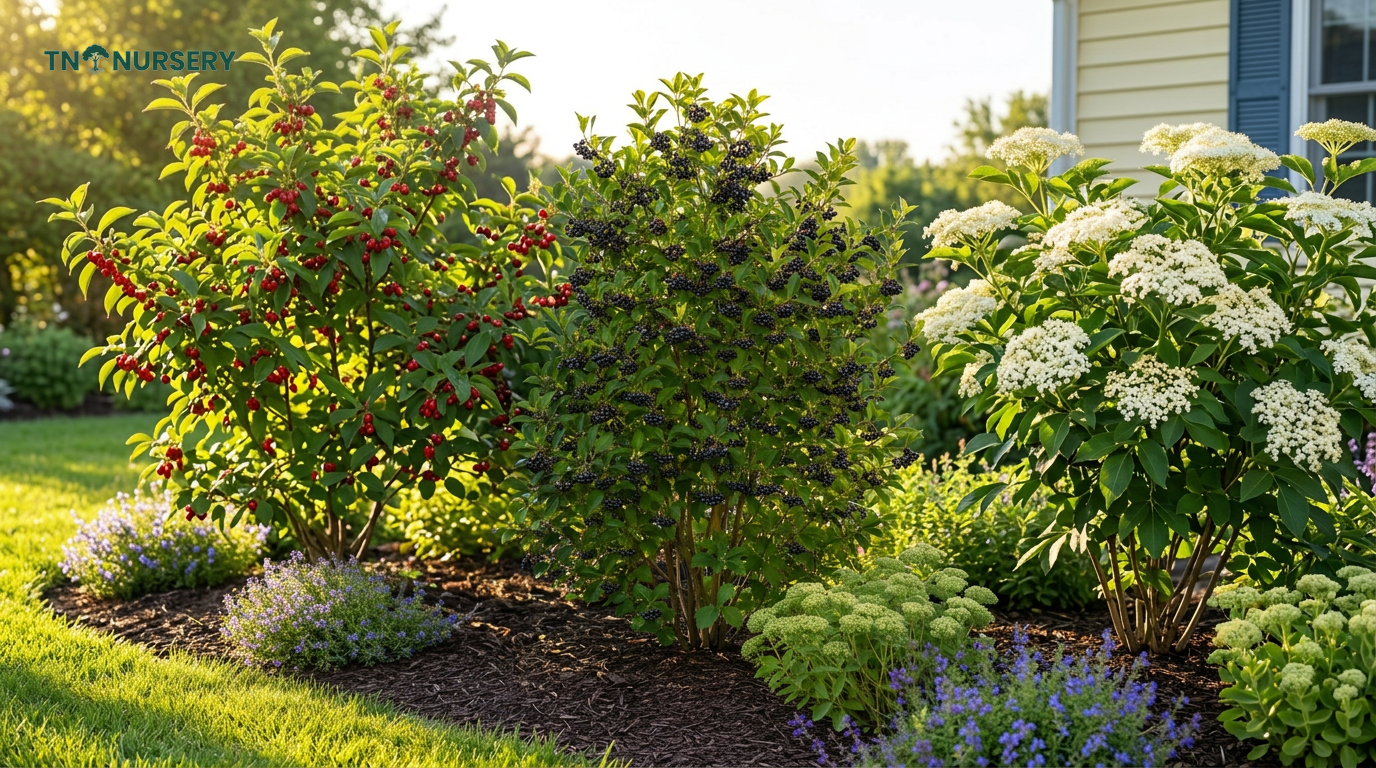
Chokeberry Bush for Sunny Yards
Plant a chokeberry bush for spring flowers, summer shine, fall color, and berries birds use. Compare it with other sun-loving shrubs with berries for 2026 planting plans.
What are the best chokeberry bush to buy?
- Works for sunny yards that need flowers, berries, and strong fall color in one planting
- Highlights low-maintenance shrubs for wildlife that support birds with lasting fruit
- Keeps the focus on TN Nursery plants suited to full-sun home landscapes
- Explains where chokeberry fits against common search favorites without drifting off-topic
Why Chokeberry Earns a Place in Sunny Yards
A chokeberry bush is one of the most dependable picks for a sunny home landscape. We recommend it when you want native berry shrubs for home gardens that handle wet soil, average soil, and even lean ground without constant fuss. You get white spring flowers, dark glossy leaves in summer, berries that persist into the cold season, and fall color that turns clear red, orange, or burgundy.
That range matters. If you are planting for long-term survival, not short-lived trends, chokeberry keeps proving itself year after year.
How to choose the right chokeberry bush?
Choose by size, fruit color, and where you need coverage. Red chokeberry usually fits tighter spaces and foundation-edge groupings, while black chokeberry often works better in naturalized borders, wider wildlife hedges, and mixed sunny screens.
- Red types: often mature around 6 to 8 feet tall with a slightly narrower look
- Black types: commonly reach about 3 to 6 feet, then spread into fuller colonies over time
- Best sun placement: full sun gives the heaviest berry set and strongest fall color
- Keep in mind: part shade is workable, but you will usually see fewer berries and looser growth
Where chokeberry fits best
We use chokeberry where a yard needs structure first, then seasonal color. It works near property lines, along drainage swales, at woodland edges, or grouped in front of taller plantings like a serviceberry bush.
And if you already grow highbush blueberry, winterberry, or red currant plants, chokeberry adds a different habit and a stronger native backbone. That mix gives you layered cover for birds and a longer season of interest.
"For sunny yards that need berries, flowers, and fall color without constant babying, chokeberry is one of the steadiest shrubs we stock."
What are the best chokeberry bush to buy?
The best choice is the one that matches your space honestly. Go with red forms for a taller, narrower line near the house. Pick black forms when you want a broader drifted look in open ground.
We make that planning easier because you can shop with zone-conscious choices across our Shrubs With Berries, Shrubs, Berry Plants, and Flowering Shrubs collections. So you can build layered plantings with shrubs, trees, fruit-bearing selections, perennials, mosses, seeds, and live stakes in one place. If you are ready to plant, chokeberry is the easiest next step.
Our Top Pick for Sunny Yards

Chokeberry Bush for Color, Wildlife, and Easy Placement
If you want one native berry shrub for home gardens that earns its space all year, this is the one we’d plant first. Our chokeberry bush brings white late-spring flowers, bright berries, and strong red to orange fall color, while handling a wide range of soils with less fuss than many sun-loving shrubs with berries. Red chokeberry reaches about 6 to 10 feet tall and 5 to 7 feet wide, so it works well at the back of a sunny border.
- White late-spring flowers that attract bees and butterflies before berries form
- Tolerant of a wide range of soils for easier planting in different sunny yard conditions
- Red and black forms offer flexible sizing, from 3 to 10 feet tall, with bright red or orange fall foliage
Build a Sunny Berry Border With Chokeberry Bush and Highbush Blueberry Appeal
If you're planning a layered yard, this lineup gives you fruit, fall color, screening, and wildlife value in one practical mix. We start with chokeberry as the anchor, then add sunny berry producers and a habitat-friendly companion for edges that shift into part shade.


Frequently Asked Questions
Which berry shrub is best for full sun?
For a sunny yard, we usually point customers to the chokeberry bush first. It handles full sun well, gives you berries and fall color, and fits the job when you want a dependable berry shrub for full sun. If you want brighter winter color, winterberry earns a spot too. Keep in mind that fruiting and berry color are usually strongest when the planting site gets plenty of direct light.
Are chokeberry shrubs native and low maintenance?
Yes. Chokeberry is one of the native berry shrubs for home gardens that works hard without asking for constant attention. Once established, it is a practical pick for people who want low-maintenance shrubs for wildlife. We still tell customers to match the plant to their zone and give it a good start with watering after planting. That part matters.
Which berry plants help birds and pollinators most?
If wildlife support is high on your list, chokeberry and winterberry are strong choices. Birds use the berries, and flowering berry plants help pollinators during bloom. Serviceberry bush also fits that goal if you want a larger form in the landscape. Look, the tradeoff is space. A shrub usually tucks into tighter beds more easily than a fruiting tree.
How do I choose between a shrub and a fruiting tree for my yard?
Start with the space you actually have. A shrub works better for foundation beds, property lines, and smaller sunny borders. A chokecherry tree or a serviceberry bush used as a small tree gives you more height and stronger structure. But if your goal is easy layering with other sun-loving shrubs with berries, shrubs are usually the cleaner fit.
Do you sell other sunny berry plants besides chokeberry?
Yes, we carry several plants customers compare when planning edible or wildlife-focused beds. That often includes highbush blueberry, red currant plants, and day neutral strawberry plants for spots that get good sun. These do not all grow the same way, though. A blueberry fills a shrub role, while strawberries stay low and work better near bed edges.
What shipping method does TN Nursery use?
We ship all items by 3-4 day ground shipping. We keep the process simple, and that is the shipping method we use for plant orders. If you need help before or after an order, email us at customerservice@tennesseewholesalenursery.com.
What is your refund, return, and replacement policy?
We do not offer refunds, and we do not accept returns. We also do not offer a warranty on any product unless you purchase an extended warranty at the time of order. If a plant is unavailable for a covered reshipment situation, we will reship it if product is available, offer the extended warranty on a plant, or provide in-store credit if it is out of stock. You can also write to us at Tennessee Wholesale Nursery, 12847 State Route 108, Altamont TN 37301, United States.
Conclusion
Key Takeaways
- Chokeberry gives you native adaptability, wildlife value, and four-season interest in sunny yards.
- Its manageable size options fit foundation plantings, borders, and larger habitat screens.
- Serviceberry suits taller forms, while highbush blueberry needs more attention to soil conditions.
- Blackberry, black raspberry, elderberry, and spice bush work best as supporting picks based on harvest and habitat goals.
