
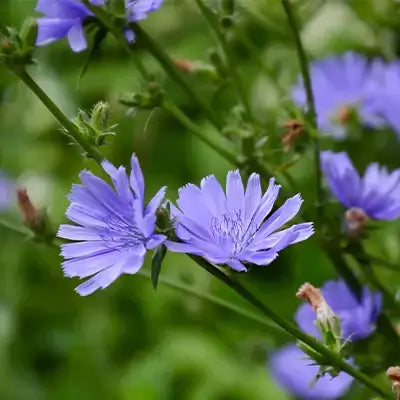
Chicory is a perennial herb native to Europe and Asia. It is an ornamental plant and is planted in gardens as an alternative to coffee. For centuries, chicory has been used traditionally in many cultures, including the Mediterranean and Indian regions.

How to Grow Chicory From Seeds
Growing Chicory plants from seeds is a simple but slow process. Plants from seeds take longer to grow than plants from cuttings or divisions. Plants grown from seeds will also have more pronounced characteristics than those grown from cuttings or divisions.
The chicory seed should be kept in a cool place and germinate within two weeks. It should be kept moist during this period, but not wet. Once your chicory seed has sprouted, move it into an area with full sunlight and keep it well-watered throughout its life cycle.
What Hardiness Zones Does Chicory Thrive In
The Chicory Plant grows in the USDA Hardiness Zones 5 to 8. It can be found in the United States, Canada, and Europe. Chicory grows best in areas that have a mild climate with little to no frost.
What is Chicory Maturity Size
The mature size of the chicory plant is 1.2-1.5 m tall and 0.6-1.2 m wide. It produces large, deep-green leaves arranged in a rosette at the top of the plant, with flowers spaced along the stems (rarely alternating on a single stem). The basal leaves are opposite, but those above it often alternate in clusters of 2-4, each with a petiole 5-18 cm long. The chicory flowers are large, about 3 cm across, and blue-purple with white inner petals.
When is the best time to plant chicory from seed
The best time to plant chicory from seed is usually in spring after the soil can be worked, or in early fall in areas with mild weather. In cooler regions, sow after the danger of hard frost has passed so young seedlings can establish quickly.
How do you improve chicory propagation from seed
For better chicory propagation, sow seed shallowly in loose soil, keep the seed bed evenly moist, and thin crowded seedlings once they are large enough to handle. Good air flow, full sun, and steady moisture during early growth usually give the strongest plants.
Where Should I Plant My Chicory
The Chicory Plant needs light to grow. It can be grown indoors in a sunny spot or outdoors in partial sunlight. Chicory will tolerate low light conditions but will not produce as much as it would if exposed to more light. The chicory plant prefers temperatures between 60 and 80 degrees Fahrenheit, but its best growth occurs between 70 and 75 degrees Fahrenheit. The plant may suffer if the soil temperature is too cold or too hot.
How Much Water Does Chicory Need
The chicory plant prefers moist soil but not standing water. If the soil gets too wet around the roots, they can rot and die. This is especially true after taking cuttings from your main plant. You should immediately remove and replant these plants in a pot or window box with suitable drainage holes to dry out before they rot.
Watering is essential when growing chicory plants indoors in pots or seedlings. A little bit of water daily will help prevent root rot, although you do not want to overwater them as this can cause their leaves to wilt and drop off.
What Soil Does Chicory Like
The Chicory plant can be grown in almost any well-drained soil in a sunny spot. It prefers rich, moist soils and even tolerates quite dry conditions. The best results are obtained when the soil is rich in organic matter, such as well-decomposed leaf mold or compost. The Chicory plant needs fertile soil to develop its roots and flowers. It likes a pH between 5 and 6 but can grow in neutral or slightly acidic (around 6.5) soil as well. This plant does not like very alkaline or salty soils.
How Should I Fertilize the Chicory Plant
The chicory plant needs a lot of nitrogen, phosphorus, and potassium (NPK). It also needs trace elements like boron, zinc, and copper. A well-balanced fertilizer will provide all these nutrients to your chicory plant. You can use any one of the following types of fertilizers for your chicory plant:
Organic fertilizer: Organic fertilizers contain no artificial chemicals or synthetic ingredients. They are made from natural sources that are safe for plants. These include manure, compost, kitchen scraps, and cottonseed meal. The best organic fertilizers contain slow-release nitrogen (N) along with other essential nutrients like phosphorus (P), potassium (K), and calcium (Ca). Organic fertilizers are more expensive than synthetic ones but more effective at nourishing plants.
Synthetic fertilizer: Synthetic fertilizers include ammonium nitrate, ammonium sulphate, urea, and ammonium chloride, and others contain synthetic chemicals such as ammonium nitrate or ammonium sulphate that are not found naturally in our soil or water supply.
Where does chicory grow best
Chicory grows best in a bright, open spot with good air movement and soil that drains well after rain. If you are planting it in a bed with other Edible Plants, give it enough room so the rosette can expand and the roots do not compete too heavily for water.
What is the best fertilizer for chicory
The best fertilizer for chicory is usually a balanced, general-purpose feed used lightly during active growth. Too much nitrogen can produce lush top growth with weaker roots, so it is better to improve the soil with compost first and then fertilize only as needed.
Pest Control for Chicory Plants
The most common pest problems for chicory are flea beetles, aphids, and cabbage worms. Check plants often and treat early, because young growth is the easiest for pests to damage. Flea beetles are the most severe problem for seedlings in fields and home beds. These tiny black beetles feed on the foliage of young plants and can leave many small holes in the leaves. Aphids often appear on the underside of leaves, sucking juices from the plant and causing curled growth or pale spots. Cabbage worms are leaf-feeding larvae that can chew foliage quickly once they hatch. They can often be managed by hand removal, a strong spray of water for aphids, row covers over young plants, and a labeled garden treatment only when damage becomes severe.
How to Prune the Chicory
The main pruning requirement for chicory is to remove old foliage. This keeps the plant tidy, improves air flow, and encourages fresh growth. Cut away damaged or yellowing leaves at the base, and remove spent flower stalks if you want the plant to put more energy into foliage and roots. If you are growing chicory for ornamental value, leave a few healthy stems in place so you can enjoy the blue blooms.
What Is the Best Season To Plant Chicory
Spring is the best time to plant chicory in most gardens because the soil is warming and moisture is usually more reliable. In mild climates, early fall can also work well because roots have time to establish before winter. Avoid planting during periods of extreme heat if the soil dries out quickly.
How To Plant Chicory Plants in Your Garden
Plant chicory in loose, well-drained soil and set each root ball deep enough to keep the crown level with the soil surface. Water it well after planting, then keep the soil evenly moist while new roots form. If you want to start with established plants instead of seed, you can shop the Chicory Plant and move it into the garden once the site is prepared.
Once planted, keep weeds away to encourage root development and resist crown rot as much as possible by mulching around the base and adding organic matter to the soil. Give each plant enough spacing for air flow, especially in humid weather, and avoid heavy watering late in the day.
How To Transplant Chicory Plants
You can also transplant chicory in your garden to grow more plants and have a few extra beds. To transplant chicory, follow these steps:
-
How to Grow Chicory
- Dig up the plant and pull it into sections about 4 inches wide and 2 inches thick. This will help with root growth once you put it back in the ground.
- Fill a bucket with about 1 inch of potting soil or compost and add some fertilizer if needed. Then place each piece of the chicory plant into the bucket and let it sit for a few hours until all pieces are moistened evenly throughout.
- Remove any debris from around each piece of root before gently pushing it back into the soil around its base using your hands or wooden spade, making sure not to damage any new roots.
Chicory is a sun-loving, drought-tolerant perennial with lovely blue flowers. This attractive, fragrant herb is native to Europe and grows well in containers and as ground cover.
Lily Of The Valley PlantExploring the Many Uses of Chicory
The plant Chicory (Cichorium intybus) possesses versatile properties that have earned it appreciation throughout history. Chicory originates from Europe but has since spread worldwide due to its bright blue flowers and ability to thrive in different soil types. Chicory proves helpful beyond decoration as it serves culinary, medicinal, and practical purposes. This simple plant demonstrates surprising versatility by serving as salad greens, coffee substitutes, and digestive health aids. Here are several critical applications for using chicory effectively.
A long-lasting popular application for chicory includes its role as a substitute for coffee. People who need to cut down on caffeine or want to discover new tastes prepare chicory root by roasting it, grinding it into tiny pieces, and making a brew similar to how coffee is prepared. Stepping roasted chicory root in hot water produces a subtly earthy flavor profile laced with a nutty taste and a touch of sweetness. Chicory is mixed into coffee blends to enhance flavor depth in numerous regions, including its well-known use in New Orleans–style coffee. People can drink this deep-brown brew, either hot or cold, and it often combines well with milk or sweeteners.
Chicory leaves are found to be used every day in various cooking methods, especially when preparing salads. Radicchio Belgian endive and escarole belong to the chicory family of plants. Mixed salads acquire a vibrant touch from radicchio's crimson color and subtle bitterness, while Belgian endive offers salads and dip accompaniments a crisp texture with its gentle bitterness. The curly-leaved escarole provides a mild taste in raw preparations and cooked dishes as a traditional ingredient in soups and stews. The subtle bitter taste of chicory leaves adds depth and complexity to rich, savory meals while creating an interesting flavor profile.
Chicory serves culinary purposes and functions in herbal medicine and natural health practices. Chicory's roots and leaves provide inulin as a prebiotic fiber supporting gut bacteria health while potentially helping digestion. Traditional healers across cultures suggest using chicory to treat constipation because it contains dietary fiber. Chicory displays mild anti-inflammatory and antioxidant properties, which differ significantly among people. Some people believe that taking chicory root tea or its extract supports liver health, but you should seek professional healthcare advice about specific conditions.
Chicory proves unexpectedly beneficial when utilized in gardening. The durable perennial plant features a lengthy taproot that effectively breaks up compacted soil to improve water and nutrient penetration. Sustainable farming and permaculture systems often use chicory as a deliberate planting choice to enhance soil structure while improving grazing animal forage quality. The vibrant blue flowers of the plant draw in bees and butterflies, which help maintain diverse local ecosystems.
Chicory's versatile nature makes it useful in ornamental landscaping. Its sky-blue flowers bloom all summer long, making it an attractive choice for any wildflower garden. The use of chicory for both ornamental purposes and crop rotation demonstrates its ability to serve multiple functions, which benefit both culinary uses and environmental health.
Chicory serves multiple important roles beyond being just a weed or coffee additive. It demonstrates its value as a versatile plant through its use in salads and coffee mugs and its importance in digestive health and pollinator garden ecosystems. People who want to diversify their meals and improve their garden soil benefit from chicory because of its bitter taste, nutrient-rich content, and adaptable nature, which adds floral beauty to gardens.
PruningFrequently asked questions
When is the best time to plant chicory?
Spring is usually the best time to plant chicory after the soil can be worked and the risk of hard frost has passed. In mild climates, early fall can also be a good planting window.
Where does chicory grow best?
Chicory grows best in a bright, open location with full sun to partial sun, good air flow, and well-drained soil. It performs best when the soil is fertile and amended with organic matter.
What is the best fertilizer for chicory?
A light application of a balanced, general-purpose fertilizer is usually enough for chicory. Compost or other organic matter can improve the soil first, and too much nitrogen should be avoided because it can encourage weak, overly leafy growth.
How do you control pests on chicory plants?
Check chicory often for flea beetles, aphids, and leaf-feeding worms. Early control methods include hand removal, row covers, better air flow, and spraying aphids off with water before using a labeled garden treatment.


