
The short answer
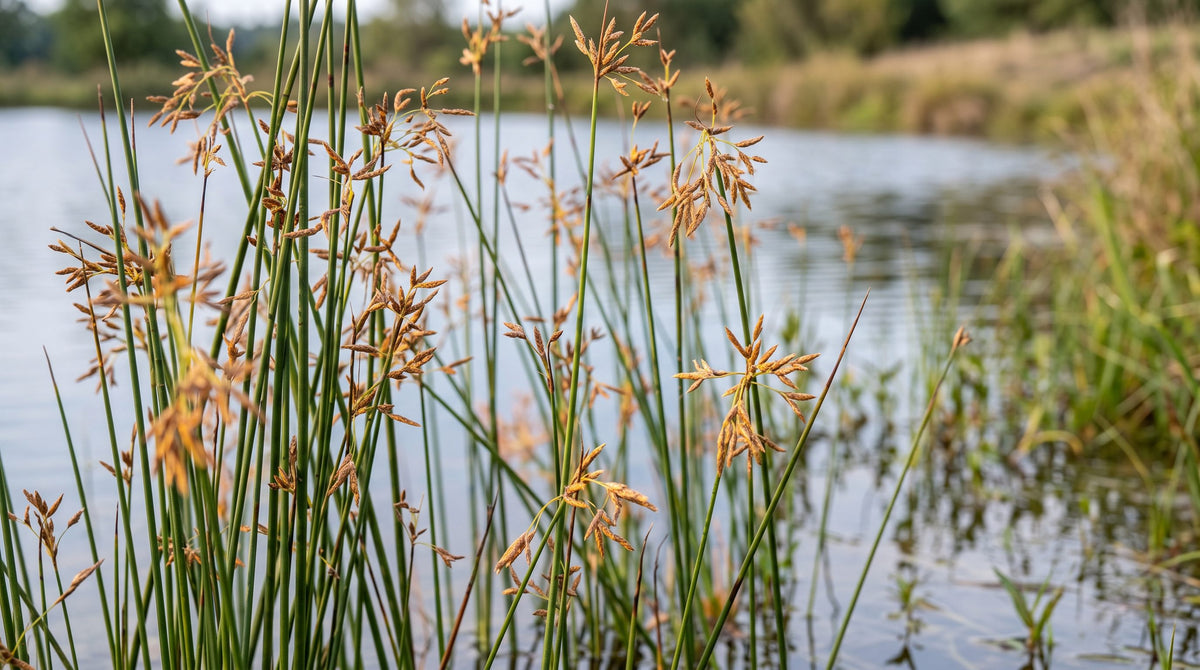
Bulrush vs cattail comes down to leaves, seed heads and water depth. Cattail has flat, ribbon-like leaves and a brown, hot-dog-shaped seed head. Bulrush has round, hollow stems with loose clusters of small brownish flowers. Plant cattail in water up to about 1.5 feet deep, and bulrush in water out to 3 or 4 feet.
The names cause most of the mix-up. In the UK and parts of the Commonwealth, people often call cattails bulrushes or reedmace. In the U.S., the two names point to different plants from different families. Cattail (Typha) belongs to the cattail family, Typhaceae. Our bulrush, Schoenoplectus tabernaemontani, belongs to the sedge family, Cyperaceae. Both are tall, water-loving perennials that can reach 10 feet tall, hold wet banks in place and give wildlife food and shelter. The real difference for a pond owner is where each one thrives. Cattail loves shallow, flooded ground and moist mud along the shoreline. Bulrush handles deeper water and even brackish, or slightly salty, water. It also stabilizes soil quickly, which makes it a strong pick for erosion control. The steps below show how to tell them apart at a glance, how to read your pond's depth and how to place plugs so both plants thrive side by side.
Bulrush vs cattail: choosing yours
1. Look at the seed head first
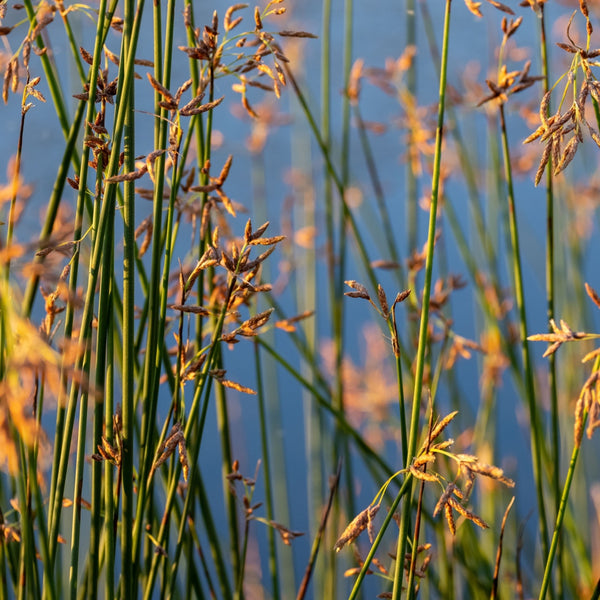
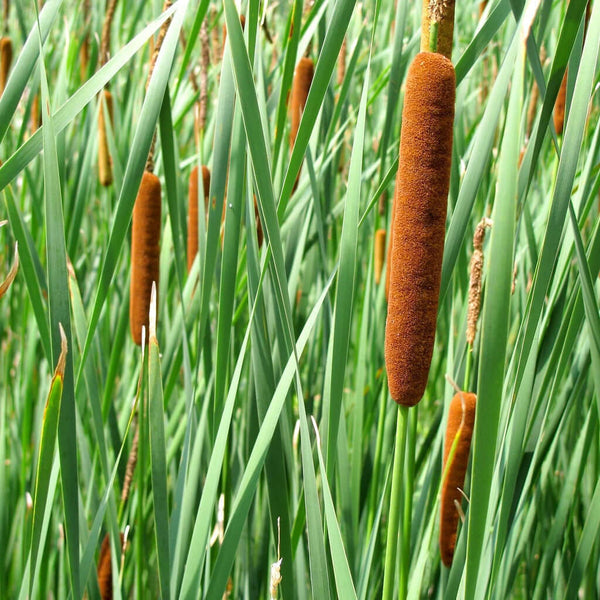
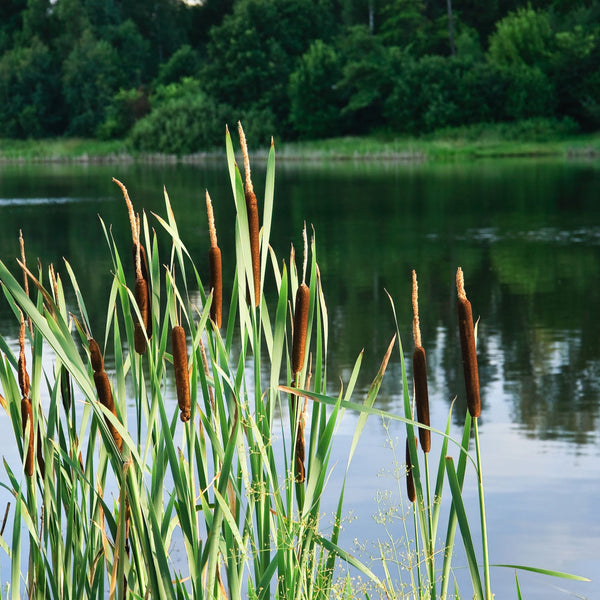
Cattail is the easy one to spot. Its brown, cylindrical flower spike looks like a hot dog on a stick, and by early fall it bursts into soft, fluffy seed. Bulrush has no solid spike. Instead, loose clusters of small brownish flowers sit at or near the tip of each stem. On our bulrush they jut out at different angles, which gives the plant an airy, whimsical look.
Tip: Bulrush flower heads can last several months, so you have a long window to check.
2. Feel the stems and leaves
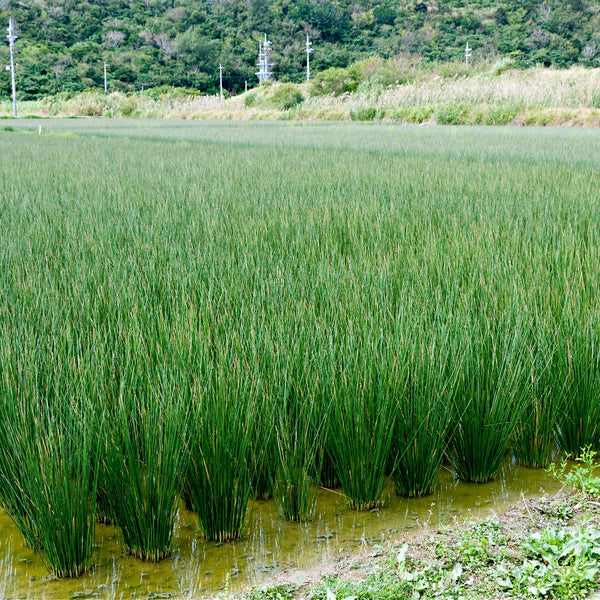
Run your hand up the plant. Cattail grows long, flat blades with a slightly waxy coating, like wide green ribbons. Bulrush stems are round and hollow, and thicker at the base. Its leaves sit as tight sheaths around the stem, so the plant reads as a stand of narrow, upright shoots rather than a fan of flat leaves. This test works even before either plant flowers.
Tip: A sheath is a leaf that wraps around the stem like a sleeve.
3. Measure the water where you'll plant
Depth decides which plant fits. Cattails get established along the shoreline and in water about 1 to 1.5 feet deep or less, according to Cornell Cooperative Extension. Bulrushes grow from damp ground out to water 3 to 4 feet deep, says Mississippi State University Extension. Push a marked stake into the pond bottom at a few spots along the edge. Give cattail the shallow band and let bulrush claim the water beyond it.
Tip: Measure water depth above the pond bottom where the plant sits, not the pond's deepest point.
4. Match the plant to the wildlife you want
Both plants feed and shelter wildlife, in different ways. Cattail's dense, leafy clumps give aquatic animals cover and birds nesting material. Bulrush seeds feed ducks and other birds, several bird species nest in its stands, and some fish spawn among its stems and roots. Amphibians also lay eggs around its base. If frogs, ducks and fish are the goal, lean toward bulrush in the deeper water.
Tip: Bulrush stands also slow wind and wave action, which helps keep the shoreline in place.
5. Plant plugs at the water's edge
Set each plug in soft, wet mud at the shallow edge, with its green tops above the water line. Both plants then spread on their own through underground stems called rhizomes, so leave space between plugs. Cattail fills in fast across the shallow band. Bulrush spreads at a moderate to fast pace and can work its way out into deeper water over time. For more on cattail, read our guide to growing cattails in a home pond.
Tip: Full sun brings bulrush to its greatest height, though it also grows in partial shade.
Planting both in one pond
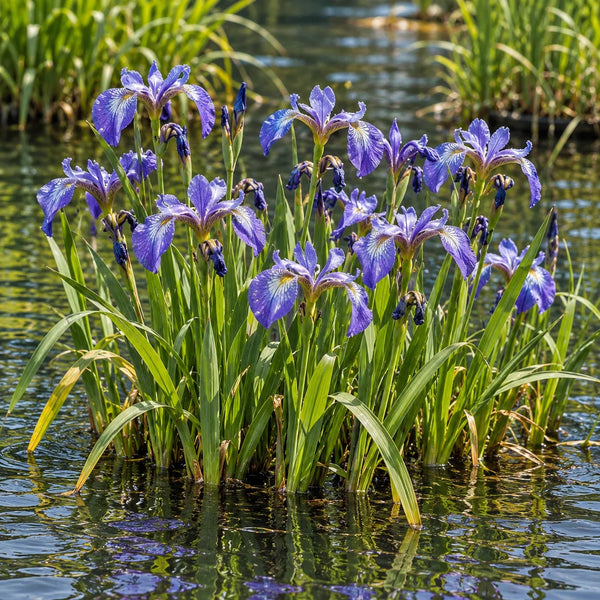
Many ponds have room for more than one plant, and a mix often looks more natural. Think of the edge as bands that step down into the water. On the damp bank, soft rush grass holds soil with its wide-ranging roots and filters sediment before it reaches the water. Blue flag iris, a native that grows about 2 to 3 feet tall, adds blue-violet flowers in the same moist ground and draws pollinators. Next comes cattail, in the shallow shelf up to about 1.5 feet deep, where its dense clumps shelter aquatic animals and give birds nesting material. Bulrush takes the band beyond, out toward 3 to 4 feet, with seeds for ducks, stems where fish spawn and a base where amphibians lay eggs. The deeper middle stays open. Our aquatic plants box pairs bulrush with river cane and crested iris. Browse more options in our pond plants collection.
Care and keeping
Cattail spreads quickly through its rhizomes and can soon take over an area. Cut it back regularly to keep it in the shallow band you planned. Bulrush needs only occasional thinning when it crowds nearby plants. Both thrive with a constant supply of moisture, so keep their roots wet through dry spells.
Frequently asked questions
Is a cattail a bulrush?
It depends on where you live. In the UK, cattails are commonly called bulrushes or reedmace. In North America, bulrush usually means sedge-family plants such as Schoenoplectus, with round stems and small flower clusters. Cattail is Typha, from its own family, with flat leaves and a brown, hot-dog-shaped seed head.
What looks like cattails but isn't?
Bulrush is a common look-alike, since both grow tall at the pond edge. Check for the brown, solid flower spike; only cattail has it. Soft rush and blue flag iris share the same wet ground too, but soft rush forms clumps of long, upright stems and iris has sword-shaped leaves and blue-violet flowers.
Is a cattail considered a reed?
Not in the botanical sense. People often call any tall wetland plant a reed, so cattails get the name too. Botanically, cattail belongs to its own family, Typhaceae, while bulrush sits in the sedge family, Cyperaceae. When you shop for pond plants, the scientific name tells you exactly what you are getting.
Bulrush vs cattail side by side
| Trait | Bulrush | Cattail |
|---|---|---|
| Family | Sedge family (Cyperaceae) | Cattail family (Typhaceae) |
| Flower and seed head | Loose clusters of small brownish flowers near the stem tip | Solid brown, hot-dog-shaped spike that turns to fluffy seed |
| Stems and leaves | Round, hollow stems with tight leaf sheaths | Long, flat, slightly waxy blades |
| Height | 3 to 10 ft | 4 to 10 ft |
| Water depth it loves | Damp ground to water 3 to 4 ft deep | Shoreline mud to water about 1 to 1.5 ft deep |
| Bloom time | Late spring to early fall | Late spring to summer |
| Spread | Moderate to fast, by rhizomes | Fast, by rhizomes |
| Wildlife | Seeds for ducks and birds, nesting cover, fish spawning, amphibian eggs | Cover for aquatic animals, nesting material for birds |
Bulrush
- Family
- Sedge family (Cyperaceae)
- Flower and seed head
- Loose clusters of small brownish flowers near the stem tip
- Stems and leaves
- Round, hollow stems with tight leaf sheaths
- Height
- 3 to 10 ft
- Water depth it loves
- Damp ground to water 3 to 4 ft deep
- Bloom time
- Late spring to early fall
- Spread
- Moderate to fast, by rhizomes
- Wildlife
- Seeds for ducks and birds, nesting cover, fish spawning, amphibian eggs
Cattail
- Family
- Cattail family (Typhaceae)
- Flower and seed head
- Solid brown, hot-dog-shaped spike that turns to fluffy seed
- Stems and leaves
- Long, flat, slightly waxy blades
- Height
- 4 to 10 ft
- Water depth it loves
- Shoreline mud to water about 1 to 1.5 ft deep
- Bloom time
- Late spring to summer
- Spread
- Fast, by rhizomes
- Wildlife
- Cover for aquatic animals, nesting material for birds