
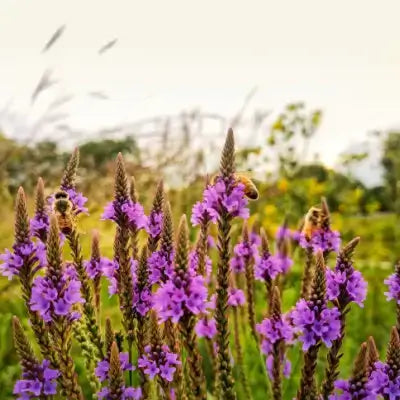
Are you looking for a gorgeous flower that will grow well with the other flowers in your home or office landscape? If so, then Blue Vervain Plant could be the plant for you. Also known as Verbena hastata, this is a dark purple and pink flower that grows well in the wild in the local area. Furthermore, this is also a beautiful flower that grows well around other trees and shrubs, making this a great addition to your garden or yard. At Tennessee Wholesale Nursery, we want to offer a wide selection of plants and flowers that you can tailor to meet your needs. Learn more about this gorgeous flower below.
What Does the Blue Vervain Plant Look Like
It is a native, perennial flower that blooms beautifully in our local climate. When fully grown, it stands between two and five feet in height. It has a square, hairy stem that is usually green; however, later in the year, it can take on a slightly red color. In addition, the leaves are shaped like lances and have slight ridges. The leaves progress in pairs up the stem. Each leaf is approximately one inch wide and six inches long. At the top of the flower, gorgeous purple and pink flowers bloom in elongated panicles. Each flower is about five inches in length.
Where Does Blue Vervain Plant Grow
The Blue Vervain Plant is a hearty flower that grows well in various areas. It is a flower that prefers moist conditions. This flower blooms well in full sun as well as shade. In the wild, one can find it in meadows, pastures, thickets, and prairies. Because it likes water, this Blue Vervainflower commonly grows along the edges of rivers and marshes. It also makes an ideal home for various animals that want to pollinate this flower. Natively, this flower grows all over North America. It can be found in the New England area, throughout the Southeast, across the West Coast, and even into Canada. Because this flower grows everywhere, it is easy to care for.
Soil and Sunlight for Blue Vervain
Selecting the right location is the first step when growing blue vervain. This herb flourishes in whole sun to partial shade, making it adjustable to different light situations. Ideally, choose an area that acquires at least 6-8 hours of sunlight per day but can tolerate some shade if necessary. Ensuring good drainage is essential, as blue vervain prefers moist to slightly wet soil. The soil should be loamy and well-draining to prevent soggy roots.
Blue vervain prefers a slightly alkaline to neutral pH range of 6.0 to 7.5 regarding soil pH. You can improve the soil's pH by adding lime to create the ideal conditions for this herb to thrive.
Trust Tennessee Wholesale Nursery for Blue Vervain Plant
If you are looking for the Blue Vervain PlantBlue Vervain Plant, our team is here to help you. Our flower experts will help you find the perfect arrangement for you. We can help you pair Verbena Hastata with a gorgeous array of plants to put on a show. Give us a call today!
About Blue Vervain
We ship all items by 3-4 day ground shipping. We do not offer refunds, and we do not accept returns. If there is an issue that qualifies for a reshipment, contact us directly at customerservice@tennesseewholesalenursery.com. You can also reach us by mail at Tennessee Wholesale Nursery, 12847 State Route 108, Altamont TN 37301, United States.
Helps with digestive health Blue vervain is good for your gut health as well. Herbalists used it to ease light stomach pain and support healthy digestion, especially when the gut was affected by worry or anxiety. Regular use in teas or liquids may easily help keep the digestive system in balance.
The leaves and flowering tops are often used to make a tea blend or liquid extract.
Native Blue Vervain: The Gardener's Treasure
To me, a veteran gardener, there's something extra special about natives like blue vervain (Verbena hastata). And it's earth-shaking to replant something that had existed on our land generations before anyone knew its name. Blue vervain is an evergreen which has been very hardy and pretty. Standing upright with its thin stalks of violet-blue flowers, this plant edifies any garden and supports pollinators.
Blue vervain likes moist meadows near streams and shallow places where its roots can absorb water. I've always liked its adaptability; it likes to grow in wet soils but will also work in less-than-perfect conditions. And it isn't only beautiful in its own right. It's more for the show, attracting native bees, butterflies, and even hummingbirds. With its cacophony of life in the middle of a row of blue vervain, my garden tells me I've made the right choice in natives.
HomeBlue Vervain in the Landscape
Build a border that handles damp ground, feeds wildlife, and keeps strong structure through the seasons. We paired trees, shrubs, and flowering plants that fit naturalized spaces where native plantings can settle in without extra fuss.
Blue Vervain and Wildlife
Blue Vervain blooms from July into September, with slim spear-shaped spikes covered in tiny purple to blue-violet flowers. The stems can show deep red to pink tones, which adds extra contrast. In mixed borders, we use it toward the back because the upright habit reads clearly above shorter native plants and pollinators favorites.
Blue Vervain and a Pollinator
You'll need blue vervain if you're looking for a showy garden. This plant doesn't just make it through; it gives back. It flowers from midsummer until early fall, the most important period for pollinators getting ready for winter. King and queen come here regularly, crashing on the small flowers while they save their money for a long journey. Nectar and pollen for native bees, neglected by the honeybees, are supplied by blue vervain. Planting it is like offering up the land in reverence, ensuring the biome thrives.
As a practical plant, blue vervain is a pipe dream. It asks so little and offers so much. You can place it in full sun or partial shade, and it will not complain. Because it is deeply established, it's drought-tolerant once established but can also live in moist environments. If you're looking for a garden that integrates with nature, not in competition with it, native plants such as blue vervain will do the trick, I always tell people.
It is sagely to plant roots that are the earth. Blue vervain links us to the past and plants the future. It's not just a plant. It is a metaphor for balance, harmony, and natural beauty everlasting.
Native PlantsPlanting Blue Vervain
Blue vervain (Verbena hastata) likes full sun and wet (sometimes boggy) soils. The plant produces candelabras of violet blue flowers from July to September. It grows 4 to 6 feet (1.2 to 1.8 m) tall. It is native to Tennessee and adjacent states, hardy in USDA plant hardiness zones 3 through 8 and as a perennial is suitable for growing in almost any garden in the southeastern United States from the Cumberland Plateau to the Mississippi River bottomlands.
Once they are a couple of inches tall, thin them out for sufficient spacing. Blue vervain plants should be spaced about 12-18 inches in between to allow for their mature size, varying from 3 to 5 feet in height. The dirt stays consistently moist during the growing season to support healthy growth.
Plant 18-24 inches (46-61 cm) apart. While not particularly bushy, good air circulation will help reduce powdery mildew in Tennessee's humid summers, especially on those plants growing directly next to a fence or wall.
After the transplants are set out, preferably in spring after the last chance of frost (early to mid-April for most of Tennessee), expect a modest gain in the first year as the plant spends most of its energy putting roots down. Achieving a growth of two feet with a few flower spikes is typical. By the second year, roots will be well rooted, plants will have reached their full height of four to six feet and flower profusely. However, this two-year establishment period is true for most native perennials and may catch those hoping for drama in the first year severely off-guard.
Plant Blue Vervain for tall purple spikes, moist-border color, and steady pollinator traffic. It grows in zones 3-9. Keep in mind, it prefers evenly damp soil over dry beds.
We give Blue Vervain enough room so the stems dry after rain and air can move between clumps. A spacing of about 18 to 24 inches works well in most borders, especially since it can self-seed and spread by rhizomes over time.
Yes. But that partly depends on your definition of easy. It takes some time to establish the first year; seeds require cold, moisture stratification. Outdoors this occurs naturally during winter. If the seeds are sown indoors, this can be accomplished by storing for 60 days in a bag in a refrigerator. Because germination can also be slow and erratic (generally three to four weeks as well), most home gardeners prefer to use nursery-grown transplants if they want flowers the same year.
We list Blue Vervain for planting zones 3 to 9, so it covers a wide range of climates. That makes it one of our more flexible perennials for pollinator-style planting. If your winters are cold and your site stays moist, this verbena plant usually settles in well.
Plant bare roots into loosened soil, then water deeply so the roots settle into the damp ground. Full sun gives the strongest bloom, but partial shade works too if your bed gets at least 4 to 6 hours of light.
Second, and just as important for the Tennessee gardener, blue vervain is extremely attractive to wildlife, especially native bumblebees and long-tongued bees that visit the flower spikes from top to bottom for several weeks, and butterflies such as monarchs, swallowtails, and skippers that stop by for nectar. By fall, goldfinches and sparrows come to pick at the seed heads. Whether you're trying to create a pollinator corridor or get more birds to hang out in your yard come October, this plant means business.
Because of the tall stature of blue vervain, it is best grown at the back of a mixed border, or interplanted with other tall plants in a meadow garden situation where the flower spikes are less likely to shade other garden plants. It will grow in the company of Joe Pye weed, ironweed, and swamp milkweed, all three of which are Tennessee natives that prefer moist conditions and flower July to September. When planted together, they form a tall wall of flowers that is buzzing with pollinators for most of the summer.
Blue Vervain was identified by Indigenous tribes and early settlers as valuable before the development of modern medicine. For hundreds of years, traditional healers have utilized this plant because of its remarkable ability to treat numerous health conditions. Traditional healers frequently utilize this plant to treat fevers as well as digestive and respiratory problems. The plant served dual purposes as both a sacred element in rituals and a protective herb. Herbal medicine gained recognition across different cultures which increased its importance and led to its inclusion in early European medical texts.
This plant provides necessary support to small bird populations which go beyond its insect benefits. During autumn months goldfinches along with other seed-eating birds come to eat from its mature seed heads. The plant acts as a vital natural food source that helps birds survive seasonal changes while increasing their ecological importance.
Modern medicine has progressed yet this distinctive plant continues to serve as a fundamental component of herbal treatments. Naturalists and holistic practitioners rely on this herb to calm the nervous system while helping people sleep better and manage stress. Certain practitioners claim that this plant promotes liver health and digestive function while also contributing to pain management. Herbalists continue to praise its effectiveness in teas and tinctures despite the absence of significant scientific research.
Use sharp trimming shears to evade damaging the plant when gathering. Cut the stems at the desired length, leaving some growth behind to encourage regrowth and maintain the plant's overall health. Be mindful of pollinators and other beneficial insects visiting the flowers during the harvest.
To enhance the ornamental appeal of blue vervain in your garden, consider planting it alongside other native perennials or wildflowers that bloom at different times of the year. This can create a visually captivating display throughout the seasons, attracting human admirers and pollinators.
So if you want native plants for butterflies and a border that settles in with less fuss each year, give Blue Vervain moisture, sun, and breathing room. The result looks planted on purpose, but never forced.
Natural wellness enthusiasts regard this plant as a fundamental component in their medicinal collection. This plant works synergistically with medicinal herbs to form powerful mixtures that increase its effectiveness and provide a calming, earthy scent. Conventional medicine has moved away from this practice but traditional remedy seekers continue to rely on it.
Prairie restoration projects and wetland rehabilitation schemes both use this plant in their designs which are meant to attract pollinators. This plant creates a strong vertical presence which contrasts beautifully with softer ground-covering plants. This plant enhances any landscape through its remarkable colors and durability whether applied in formal garden designs or naturalized settings.
Indigenous healers initially brewed this plant into teas and poultices when they discovered its properties. People claimed that this plant helped release nervous tension while promoting relaxation and supporting general health. Herbalists and apothecaries used it in their treatments for colds and coughs as well as mood disturbances throughout the 19th century. Scientific progress caused herbal medicine to fade from mainstream medical practice but this plant remains important for holistic healing today.
Blue Vervain Care and Watering
To grow blue vervain from seeds, prepare a seedbed in early spring or late winter. Ensure the soil is adequately prepared, free of weeds, and well-draining. Please spread the seeds evenly on the soil's surface, gently pressing them down without burying them too deep. They need light to germinate. Water the area thoroughly and maintain consistent moisture until the seedlings emerge, typically taking 2-4 weeks.
A tincture can be made by macerating blue vervain in alcohol or glycerin for several weeks. This method allows for longer preservation of the herb's medicinal properties. A typical dosage of blue vervain tincture is 20-30 drops, diluted in water, taken up to three times daily.
Soil and water: Keep the soil consistently moist, especially the first year. Established plants tolerate short dry periods but sulk if drought lasts a week or two, resulting in lower leaves dropping. If there is no natural wet spot nearby, a soaker hose on a timer can be used.
Winter care: The plants can also be cut back to a few inches after the first hard frost, or the stems can be left standing as insect habitat and bird food (either option works in Tennessee, as the cold causes no dieback, because it is the roots that survive through the winter).

